



Polysilicone-21: properties, uses, pros, cons, safety
Polysilicone-21 is a synthetic silicone composite powder used in cosmetics mainly as a viscosity controlling agent and texture modifier. From a technology standpoint, it consists of silicone elastomer particles with a resinous surface coating: this architecture is designed to improve rheological control (consistency, slip, suspension/emulsion stability) and the sensory behavior of the finished product.
Definition
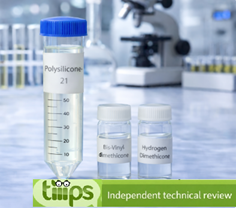
It is not a single molecule: it is a particulate system made of silicone elastomer particles produced by reacting Bis-Vinyldimethicone with Hydrogen Dimethicone, then “finished” with a resinous coating formed through reactions of silane groups (including methoxysilanes and silanols) at the particle surface. From a formulation standpoint, the result is a powder that can act as a consistency modulator, affecting slip, a silky feel, and physical stability (depending on the carrier and the matrix).
Main uses
Cosmetics
Primary use as a viscosity controlling agent to regulate and stabilize viscosity in gels, suspensions, emulsions, and solutions, improving product handling (dose, spreadability, sensoriality) and overall physicochemical stability, when compatible with the system.
INCI functions
Viscosity control agent. It controls and adapts, Increasing or decreasing, viscosity to the required level for optimal chemical and physical stability of the product and dosage in gels, suspensions, emulsions, solutions.
Industrial use
More generally, silicone elastomer powders can be used as rheology/slip additives in compatible matrices (not necessarily cosmetic), but practical relevance depends on the specific commercial grade and the target application system.
Identification data and specifications
| Characteristic | Value | Note |
|---|---|---|
| INCI name | Polysilicone-21 | Cosmetic denomination |
| Origin | synthetic | Composite powder |
| Main function | viscosity controlling | Reported INCI function |
| CAS number | 1013922-83-2 | Identifier reported in industry databases |
| EC number (EINECS) | not always reported as unique | Depends on classification/registration |
| Molecular formula | not applicable (polymer/composite) | Particulate polymeric material |
| Molecular weight | not applicable (polymer/composite) | Distribution, not a single value |
Chemical-physical properties (indicative)
| Characteristic | Indicative value | Note |
|---|---|---|
| Physical state | powder | Elastomer particles with resin coating |
| Color | white to off-white | Grade/specification-dependent |
| Odor | mild / characteristic | Usually not dominant in the finished product |
| Water solubility | insoluble | Typical of silicones/elastomers |
| Dispersibility | matrix-dependent | Critical for performance and stability |
| Rheological effect | viscosity/consistency modulation | Depends on phase and process |
| Chemical stability | high | Compatibility and dispersion are more critical |
Functional role and mechanism of action
Polysilicone-21 acts as a viscosity controlling agent via a physical mechanism: elastomer particles and their resinous coating interact with the matrix (oil phase, emulsifier network, thickening polymers), contributing to:
increased perceived consistency and formula “structure,”
improved slip and application feel (reduced friction),
stabilization of suspensions or microstructures, reducing separation phenomena when the system is properly designed.
The magnitude of the effect strongly depends on concentration, continuous-phase type, carrier polarity/viscosity, processing shear, and the presence of other rheology modifiers.
Formulation compatibility
Performance depends mainly on achieving a stable dispersion of the particles and avoiding incompatibilities with:
highly electrolyte-rich systems or thickeners sensitive to particulates,
emulsions with borderline balance (possible rheology drift),
suspensions where the powder can aggregate if not properly wetted.
During development it is useful to verify hot/cold stability, centrifugation, thermal cycling, accelerated aging, and batch-to-batch repeatability.
Production process
The material is described as a composite powder produced in two main steps:
First stage: reaction of Bis-Vinyldimethicone with Hydrogen Dimethicone to form silicone elastomer particles.
Second stage: excess silicon hydride groups on the particle surface are reacted with methyltrimethoxysilane, tetramethylorthosilicate, and trimethylsilanol to form a resinous coating on the elastomer particle.
This coating is relevant because it modifies the particle–matrix interface and can improve rheological “hold” and sensoriality, while potentially reducing some issues typical of uncoated elastomer particles (depending on the base).
Pros and cons
Pros
Improves viscosity management and physical stability in compatible formulas, with practical utility in emulsions, gels, and suspensions.
Contributes to a more silky and smoother texture, often with reduced perception of greasiness compared with using emollients alone.
May support better process repeatability where consistency is the key driver.
Cons
Non-universal compatibility: if dispersion is not controlled, aggregation, instability, or viscosity drift may occur.
Risk of a “powdery” feel or excessive slip if overdosed or if the base is not balanced.
Environmental profile: silicones are generally chemically stable; environmental management depends on the specific family and on possible impurities/residues (to be handled via specifications and supplier documentation).
Safety, regulatory, and environmental aspects
In cosmetics, polymeric silicone materials are often regarded as having low dermal absorption, but evaluation must always be tied to the finished product (matrix, preservatives, fragrance, application area, usage pattern).
Practical points to control:
batch quality (absence of undesired reactive or volatile impurities, if relevant for the target market),
management of incidental inhalation exposure if the powder is handled as such in manufacturing (containment and PPE on site),
documentation compliance (SDS, specifications, any statements on residues/regulatory) consistent with the destination market.
Allergen.
It is not typically a classic “fragrance allergen”; reactions are more often related to the overall formula and individual sensitivity.
Contraindications (brief).
Use caution in spray/aerosol products if the commercial form or the formula can increase incidental inhalation exposure; evaluate case by case on the finished product.
Formulation troubleshooting
Instability or separation over time.
Action: optimize structuring/emulsifier system; improve wetting and dispersion; review order of addition and shear.
Viscosity too high or “draggy” during application.
Action: reduce dosage; balance with compatible emollients/cosmetic solvents; re-tune primary thickeners.
Aggregation or lumps.
Action: pre-disperse in a compatible phase; verify particle size and incorporation method; control processing temperature.
Conclusion
Polysilicone-21 is a composite powder based on silicone elastomer particles with a resinous coating, used mainly as a viscosity controlling agent to improve consistency, spreadability, and stability in compatible formulas. Its technical value depends on dispersion quality, matrix compatibility, and the overall rheology balance; correct management relies on robust supplier specifications and targeted stability testing on the finished product.
Mini-glossary
Silicone elastomer. A silicone polymer network with a “rubbery” behavior, used to modify texture and sensoriality.
Resinous coating. A surface layer that changes the particle–matrix interface, influencing dispersion, stability, and rheological response.

