



Ceramide NS Dilaurate is the diester of Ceramide NS and lauric acid, a lipid molecule belonging to the specific species of ceramides, the main constituents of the human skin's defence barrier and lipids in the stratum corneum where it has the ability to form stable lamellar structures.
The name describes the structure of the molecule:
- Ceramide - Ceramides are a family of waxy lipids (fats)
- "NS" is a specific designation for a particular ceramide structure.
- Dilaurate - Indicates that there are two molecules of lauric acid esterified to the ceramide.
Description of raw materials used in production:
- Ceramide NS - Used as a starting point, ceramides are often derived from skin or animal tissues or synthetically produced.
- Lauric acid - A medium-chain fatty acid, often derived from coconut oil or palm oil.
Synthesis process:
Esterification - The Ceramide NS is reacted with lauric acid in the presence of an acid catalyst or a condensing agent. This leads to the formation of the desired product, ceramide NS dilaurate, through an esterification reaction. This process occurs twice to esterify both ends of the ceramide with lauric acid.
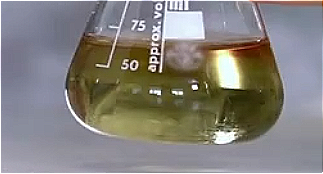
It appears as a colourless to yellow liquid
What it is used for and where
Cosmetics
- Hair conditioning agent. A large number of ingredients with specific purposes can co-exist in a hair shampoo: cleansers, conditioners, thickeners, mattifying agents, sequestering agents, fragrances, preservatives, special additives. However, the indispensable ingredients are the cleansers and conditioners as they are necessary and sufficient for hair cleansing and manageability. The others act as commercial and non-essential auxiliaries such as: appearance, fragrance, colouring, etc. Hair conditioning agents have the task of increasing shine, manageability and volume, and reducing static electricity, especially after treatments such as colouring, ironing, waving, drying and brushing. They are, in practice, dispersing agents that may contain cationic surfactants, thickeners, emollients, polymers. The typology of hair conditioners includes: intensive conditioners, instant conditioners, thickening conditioners, drying conditioners.
- Skin conditioning agent - Miscellaneous. This ingredient has the task of modifying the condition of the skin when it is damaged or dry by reducing its flakiness and restoring its elasticity.

