



Ceramide AP: properties, uses, pros, cons, safety
Ceramide AP is a synthetic ceramide belonging to the sphingolipid family, that is, structural lipids that are very important for the skin barrier. In cosmetics it is used mainly as a skin conditioning ingredient and, to a lesser extent, as a hair conditioning ingredient. From a chemical point of view, it is described as a ceramide based on phytosphingosine linked to an α-hydroxylated fatty acid, with the commonly reported molecular formula C36H73NO5 and a molecular weight of about 599.97 g/mol.
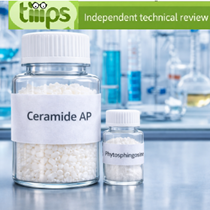
Description
Ceramide AP is an ingredient of almost exclusively cosmetic interest. Ceramides are among the main lipids present in the stratum corneum and contribute fundamentally to epidermal barrier cohesion, reduction of water loss, and maintenance of the skin surface in good condition. In formulation, Ceramide AP is often included in products intended for dry skin, sensitive skin, barrier products, and treatments designed to improve hydration, comfort, and skin texture quality.
From a technical point of view, it is not normally used as an isolated “star substance,” but more often within complex lipid systems together with other ceramides, cholesterol, fatty acids, and support ingredients, in order to more closely mimic the natural lipid architecture of the skin.
Production process
Ceramide AP is generally described in cosmetic repertories as an ingredient of synthetic origin. Industrially it is obtained by controlled synthesis of the ceramide structure, starting from a phytosphingosine base and a suitable lipid component, followed by purification and standardization of the commercial grade.
In formulation practice, Ceramide AP is very often not purchased as a pure substance to be used alone, but as part of ceramide complexes or pre-prepared dispersions, which may also contain cholesterol, phytosphingosine, emulsifiers, and dispersing systems. This approach makes it easier to incorporate into formulas, because pure ceramides are relatively difficult ingredients to handle in terms of dispersibility and technological compatibility.
Key constituents
In the case of pure Ceramide AP, the reference compound is the ceramide itself. However, in real cosmetic products and commercial grades, it is frequently found in blends with other ceramides, cholesterol, phytosphingosine, and carrier ingredients. For this reason, from a practical point of view, it is always important to distinguish between:
- the INCI name of the active;
- the actual commercial grade purchased by the formulator;
- the complete system in which the ceramide is incorporated.
Identification data and specifications
| Characteristic | Value | Note |
|---|---|---|
| INCI name | Ceramide AP | cosmetic denomination |
| Chemical category | ceramide / sphingolipid | structural skin lipid |
| Molecular formula | C36H73NO5 | commonly reported value |
| Molecular weight | 599.97 g/mol about | theoretical value |
| Origin | synthetic | as reported in cosmetic repertories |
| Cosmetic functions | skin conditioning, hair conditioning | main recognized functions |
| CAS number | variable according to database/stereochemical definition | multiple references appear in commercial literature |
| EC number | variable according to commercial database | to be verified on the purchased grade |
| Commercial form | powder or complex/dispersion | more often in formulation blends |
Physico-chemical properties (indicative)
| Characteristic | Indicative value | Note |
|---|---|---|
| Appearance | white or off-white powder / dispersion | depends on the commercial grade |
| Odor | absent or very slight | generally neutral |
| Solubility | poor in water | delicate formulation handling |
| Dispersibility | better in lipid systems or pre-dispersed complexes | often sold in blends |
| Stability | good if properly formulated | depends on the overall system |
| Functional affinity | high for the skin barrier | consistent with the role of epidermal ceramides |
| Formulation compatibility | good in barrier emulsions and structured lipid systems | should be verified in complex formulas |
Cosmetic focus
In the cosmetic focus, Ceramide AP is particularly interesting in products intended for compromised skin barrier, xerosis, dry skin, sensitive skin, and skincare aimed at restoring skin comfort. Ceramides, as a group, are key components of the lipid matrix of the stratum corneum and are closely associated with the skin’s ability to retain water and to limit the penetration of irritants.
In practice, Ceramide AP is mainly used in:
- barrier creams;
- moisturizing lotions;
- products for dry or mature skin;
- lipid serums;
- post-treatment products or maintenance products for skin comfort.
Very often, its technical value emerges especially when it is included together with cholesterol and fatty acids, that is, in systems that aim to reproduce the epidermal lipid composition more realistically. In these cases, the perceived benefit is linked more to the overall system than to the single ceramide alone.
In hair, the hair conditioning function is secondary but still recognized: in some formulations ceramides are valued for supporting the sensation of a more compact, disciplined, and protected fiber, especially in treated or sensitized hair.
INCI Functions
Hair conditioning agent. A large number of ingredients with specific purposes can co-exist in a hair shampoo: cleansers, conditioners, thickeners, mattifying agents, sequestering agents, fragrances, preservatives, special additives. However, the indispensable ingredients are the cleansers and conditioners as they are necessary and sufficient for hair cleansing and manageability. The others act as commercial and non-essential auxiliaries such as: appearance, fragrance, colouring, etc. Hair conditioning agents have the task of increasing shine, manageability and volume, and reducing static electricity, especially after treatments such as colouring, ironing, waving, drying and brushing. They are, in practice, dispersing agents that may contain cationic surfactants, thickeners, emollients, polymers. The typology of hair conditioners includes: intensive conditioners, instant conditioners, thickening conditioners, drying conditioners.
Skin conditioning agent - Miscellaneous. This ingredient has the task of modifying the condition of the skin when it is damaged or dry by reducing its flakiness and restoring its elasticity.
Pros
- It is an ingredient closely aligned with the physiology of the skin barrier.
- It is particularly interesting in products for dry, sensitive, or low-comfort skin.
- It may contribute to maintaining hydration and reducing transepidermal water loss.
- It integrates well into cosmetic systems combining ceramides, cholesterol, and fatty acids.
- It has strong technical and positioning value in skincare lines oriented toward barrier repair.
Cons
- The food focus is effectively not relevant.
- The pure substance can be relatively complex to handle from a formulation point of view.
- Its practical effectiveness depends greatly on the delivery system and the overall formula.
- It is often used at low dosages and in complexes, so it is not always easy to attribute the result to Ceramide AP alone.
- Commercial grades may differ in CAS/EC identification and blend composition, so it is essential to read supplier documentation carefully.
Safety, regulatory aspects and environment
From a cosmetic safety point of view, Ceramide AP is generally used as an ingredient compatible with skincare and haircare use, provided it is included in products that are properly formulated and assessed according to the cosmetic regulatory framework. It is not a classic fragrance allergen, but, as with all ingredients, tolerability must always be referred to the finished product and its complete composition.
On a technical level, practical safety depends mainly on:
- quality and purity of the commercial grade;
- correct preservative system;
- good compatibility with the vehicle;
- correct use concentration.
From a functional point of view, cosmetic interest in ceramides derives from their connection with skin barrier homeostasis. In the literature, reduced ceramide levels in the stratum corneum are associated with increased dryness and worsening of barrier function; for this reason, cosmetic systems containing ceramides are widely used in the care of dry and fragile skin.
Conclusion
Ceramide AP is an ingredient of clear cosmetic interest, with a main role in supporting the skin barrier and maintaining skin in good condition. Its use is particularly consistent in products intended for hydration, comfort, xerosis, and barrier skincare.

