



Pelargonic acid methyl ester (Methyl pelargonate or nonanoate) is a chemical compound, ester of methyl alcohol and pelargonic acid.
The name defines the structure of the molecule
- "Pelargonic Acid" is a carboxylic acid with the chemical formula CH₃(CH₂)₇COOH. It's also known as nonanoic acid and is a linear saturated fatty acid with nine carbon atoms.
- "Methyl" indicates the presence of a methyl group, which is an alkyl group with the formula CH₃.
- "Ester", a compound derived from the reaction between an acid and an alcohol. In this case, pelargonic acid has reacted with methanol to form the ester.
Description of raw materials used in production
- Pelargonic acid (nonanoic acid) - A straight-chain carboxylic acid with nine carbon atoms.
- Methanol - A simple alcohol used as a reactant in ester formation.
Step-by-step summary of industrial chemical synthesis process.
- Preparation - Pelargonic acid and a quantity of methanol are fed into a reactor.
- Addition of catalyst - An acid catalyst such as sulfuric acid is added to speed up the reaction.
- Heating - The mixture is heated to promote the esterification reaction.
- Reaction - The reaction continues until equilibrium is reached or until esterification is complete.
- Purification - After the reaction, separation of the ester product, any excess reactants and the catalyst by distillation takes place.
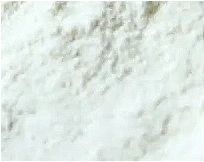
It occurs as a yellowish liquid or white powder.
What it is used for and where
Cosmetics
Fragrance. It plays a very important role in the formulation of cosmetic products as it allows perfume to be enhanced, masked or added to the final product, improving its commercial viability. The consumer always expects to find a pleasant scent in a cosmetic product.
Skin conditioning agent - Emollient. Emollients have the characteristic of enhancing the skin barrier through a source of exogenous lipids that adhere to the skin, improving barrier properties by filling gaps in intercorneocyte clusters to improve hydration while protecting against inflammation. In practice, they have the ability to create a barrier that prevents transepidermal water loss. Emollients are described as degreasing or refreshing additives that improve the lipid content of the upper layers of the skin by preventing degreasing and drying of the skin. The problem with emollients is that many have a strong lipophilic character and are identified as occlusive ingredients; they are oily and fatty materials that remain on the skin surface and reduce transepidermal water loss. In cosmetics, emollients and moisturisers are often considered synonymous with humectants and occlusives.
CAS: 1731-84-6
Commercial applications
Herbicide. Used as a non-selective herbicide, effective against many weeds.
Component in Perfumes. Occasionally used in fragrance compositions for its olfactory notes.
Chemical Intermediate. Used in the production of other chemical compounds in an industrial setting.
Solvent. Can act as a solvent in various industrial applications due to its physicochemical properties.
Research. Utilized in scientific studies and research.

