



Cetyl Myristate – emolliente ceroso INCI, dati identificativi, dosaggi cosmetici e guida formulativa
Cetyl myristate
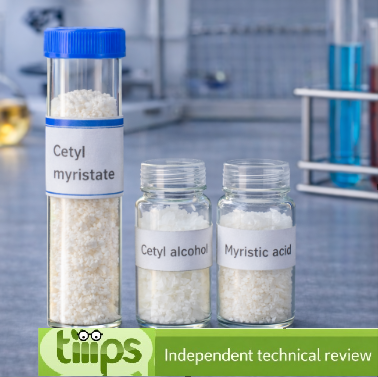
Estere di cetyl alcohol e myristic acid – C₃₀H₆₀O₂
Sinonimi: hexadecyl tetradecanoate, myristic acid cetyl ester, hexadecyl myristate
INCI / funzioni: skin conditioning, skin conditioning – emollient (emolliente)
Definizione
Cetyl myristate è un estere ceroso (wax ester) formato dall’unione di cetyl alcohol (1-hexadecanol) e myristic acid (tetradecanoic acid). Dal punto di vista compositivo, l’ingrediente è costituito principalmente dalla molecola Cetyl Myristate, con possibili tracce controllate (grado-dipendenti) di componenti correlati (es. residui di acido/alcol o esteri affini) entro le specifiche del fornitore. In cosmetica è impiegato soprattutto come emolliente e texturizer: contribuisce a una sensazione più setosa, riduce la percezione di untuosità in alcune basi, migliora scorrevolezza e “payoff” e può supportare la corposità della fase oleosa in emulsioni e sistemi anidri.
Alimentazione: non è un ingrediente alimentare tipico; impiego principalmente tecnico.
Cosmetica: emolliente e supporto texture (creme, lozioni, make-up, prodotti corpo e labbra).
Medicina: possibile impiego tecnico in basi lipofile per applicazioni topiche (grado-dipendente).
Farmaceutica: potenziale eccipiente lipofilo, subordinato a grado e dossier applicabile.
Uso industriale: estere ceroso per applicazioni di lubrificazione/“feel” e modifica reologica (settore-dipendente).
Calorie (valore energetico)
| Metrica | Valore |
|---|---|
| Valore energetico (100 g) | ~900 kcal (ordine di grandezza tipico per esteri lipidici) |
| Nota d’uso | utilizzato a dosi funzionali: impatto energetico sul prodotto finito trascurabile |
Dati di identificazione e specifiche
| Identificativo | Valore |
|---|---|
| Nome INCI | Cetyl Myristate |
| Nome chimico (riferimento) | hexadecyl tetradecanoate |
| Formula bruta | C₃₀H₆₀O₂ |
| Massa molare | 452,81 g/mol |
| Numero CAS | 2599-01-1 |
| Numero EC (EINECS) | 220-001-1 |
Principali sostanze contenute
| Frazione | Componenti | Nota tecnica |
|---|---|---|
| Estere principale | cetyl myristate | driver dell’effetto emolliente e della resa sensoriale |
| Tracce controllate (grado-dipendenti) | residui di acido/alcol, esteri affini | possono influire su odore, fusione e ripetibilità; gestire via QC |
Proprietà fisiche e chimiche (rilevanti in pratica)
| Proprietà | Indicazione tipica | Impatto formulativo |
|---|---|---|
| Stato fisico | solido ceroso (scaglie/pastiglie) | utile come texturizer in anidri ed emulsioni |
| Punto di fusione | tipicamente nell’ordine di ~38–48 °C (range fornitore-dipendente) | influenza stabilità a caldo e sensorialità “melt” |
| Solubilità | miscibile in molte fasi oleose; non miscibile in acqua | inserimento in fase grassa |
| Sensazione al tatto | slip e “feel” più setoso | aiuta a ridurre “drag” in alcuni sistemi |
Ruolo funzionale in formulazione
| Funzione | Cosa fa in formula | Note operative |
|---|---|---|
| Emolliente | migliora morbidezza e scorrevolezza | contribuisce a un finish più vellutato (dipende dal sistema) |
| Texturizer / modificatore reologico | aumenta corpo e “cushion” in anidri | utile in balsami, stick, creme ricche |
| Supporto al “payoff” | migliora applicazione e sensorialità | particolarmente utile in body care e make-up cremoso |
Compatibilità formulativa
| Sistema | Compatibilità | Controlli consigliati |
|---|---|---|
| Sistemi anidri (oli/esteri/cere) | generalmente ottima | verificare cristallizzazione e stabilità a caldo/freddo |
| Emulsioni O/W | buona (in fase oleosa) | controllare stabilità a cicli termici e viscosità nel tempo |
| Emulsioni W/O | buona | validare con emulsionante e bilanciamento cere/oli |
| Pigmenti/polveri | utile | ottimizzare con dispersanti e profilo esteri della fase grassa |
Linee guida d’uso (indicative)
| Applicazione | Range tipico | Nota tecnica |
|---|---|---|
| Creme/lozioni (fase oleosa) | 0,5–5,0% | migliora emollienza e sensorialità |
| Balsami e burri corpo | 1,0–10,0% | incrementa “body” e scorrevolezza |
| Stick/labbra | 1,0–10,0% | supporta payoff e struttura (in sinergia con cere) |
| Make-up cremoso | 0,5–8,0% | riduce “drag” e migliora applicazione |
Applicazioni tipiche
Creme corpo e mani per migliorare comfort e sensorialità.
Balsami, burri e sistemi anidri per aumentare corpo e “cushion”.
Prodotti labbra e make-up cremoso per supportare payoff e scorrevolezza.
Qualità, gradi e specifiche
| Controllo QC | Cosa verificare |
|---|---|
| Identità | coerenza CAS/EC e documentazione del fornitore |
| Indici chimici | acid value, saponification value (se presenti in specifica) |
| Punto di fusione | range accettabile per performance e stabilità |
| Odore/colore | stabilità nel tempo, soprattutto in anidri e prodotti labbra |
| Documentazione | CoA e SDS del lotto acquistato |
Sicurezza, normativa e ambiente
| Tema | Indicazioni operative |
|---|---|
| Profilo di sicurezza | in genere idoneo all’uso cosmetico alle normali concentrazioni; formulare per risultare non irritante sul prodotto finito |
| Normativa cosmetica UE | ingrediente utilizzabile secondo requisiti generali e GMP; valutazione di sicurezza sul prodotto finito |
| Gestione polveri/scaglie | evitare inalazione di particolato fine durante manipolazione bulk |
| Ambiente | gestire residui oleosi secondo regole locali; evitare rilascio non controllato |
Troubleshooting formulativo
| Problema | Causa probabile | Azioni correttive |
|---|---|---|
| “Graininess” in burri/stick | cristallizzazione non ottimizzata | ribilanciare cere/esteri, ottimizzare curva di raffreddamento, valutare esteri compatibilizzanti |
| Instabilità a caldo (ammorbidimento eccessivo) | punto di fusione troppo basso per il target | aumentare quota di cere strutturanti o scegliere un texturizer con fusione più alta |
| Sensazione troppo cerosa | eccesso di frazione cerosa | ridurre dose, bilanciare con esteri più “dry feel” e/o oli leggeri |
| Variazioni tra lotti | differenze di profilo e fusione | fissare range QC (fusione, indici, odore) e qualifica fornitore |
Conclusione
Cetyl myristate è un emolliente ceroso utile per migliorare texture, scorrevolezza e sensorialità in molte formulazioni cosmetiche. È particolarmente efficace come texturizer in sistemi anidri e come supporto della fase oleosa in emulsioni, a condizione di gestire correttamente bilanciamento con cere/esteri e la finestra di fusione per garantire stabilità e ripetibilità.
Mini-glossario
| Termine | Significato | Nota |
|---|---|---|
| Wax ester | estere tra acido grasso e alcol grasso | tipicamente solido/ceroso, utile come texturizer |
| Acid value | indice di acidità (acidi liberi residui) | marker qualità e stabilità |
| Saponification value | indice legato alla saponificazione dell’estere | correlato a composizione e purezza |
| Drag | attrito percepito in applicazione | si gestisce bilanciando esteri/oli/polveri |

