



Peri peri / pili pili (Capsicum spp.)
Peri peri / pili pili are designations commonly used for small hot chillies belonging to the genus Capsicum, most frequently associated with Capsicum frutescens and, in some contexts, with Capsicum chinense or closely related local landraces. The fruits are typically small, elongated or conical, with lengths of a few centimetres, a thin pericarp and a smooth to slightly irregular surface. During ripening, the colour changes from green to yellow-orange or intense red, depending on the cultivar and maturation stage. Internally, the fruit presents a central placenta from which numerous seeds are attached; this region is the main site of accumulation of pungent compounds.
The pungency of peri peri / pili pili is linked to the presence of capsaicinoids, primarily capsaicin and dihydrocapsaicin, with possible contributions from minor capsaicinoids. These molecules are concentrated in the placenta and, to a lesser extent, in the inner epidermis of the pericarp. The overall capsaicinoid content is generally in the medium–high heat range, making these chillies significantly hotter than many standard culinary Capsicum annuum types. The fruits also contain carotenoids (such as capsanthin and beta-carotene) responsible for the red–orange pigmentation, as well as a fraction of volatile aromatic compounds that contribute to the characteristic flavour profile. Moisture content in fresh fruit is high, with the solid fraction composed of cell wall material, sugars, organic acids, pigments and capsaicinoids.
From a technological and culinary perspective, peri peri / pili pili can be used in fresh, dried, or ground form. Drying reduces water activity, increases the apparent concentration of pigments and capsaicinoids, and leads to a more brittle structure that facilitates flaking or milling into powders. In processed products, these chillies function primarily as a pungent flavouring agent and colour contributor in sauces, marinades, spice blends, flavoured oils and other condiments. The perceived intensity of heat and aroma depends on factors such as dosage, particle size, processing conditions (temperature, time, exposure to air and light) and matrix composition of the final product, which influence the extraction and stability of capsaicinoids and volatile components.
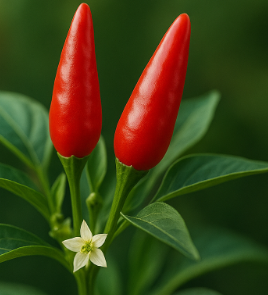 | 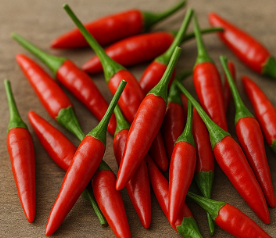 |
Botanical classification
Common name: pili pili, peri peri (African chili pepper)
Clade: Angiosperms
Order: Solanales
Family: Solanaceae
Genus: Capsicum
Species: Capsicum frutescens L.
Cultivation and growth conditions
Climate
Pili pili / peri peri is a chili pepper typical of tropical and subtropical areas, widely grown in East Africa and other warm regions. It prefers a warm–humid climate with temperatures generally between 20 and 30 °C during the crop cycle. It is very sensitive to frost and to temperatures below about 12 °C, which cause growth arrest and possible tissue damage.
Exposure
The crop requires full sun to achieve good vegetative vigour, flowering and fruit set. High light availability also promotes the accumulation of capsaicinoids (pungency) and pigments in the berries. Under prolonged shade, plants grow more elongated, are less productive and produce fruits of lower quality.
Soil
Pili pili adapts to well–drained soils, preferably sandy–loam or loam, with good aeration and moderate organic matter content. Optimal pH is slightly acidic to neutral (around 6–7). Heavy, very clayey soils prone to waterlogging increase the risk of root rots and fungal diseases. Proper seedbed preparation and good tilth in the surface horizon are important.
Irrigation
The crop needs a regular soil moisture level, especially during transplanting, vegetative growth, flowering and fruit enlargement. Moderate and frequent irrigations are recommended, while avoiding prolonged waterlogging. Periods of marked drought reduce both number and size of fruits; excessive water favours diseases and may alter the concentration of pungent compounds.
Temperature
Optimal germination occurs at temperatures above 20 °C, while vegetative development is favoured by values between about 22 and 28 °C. Very high temperatures combined with low air humidity and dry winds can cause flower drop and reduced fruit set. Low temperatures slow growth markedly and may block fruit ripening.
Fertilization
Peri peri requires balanced fertilization with nitrogen (N), phosphorus (P) and potassium (K):
Nitrogen supports leaf and shoot development, but must be carefully dosed to avoid excessive vegetative growth at the expense of fruiting.
Phosphorus is important for the root system and flowering.
Potassium improves fruit quality, colour, firmness and tolerance to stress.
Well–matured farmyard manure or compost, integrated with balanced mineral fertilizers, is recommended. Excess nitrogen makes plants more susceptible to aphids and fungal diseases.
Crop care
Main crop management practices include:
Hoeing and manual or mechanical weeding to control weeds, which are highly competitive in the early stages.
Possible mulching (organic or plastic) to reduce weeds and evaporation losses.
Staking in intensive systems, to prevent lodging and breakage of branches carrying heavy fruit loads.
Monitoring of pests (e.g. aphids, thrips, whiteflies) and diseases (powdery mildew, Phytophthora root and collar rots, etc.) with an integrated pest management approach.
Crop rotation avoiding repeated cultivation of Solanaceae (tomato, eggplant, other peppers) on the same plot for several consecutive years.
Good air circulation within the canopy reduces leaf wetness and limits disease development.
Harvesting
Harvest is carried out when the fruits reach their typical colour (usually intense red) and full firmness. Fruits are generally harvested sequentially, as they ripen. Depending on the intended use (fresh, dried, powder, sauces), fruits may be picked fully ripe or at an advanced colour–turning stage. After harvest, for powder or dried products, careful drying is essential to lower moisture content and preserve aroma and pungency.
Propagation
Propagation is by seed:
Sowing is usually done in nursery trays (heated in cooler climates), followed by transplanting to the field once the frost risk has passed.
It is important to use selected seed to maintain typical pungency level and the specific characteristics of pili pili / peri peri.
Seedlings require a light, well–drained substrate and careful management of irrigation and temperature in the early weeks to obtain a healthy root system and uniform plants at transplanting.
Indicative nutritional values per 100 g (fresh hot chili pepper)
(Average values for fresh hot red chili; peri peri-type chilies lie in this range.)
Energy: 35–45 kcal
Water: 85–90 g
Protein: 2–3 g
Total fat: 0.3–0.5 g
SFA: very low
MUFA and PUFA: minor but predominant share of total fat
Available carbohydrates: 3.5–8 g
Simple sugars: about 1.5–6 g
Total dietary fibre: about 2–3 g
Minerals (order of magnitude): potassium, calcium, iron in amounts comparable to other hot chilies
Vitamins:
vitamin C (often >120–150 mg/100 g in ripe fruit)
vitamin A (carotenoids)
vitamin B6 and other B-group vitamins in smaller amounts
In dried or powdered form the energy density increases (approximately 280–350 kcal/100 g), with a corresponding concentration of carbohydrates, fibre and capsaicinoids, while total fat remains low.
Key constituents
Capsaicinoids (capsaicin, dihydrocapsaicin and analogues) responsible for pungency
Carotenoids (e.g. capsanthin, capsorubin), which give the red/orange colour and contribute provitamin A activity
Vitamin C and other antioxidants (vitamin E, small amounts of phenolic compounds)
Dietary fibre (particularly in the fruit wall and seeds)
Minor fractions of volatile compounds responsible for aroma
Proteins, minerals and lipids in modest quantities
Production process
Cultivation
Sowing or transplanting of Capsicum frutescens in warm climates;
irrigation, fertilisation and pest/disease management according to good agricultural practice.
Harvesting
Fruits are harvested at full maturity (intense red colour), manually or mechanically, depending on the intended use (fresh, dried, processed).
Sorting and preparation
Removal of damaged or diseased fruits;
possible washing and surface drying for fresh product;
for dried product: cutting or splitting and preparation for drying.
Drying (for flakes or powder)
Hot-air or controlled drying to a moisture level safe for storage;
grinding to the required particle size to obtain flakes or powder.
Processing into sauces or blends
Grinding of fresh or rehydrated chilies, addition of salt, acids (lemon juice, vinegar), vegetable oils and spices/aromatics;
possible pasteurisation or heat treatment to increase shelf-life.
Packaging
Dried peppers or powder: jars, cans or barrier pouches;
peri peri sauces: bottles or jars with hermetic closure, labelled with storage instructions.
Physical properties
Shape: small, elongated fruits with a conical profile
Colour: green when immature, bright red at maturity (some selections may be orange or yellow)
Pungency: medium-high to very high, typically 50,000–175,000 SHU (some sources report ranges extending higher)
Moisture: high in fresh fruit, very low in dried product
Capsaicinoids: relatively stable to heat and oxidation compared with volatile aroma compounds
Sensory and technological properties
Flavour: intense heat, often with fruity and slightly citrus-like or earthy notes depending on origin and processing.
Aroma profile: vegetal and spicy with possible smoky or roasted nuances in smoked or roasted products.
Persistence: lingering pungency, with a pronounced rise and gradual decline.
Behaviour in cooking:
heat spreads into both the fat and aqueous phases of the dish;
part of the volatile aromatic fraction may diminish with prolonged cooking, while capsaicin is relatively heat-stable.
Food uses
Preparation of peri peri / piri piri sauce as marinade or table condiment for meat (especially chicken), fish and grilled dishes
Use in spice rubs, dry marinades, flavoured oils, chili pastes
Hot ingredient in stews, soups, rice dishes, pulses and vegetable preparations
Production of industrial hot sauces and semi-finished products for the food industry
Domestic use as fresh, dried or powdered chili for increasing heat and aromatic complexity
Nutrition and health
Like other chili peppers, peri peri / pili pili contributes very few calories at realistic serving sizes (typically a few grams per portion). Nutritional points of interest include:
contribution of vitamin C and carotenoids (vitamin A precursors) in fresh fruit
presence of capsaicinoids with documented biological activities (thermogenesis, modulation of pain perception, antioxidant effects in experimental models)
very low fat content, with minimal SFA and a relatively higher share of unsaturated fatty acids
Scientific literature attributes several potential effects to capsaicin and hot peppers (support to energy expenditure, appetite modulation, possible influences on lipid metabolism and inflammation). These effects depend on dose, exposure time and overall dietary pattern and should not be interpreted as pharmacological properties of the food itself.
In individuals with gastrointestinal disorders (e.g. severe reflux, ulcers, inflammatory diseases), high-pungency peppers may be poorly tolerated; intake should be adapted or medically assessed.
Portion note
Given the high heat level, portion sizes are small:
fresh chili: typically 1–5 g per serving, depending on recipe and desired pungency;
peri peri sauce: usually 5–15 g per serving, according to heat level and dilution.
Allergens and intolerances
Chilies are not listed among the major regulated allergens, but rare individual hypersensitivity reactions may occur.
In sensitive individuals or at high intakes, strong heat can trigger gastrointestinal symptoms (burning, reflux, abdominal pain, changes in bowel habits).
In processed products, presence of chili and any potential traces of other allergens (e.g. nuts, gluten, soy) must be clearly declared on the label according to legislation.
Storage and shelf-life
Fresh chilies
store refrigerated (approx. 4–7 °C);
typical shelf-life from a few days up to 1–2 weeks depending on maturity and packaging.
Dried or powdered product
store in a cool, dry place away from light and heat sources;
typical shelf-life: 12–24 months;
aroma and colour gradually diminish over time due to oxidation and loss of volatiles.
Peri peri sauces
once opened, keep refrigerated and consume within the time stated by the manufacturer;
acidity and salt content help preserve the product but do not replace correct storage.
Safety and regulatory aspects
Peri peri / pili pili peppers and sauces fall under general legislation for spices and foodstuffs.
Subject to legal limits for:
pesticide residues;
mycotoxins (e.g. aflatoxins, ochratoxin A in poorly dried/stored products);
other chemical contaminants and foreign bodies.
Food business operators must implement GMP/HACCP systems and ensure full traceability of raw materials and batches.
Labelling
For dried pepper or powder:
sales name (e.g. “peri peri hot chili”, “piri piri chili powder”, “pili pili crushed chili”);
ingredient list (if part of a spice blend) in descending order of weight;
country of origin where required;
minimum durability date;
storage conditions;
name and address of the food business operator;
any statements regarding heat level (e.g. graphical scales, “extra hot”) where used.
For sauces:
complete ingredient list;
salt, sugar and oil content as part of the nutrition declaration;
“gluten-free” or similar claims only if legal criteria are fulfilled;
any additional voluntary claims (e.g. “no preservatives added”) must comply with applicable regulations.
Troubleshooting
Common defects
Loss of aroma and colour in dried or powdered product:
long storage times, exposure to light, heat or oxygen.
Bitter or burnt taste:
excessive roasting/toasting of chilies;
overly aggressive drying conditions.
Mould growth or off-odours:
insufficient drying or poor storage conditions.
Preventive measures
Controlled drying at appropriate temperatures;
use of packaging with good barrier properties against light and oxygen;
first-in, first-out stock rotation and periodic organoleptic checks;
hygienic storage conditions with low humidity.
Main INCI functions (cosmetics)
Chili extracts (not always specified as peri peri) may appear in INCI lists under names such as Capsicum Frutescens Fruit Extract or Capsicum Frutescens Resin. Typical declared functions include:
Skin conditioning (supporting maintenance of skin in good condition, particularly in tonifying products);
Rubefacient / warming effect in topical massage products through capsaicin-induced local heat;
ancillary antioxidant contribution at low concentrations, in combination with other ingredients.
Use in cosmetics must be carefully controlled in terms of concentration and exposure, especially on sensitive skin, and must comply with cosmetic safety regulations.
Conclusion
The group of chilies commonly known as pili pili / peri peri / piri piri corresponds mainly to small, very hot Capsicum frutescens fruits and to sauces and seasonings derived from them. From a nutritional perspective, their energy contribution at usual intake levels is modest, whereas their main value lies in sensory, technological and phytochemical aspects: intense heat, colour, distinctive aroma and capsaicinoid content.
Used in moderate quantities within a varied and balanced diet, peri peri chilies and sauces enhance flavour complexity and diversify the intake of plant bioactive compounds. In cosmetic applications, carefully controlled Capsicum frutescens extracts can be used for warming or conditioning effects, always within the limits of regulatory and safety requirements.
Mini-glossary
SFA: Saturated Fatty Acids. Fats which, in excess, are associated with increased cardiovascular risk; in hot chilies they are present only in very small amounts.
MUFA: MonoUnsaturated Fatty Acids. Unsaturated fats generally considered favourable when consumed as part of a balanced diet.
PUFA: PolyUnsaturated Fatty Acids. Include essential fatty acids; adequate intake supports normal physiological functions.
Capsaicinoids: Family of compounds (e.g. capsaicin) responsible for the pungency of chili peppers and associated with various biological activities studied in experimental models.
SHU (Scoville Heat Units): Unit of measure of chili pungency; higher values indicate greater perceived heat intensity.
GMP/HACCP: Good Manufacturing Practices / Hazard Analysis and Critical Control Points. Systems for managing quality, hygiene and safety in food production and processing.
BOD/COD: Biochemical Oxygen Demand / Chemical Oxygen Demand. Wastewater parameters used to assess the biodegradable and oxidisable organic load and the environmental impact of effluents.
Studies
Fresh chili pepper contains phenols, flavonoids, capsaicinoids and ascorbic acid, all components that exert antioxidant activity. In processed chili pepper there are fewer phytochemical components and the antioxidant activity is lower. Cooking pepper removes at least 60% of vitamin C. Capsaicin is the alkaloid that gives chili pepper its pungent taste; it is a component with antioxidant properties. (1).
An extract obtained from pepper leaves significantly inhibited the production of inflammatory cytokines, inhibited cell proliferation without causing cytotoxicity, and suppressed the expression of inflammatory proteins. Between pepper and chili pepper, significant variations have been observed among varieties in relation to their phytochemical constituents and antioxidant activities. (2).
Among the polyphenols present, caffeic acid, quercetin and kaempferol are the most abundant and have shown antimicrobial activity. (3).

