



Persea gratissima is the Avocado (Persea americana Mill.) native to Mexico and Central America and belongs to the Lauraceae family.
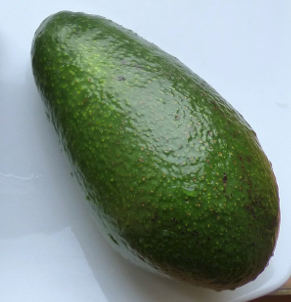
Persea americana synonyms: Persea gratissima, Persea drymifolia, Persea nubigena, Laurus persea
Other species: Persea mexicana, Persea obovatifolia, Persea indica, Persea borbonia.
Hass cultivar, the most widespread in the world, contains a variety of essential nutrients and important phytochemicals.
Composition: 71% monounsaturated fatty acids (MUFA), 13% polyunsaturated fatty acids (PUFA), 16% saturated fatty acids (SFA).
In a fruit of 68 grams are found (1) :
| Substance | mg |
| Potassium | 345 |
| Luteine | 185 |
| Folic acid | 60 |
| Fitosterols | 57 |
| Vitamin A | 43 |
| Magnesium | 19,5 |
| Vitamin K | 14 |
| Choline | 10 |
| Sodium | 5,5 |
| Fiber | 4,6 |
| Vitamin E | 1,3 |
| Niacine | 1,3 |
| Pantothenic acid | 1,0 |
| Vitamin B6 | 0,2 |
| Sugars | 0,2 |
| Vitamin B2 | 0,1 |
Oleic acid is the main monounsaturated fatty acid with anti-inflammatory activity, and palmitic acid the main saturated fat.
One of its components, perseorangin, is a natural pigment that develops an orange-red colour when the seeds are crushed.
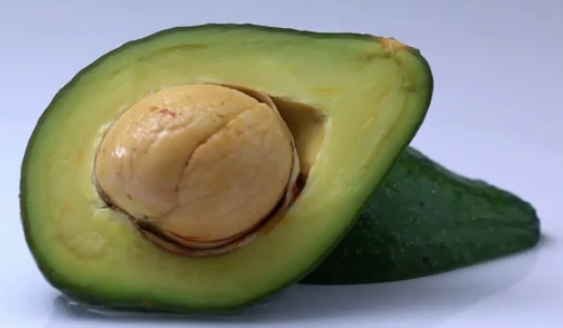
What it is used for and where
Medical
Used as an adjunct in the treatment of osteoarthritis (2) and diabetes (experimentation on rats) (3).
In a 12-week study of overweight or obese women and men where the intake of avocado Hass was a component of a low-calorie diet to lose weight, a significant decrease in serum glucose and decrease in Body Mass Index (in kg/m2) was observed (4).
A composition of one third pear oil and two thirds soybean oil (ASU) is a plant extract that is easily found in pharmacies and herbalists. This study has analyzed it in patients with osteoarthritis of the knee and hip. The results confirmed its beneficial effects on the knee, but not on the hip (5).
An oil with excellent nutritional characteristics is extracted from avocado . However, the characteristics of this oil are directly proportional to the quality, ripeness, method of extraction, extraction temperature, solvents used for extraction and storage of the fruit. Avocado oil contains a high content (69.4%) of monounsaturated fatty acids (antioxidants and anti-inflammatories), while saturated fatty acids represent only 14% of the total (6).
The seeds of avocado, in the form of a centrifuged methanolic extract, can be used as a natural dye re-orange, but above all their antioxidant activity, referred to the high polyphenolic content, could be considered a natural anti-cancer remedy (7).
Cosmetics
Avocado yields an oil that acts in cosmetic formulations as a protective emollient agent and counteracts dehydration and dry skin with the task of restoring and maintaining the skin's moisture levels and increasing its elasticity. The agents responsible for this positive activity are carotenoids, mostly contained in the peel, which, with their antioxidant activity, tend to regenerate the horny layer of the skin (8).
Emollients have the characteristic of enhancing the skin barrier through a source of exogenous lipids that adhere to the skin, improving barrier properties by filling gaps in intercorneocyte clusters to improve hydration while protecting against inflammation. Emollients are described as degreasing or refreshing additives that improve the lipid content of the upper layers of the skin by preventing degreasing and drying of the skin. The problem with emollients is that many have a strong lipophilic character and are identified as occlusive ingredients; they are oily and fatty materials that remain on the skin surface and reduce transepidermal water loss. In cosmetics, emollients and moisturisers are often considered synonymous with humectants and occlusives.
The most relevant studies and their abstracts have been selected to explore this in more depth:

