



Cocos nucifera - Coconut
Description
The coconut is the fruit of the tropical palm Cocos nucifera, a highly characteristic species widely cultivated in coastal regions of Asia, the Pacific and Central America. The fruit has a complex structure: an outer fibrous husk surrounds a very hard woody shell, which protects the inner white flesh (endosperm) and, in younger fruits, the coconut water (liquid endosperm). As the fruit matures, the amount of coconut water gradually decreases, while the flesh thickens, becomes richer in lipids and develops a more intense aroma and flavour.
Fresh coconut flesh is firm, slightly crunchy and pleasantly sweet, with a clearly recognisable tropical character. From this single raw material, an impressive variety of products can be obtained: coconut milk and coconut cream (by aqueous extraction of grated flesh), coconut oil (by pressing the dried kernel, known as copra), desiccated coconut and coconut flour (by drying and milling), as well as coconut water as a ready-to-drink beverage. The strong versatility of coconut is closely linked to its high content of medium-chain fatty acids, particularly lauric acid, which influences both the nutritional profile and the functional behaviour of coconut-based ingredients. In many producer countries, the coconut palm also has major cultural, economic and nutritional importance and is often described as a “tree of life” because so many parts of the plant are used.
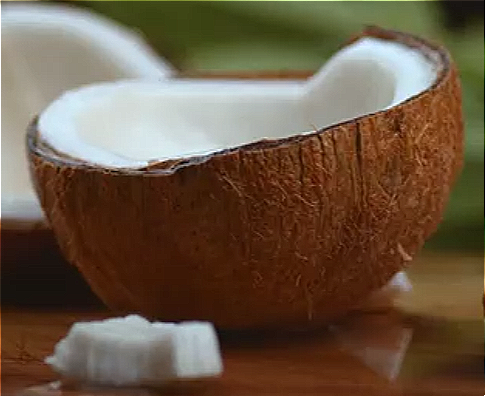
Botanical classification
Common name: coconut
Botanical name: Cocos nucifera
Botanical family: Arecaceae
Geographical origin: tropical regions of Asia, now widespread in all tropical coastal areas of the world
Habit: evergreen palm, single trunk, up to 25–30 meters high
Lifespan: perennial, long-lived (can exceed 80–100 years)
Cultivation and growth conditions
Climate
Requires a tropical or warm subtropical climate.
Grows best in coastal areas with high air humidity.
Needs consistently mild temperatures and absence of frost.
Exposure
Prefers full sun, with at least 6–8 hours of direct light per day.
Sensitive to prolonged shade, which slows growth and reduces productivity.
Soil
Prefers soils that are:
sandy or sandy-loam,
well drained,
moderately rich in organic matter.
Tolerates salinity and coastal soils.
Ideal pH: 5.5–7.5.
Irrigation
Requires constant soil moisture.
In the absence of regular tropical rainfall:
provide regular irrigation without waterlogging;
in the first years, 2–3 irrigations per week;
once established, it tolerates short dry periods.
Temperature
Optimal range: 25–32 °C.
Damage may occur below 10–12 °C.
Temperatures below 4–5 °C can be lethal.
Fertilization
Needs good availability of:
nitrogen (N) for leaf development,
potassium (K) for fruiting and stress resistance,
magnesium (Mg) and boron (B) to prevent yellowing and deformation.
In tropical plantations, 3–4 fertilizer applications per year are common.
Crop care
Remove weeds around the trunk during the first years.
Protect young palms from very strong winds.
Keep the soil mulched in dry climates.
Monitor typical pests:
boring beetles,
mites,
root and collar fungi.
Remove dry or damaged leaves to reduce disease risk.
Harvest
Under optimal conditions, a palm starts producing after 6–8 years.
Fruits take about 10–12 months to ripen.
Harvesting is carried out continuously throughout the year, roughly every 45–60 days.
For coconut water, fruits are harvested young (about 6–7 months).
For copra and oil, fully mature fruits are harvested.
Propagation
Propagation is almost exclusively by seed.
The seed is the whole nut, which naturally germinates after 2–3 months.
For sowing:
use fresh, heavy nuts;
place them on their side, with the germination “eye” upwards;
maintain constant moisture and temperature (25–30 °C).
Techniques such as cuttings or grafting are not used.
Nutritional Facts (Per 100g, Fresh Coconut Flesh)
Nutrient | Amount | % Daily Value (DV) |
|---|---|---|
Energy | 354 kcal | 18% |
Carbohydrates | 15.2 g | 5% |
Sugars | 6.2 g | - |
Fiber | 9.0 g | 36% |
Protein | 3.3 g | 7% |
Total Fat | 33.5 g | 51% |
Saturated Fat | 29.7 g | 149% |
Vitamin C | 3.3 mg | 4% |
Potassium | 356 mg | 10% |
Iron | 2.4 mg | 13% |
Magnesium | 32 mg | 8% |
(Source: USDA FoodData) |
Values may vary slightly depending on cultivar, maturity and analytical source, but they give a reliable order of magnitude for fresh coconut meat.
Coconut is rich in healthy fats, fiber, and essential minerals, but it should be consumed in moderation due to its high calorie and saturated fat content, although the structure of these fats is not as problematic (they are very different from those in lard, for example)
Key constituents
Lipids (triacylglycerols)
Very high proportion of saturated fatty acids, dominated by lauric acid (typically around 45–50% of total fatty acids), plus myristic, palmitic and smaller amounts of capric, caprylic and stearic acids.
Smaller fractions of monounsaturated (oleic) and polyunsaturated (linoleic) fatty acids.
Dietary fibre
Mainly insoluble fibre (cellulose, hemicelluloses, lignin), which contributes to stool bulk and intestinal motility.
Proteins and amino acids
Moderate protein content, with relevant levels of amino acids such as arginine and lysine, but not a complete protein source on its own.
Micronutrients
Manganese, copper, iron, potassium, phosphorus, and small amounts of other trace elements.
Minor and aromatic compounds
Lactones, aldehydes and other volatiles responsible for the characteristic coconut flavour.
Natural phenolic compounds in small amounts, with mild antioxidant activity.
Production process
Harvesting and primary handling
Coconuts are harvested at a suitable degree of maturity depending on the target product: younger fruits for coconut water and softer flesh, fully mature fruits for oil extraction and desiccated products. After harvest, the fibrous husk is removed and the whole nut is inspected, cleaned and sorted.Opening and separation of components
The shell is mechanically opened to recover coconut water (if desired) and to extract the white kernel. The brown inner skin (testa) may be removed to obtain a whiter product (for desiccated coconut or high-grade milk) or retained when colour is less critical.Processing of flesh into derived products
Coconut milk and cream: finely grated flesh is mixed with warm water and then pressed. The emulsion is filtered; further separation (via centrifugation) yields richer coconut cream.
Coconut oil: kernel is dried to obtain copra, which is mechanically pressed or solvent-extracted. The crude oil can be refined, bleached and deodorised (RBD) or marketed as virgin coconut oil when produced by gentler physical processes.
Desiccated coconut / coconut flour: the pressed or unpressed flesh is dried under controlled temperature and humidity, then milled to specific particle sizes.
Stabilisation and packaging
Final products undergo appropriate thermal treatment (pasteurisation or sterilisation for canned milk), drying (for desiccated coconut and flour) or filtration and polishing (for oil), followed by packaging under conditions that protect against oxygen, light and moisture.
Physical properties
Fresh coconut flesh shows a firm, fibrous texture, with moderate water activity and high fat content.
Coconut oil is semi-solid or solid at room temperature in temperate climates, with a melting range around 24–26 °C, due to its high content of medium-chain saturated fats.
Oil density is slightly lower than water, and the low degree of unsaturation gives it high oxidative stability compared with many other vegetable oils.
Desiccated coconut and coconut flour have low moisture and relatively high bulk density, behaving like coarse or fine particulate solids.
Sensory and technological properties
Flavour and aroma: characteristic sweet, creamy and tropical profile, driven by lauric-rich lipids and specific aromatic lactones.
Mouthfeel: coconut ingredients can provide creaminess, full body and a pleasantly unctuous texture to foods and beverages.
Emulsifying and stabilising ability: coconut milk and cream naturally contain emulsified fat droplets, which help stabilise sauces, desserts and curries; however, separation can occur over time, especially at low temperature.
Thermal behaviour: coconut oil maintains a relatively stable profile when used in frying or baking, thanks to its high saturated fat content and low susceptibility to oxidation.
Water-binding and bulking effect: desiccated coconut and coconut flour contribute texture, bulk and water absorption in bakery and confectionery formulations.
Food applications
Bakery and confectionery: cakes, biscuits, cookies, bars, fillings, chocolate confectionery, toppings and decorations using desiccated coconut or coconut flour.
Culinary preparations: coconut milk and cream are widely used in curries, soups, sauces, and stews, especially in Asian, Caribbean and African cuisines.
Beverages: coconut water as a hydrating drink, plant-based “coconut drinks” (coconut beverages) as dairy alternatives, and cocktails.
Frying and cooking fats: coconut oil as a frying medium or culinary fat in both household and industrial applications.
Special nutrition: inclusion in high-energy snacks, bars and certain sports formulations where dense caloric content and MCT are valued.
Nutrition and health
Coconut provides a high energy density, mainly because of its elevated content of saturated fats. For this reason, portion control is important, particularly in people with hypercholesterolaemia or at increased cardiovascular risk. At the same time, a major part of coconut fat is made up of medium-chain triglycerides (MCT), such as lauric, caprylic and capric acid. These fatty acids are absorbed and metabolised somewhat differently from long-chain saturated fats, being transported more rapidly to the liver and used as an energy source. However, their overall impact on blood lipids and long-term cardiovascular outcomes is still debated, and they should not be considered “neutral” by default.
The relatively high fibre content of coconut flesh supports intestinal regularity and contributes to satiety, which may indirectly help with appetite control when coconut is used in small quantities in a balanced diet. The presence of manganese, copper, iron and potassium supports various enzymatic processes and electrolyte balance. Coconut water, in particular, is appreciated as a rehydration drink because of its natural content of potassium and other electrolytes, but it should not replace medical oral rehydration solutions in clinical situations.
In summary, coconut and coconut-based foods can be part of a healthy dietary pattern if consumed in moderation, especially paying attention to total saturated fat intake from all sources.
Portion note
A practical reference portion for fresh coconut flesh is about 30 g, corresponding roughly to a small piece of kernel or around 1–2 tablespoons of desiccated coconut. This amount provides flavour and functional properties in recipes while helping limit total saturated fat and energy intake.
Allergens and intolerances
Coconut is botanically distinct from common tree nuts, but allergic reactions to coconut do occur in susceptible individuals. Although they are relatively rare, cross-reactivity has been described in some people with pre-existing allergies to nuts or latex. In the EU, coconut is not part of the mandatory “top allergens” list, but in other jurisdictions (e.g. some non-EU countries) coconut may be treated as a tree nut for labelling purposes. Clinically documented coconut allergy can manifest as oral allergy symptoms, urticaria or, in rare cases, systemic reactions.
Lactose-intolerant and dairy-allergic consumers often choose coconut-based drinks and yogurts as dairy alternatives. These can be suitable options, provided the consumer checks the label for added ingredients (e.g. soy, nuts, gluten-containing additives) that might introduce other allergens.
Storage and shelf-life
Whole fresh coconuts: when intact and stored in a cool, dry place, they can remain usable for several weeks; once cracked, the flesh should be kept refrigerated and consumed within a few days.
Fresh coconut flesh (cut or grated): should be refrigerated, well covered or in airtight containers, usually with a shelf-life of about 3–5 days.
Desiccated coconut and coconut flour: low moisture content allows storage at ambient temperature in a cool, dry environment, typically for 6–12 months, depending on packaging and fat content.
Coconut oil: thanks to its high saturated fat content, coconut oil has a relatively long shelf-life (often 18–24 months) when packed in opaque or semi-opaque containers and stored away from light and heat.
Coconut milk and cream (canned or aseptic): ambient-stable until opening; after opening, they should be refrigerated and used within 2–5 days.
Shelf-life must always be validated by producers via appropriate stability studies and microbiological testing.
Safety and regulatory
From a safety standpoint, coconut and its derivatives must comply with general food hygiene and contaminant requirements, including limits on mycotoxins, heavy metals, pesticide residues and microbiological criteria. For coconut oil, standards such as the Codex Standard for Named Vegetable Oils (CXS 210) define identity and quality parameters, including permissible ranges for fatty acid profile, acidity, moisture and volatile matter, as well as requirements on organoleptic characteristics (colour, odour, taste).
In the European Union, coconut-derived foods fall under the general framework of Regulation (EU) No 178/2002 (general food law) and Regulation (EU) No 1169/2011 (food information to consumers), alongside any specific national provisions. For coconut-based novel ingredients or highly processed fractions (e.g. new emulsifiers or concentrates), novel food or specific additive legislation may apply.
Labelling
Key labelling points in many jurisdictions include:
Name of the food: clear designation such as “coconut”, “desiccated coconut”, “coconut milk”, “coconut oil”, “coconut drink”, etc., reflecting the product’s nature.
Ingredient list: in composite foods, coconut and coconut derivatives must appear in descending order of quantity, with clear naming (e.g. “coconut oil”, “coconut milk (water, coconut extract)”).
Allergen statement: where coconut is treated as an allergen (depending on jurisdiction), or where coconut is used in products aimed at sensitive groups, an explicit highlighting may be required or recommended.
Nutrition declaration: energy, fat (including saturates), carbohydrate, sugars, protein and salt, plus any mandatory micronutrients, must be declared according to local regulations.
Claims: nutrition or health claims (e.g. related to MCT or “no lactose”) must comply with the relevant legal frameworks and must not mislead consumers about the effects of saturated fat intake.
Troubleshooting
Rancid or off-flavours in coconut oil:
Possible causes: prolonged exposure to light, heat or oxygen, poor quality raw material, or inadequate refining.
Corrective actions: improve packaging (opaque containers), reduce headspace, optimise storage and logistics.
Phase separation in coconut milk or cream:
Typical phenomenon caused by the destabilisation of the fat emulsion, especially at low temperatures.
Corrective actions: gentle shaking or stirring before use, use of suitable emulsifiers or stabilisers, control of thermal treatments and cooling profiles.
Dry, crumbly texture in bakery products with high coconut content:
Possible causes: excessive desiccated coconut or coconut flour, insufficient hydration or binding agents.
Corrective actions: adjust liquid content, increase binders (e.g. eggs, hydrocolloids), combine coconut with other flours.
Insufficient coconut flavour:
Possible causes: old stock, excessive refining of oil, low-aroma varieties.
Corrective actions: use fresher or higher-quality coconut ingredients, consider adding natural coconut flavours if allowed and desired.
Sustainability and supply chain
Coconut production is concentrated in tropical coastal regions, often in developing countries. From a sustainability perspective, several aspects are relevant:
Land use and biodiversity: traditional coconut groves can be relatively biodiversity-friendly, while intensive monocultures may reduce habitat diversity. Integrating coconut into agroforestry systems can support soil health, carbon storage and local ecosystems.
Social and economic conditions: coconut farming involves many smallholder producers. Certification schemes (e.g. Fair Trade, organic) can support fair remuneration, improve working conditions and promote more resilient local economies.
Processing and waste management: coconut processing generates by-products such as husks, shells and press cake. These can be valorised as growing media, fibre products, activated carbon or animal feed, reducing waste and improving overall resource efficiency.
Environmental footprint: coconut oil tends to have a different environmental profile from other tropical oils such as palm oil; however, long supply chains and transport must be considered. Good manufacturing practices and control of BOD/COD in effluents from processing plants are important to protect local water bodies.
Main INCI functions (cosmetics)
Coconut-derived ingredients are widely used in cosmetic and personal care products. Typical INCI names include Cocos Nucifera Oil, Cocos Nucifera Water, Cocos Nucifera Fruit Extract, and derivatives such as Cocamidopropyl Betaine or Coco-Glucoside (from coconut fatty acids and plant-based sugars). Their main cosmetic functions are:
Emollient: coconut oil softens and smooths the skin, supporting the skin barrier by forming a thin lipid film.
Skin conditioning: improves suppleness, reduces roughness and helps decrease transepidermal water loss when properly formulated.
Hair conditioning: in hair care, coconut oil can help reduce protein loss and improve combability and shine in some hair types.
Cleansing and foaming (via derivatives): coconut fatty acids are used to manufacture surfactants (e.g. Coco-Glucoside, Sodium Coco-Sulfate, Cocamidopropyl Betaine), which provide mild cleansing, foam and viscosity in shampoos, shower gels and facial cleansers.
Solvent and carrier: in certain products, coconut oil acts as a lipophilic solvent and carrier for lipophilic active ingredients, fragrance and UV filters.
Regulatory authorities and safety panels have generally evaluated these ingredients as safe for cosmetic use within the recommended concentration ranges, although some derivatives (e.g. Cocamidopropyl Betaine) have been associated with irritation or allergic contact dermatitis in susceptible individuals.
Conclusion
Coconut is a highly versatile tropical fruit that plays important roles in food, nutrition, cosmetics and local economies in many parts of the world. Its flesh and derived products provide energy, fibre, minerals and characteristic flavour and functionality, while its oil offers technological advantages such as oxidative stability and specific textural properties. At the same time, the high proportion of saturated fat requires moderation in dietary use, particularly for individuals concerned about cardiovascular risk.
When produced and sourced through responsible supply chains, with attention to environmental impact and social conditions, coconut and coconut-derived ingredients can make a valuable contribution to diversified, sustainable product portfolios in both the food and cosmetic sectors.
Mini-glossary
SFA (saturated fatty acids): fatty acids without double bonds; excessive intake is associated with increased LDL cholesterol and potentially higher cardiovascular risk.
MUFA (monounsaturated fatty acids): fatty acids with one double bond; often considered cardioprotective when they replace saturated fats in the diet (e.g. oleic acid).
PUFA (polyunsaturated fatty acids): fatty acids with two or more double bonds, including omega-3 and omega-6; they influence inflammation and cardiovascular health depending on type and balance.
MCT (medium-chain triglycerides): triglycerides composed of medium-chain fatty acids (typically C8–C12); more rapidly absorbed and oxidised than long-chain fats, used in clinical nutrition and specialised foods, but not free from metabolic impact.
GMP/HACCP (good manufacturing practice / hazard analysis and critical control points): systems and principles to ensure that foods and cosmetics are produced under controlled, hygienic conditions and that key safety hazards are identified and controlled along the process.
BOD/COD (biochemical oxygen demand / chemical oxygen demand): indicators of the quantity of biodegradable and total oxidisable organic matter in water; important parameters for assessing the environmental impact of industrial effluents from coconut processing and other food industries.
Studies
There are two groups of coconut trees: tall and dwarf. The tall variety gives fruits between 6 and 10 years, while the dwarf variety between 4 and 5 years. The coconut is quite caloric, 354 calories in 10 grams of pulp.
Content (1):
- Ascorbic acid
- Caffeic acid
- Vitamin B3, nicotinic acid or niacin
- Vitamin B5, pantothenic acid
- Vitamin B7, biotin
- Vitamin B2, riboflavin
- Vitamin B9, folic acid
- traces of vitamin B1 thiamine
- traces of vitamin B6 pyridoxine
- selenium
- sugars
- L-Arginine
- Lauric acid
- Myristic acid
- Palmitic acid
The kernel contains about 70% oil that is used in cosmetics and nutrition.
The ethanol extract at 1.5% of the coconut husk has shown an antibacterial action against dental biofilm and can be used as an irrigation solution to overcome bacterial resistance with synthetic agents (2).
Some components of green dwarf coconut water, mainly caffeic acid and ascorbic acid, have demonstrated antioxidant and hepatoprotective activity and reduce DNA damage, thus reducing oxidative stress induced by ethanol metabolism in steatosis and alcoholic steatohepatitis (3).
Coconut water has been used as an intravenous solution in surgery (4).
This study believes that the fiber extract from the lemon peel acts, in certain amounts, on the central nervous system. The resulting anxiolytic and antidepressant effect is related by interaction with the serotonergic system (5).
Cosmetics
Coconut is used as a topical skin care treatment and for repairing the natural function of the skin barrier (6) due to the emollient and anti-infective properties of phenolic acids, vitamins and flavonoids.
Emollients have the characteristic of enhancing the skin barrier through a source of exogenous lipids that adhere to the skin, improving barrier properties by filling gaps in intercorneocyte clusters to improve hydration while protecting against inflammation. Emollients are described as degreasing or refreshing additives that improve the lipid content of the upper layers of the skin by preventing degreasing and drying of the skin. The problem with emollients is that many have a strong lipophilic character and are identified as occlusive ingredients; they are oily and fatty materials that remain on the skin surface and reduce transepidermal water loss. In cosmetics, emollients and moisturisers are often considered synonymous with humectants and occlusives.
Safety
Coconut and its derived products were initially classified as unhealthy due to the significant presence of fatty acids believed to be saturated, but scientific research has recently shown that there are in fact medium-chain fatty acids (7). In particular, lauric acid, as a primary fatty acid behaves as a medium and long chain fatty acid (8).
The most relevant studies have been selected to explore this in more depth:
(1) DebMandal M, Mandal S. Coconut (Cocos nucifera L.: Arecaceae): in health promotion and disease prevention. Asian Pac J Trop Med. 2011 Mar;4(3):241-7. doi: 10.1016/S1995-7645(11)60078-3.
Narayan KK, Deo JV, Abani MC. Natural tritium levels in tender and ripe coconut fruit (Cocos nucifera L.): a preliminary examination. Sci Total Environ. 2000 Jul 10;256(2-3):233-7. doi: 10.1016/s0048-9697(00)00482-4.
Abstract. Tissue Free Water Tritium concentrations (TFWT) were determined in tender coconut (Cocos nucifera L.) water, ripe coconut water, and kernel milk water, and compared with the same in groundwater collected from the vicinity of the trees. Samples with a very low tritium content were enriched by the alkaline electrolysis method. All of the samples were analyzed for tritium content in an ultra-low level liquid scintillation spectrometer. The TFWT in kernel milk water was found to be approximately 20-40 times higher than that in the groundwater. The tritium concentration in descending order in these samples is: kernel milk water, ripe coconut water, tender coconut water, and groundwater. The concentration of tritium increases as the fruit grows and the significantly high concentration in the kernel milk water suggests enrichment during the growth of the fruit.
(2) Kohli D, Hugar SM, Bhat KG, Shah PP, Mundada MV, Badakar CM. Comparative evaluation of the antimicrobial susceptibility and cytotoxicity of husk extract of Cocos nucifera and chlorhexidine as irrigating solutions against Enterococcus Faecalis, Prevotella Intermedia and Porphyromonas Gingivalis - An in-vitro study. J Indian Soc Pedod Prev Dent. 2018 Apr-Jun;36(2):142-150. doi: 10.4103/JISPPD.JISPPD_1176_17
Abstract. Aim and background: The aim of the present study is to evaluate and compare the antimicrobial susceptibility and cytotoxicity of Cocos nucifera and chlorhexidine (CHX) as irrigating solutions against Enterococcus faecalis, Prevotella intermedia, and Porphyromonas gingivalis. Materials and methods: The ethanolic extract of husk of C. nucifera was prepared. The minimum inhibitory concentration (MIC) and minimum bactericidal concentration (MBC) of the extract were determined using the serial broth dilution method and its cytotoxicity was evaluated against human periodontal fibroblasts using 3-(4,5-dimethyl-thiazole-2-yl)-2,5-diphenyl tetrazolium bromide assay. Antibacterial susceptibility for two irrigating solutions, namely 2% CHX gluconate irrigant (Group I) and 1.5% C. nucifera husk irrigant (Group II), was tested against P. gingivalis, P. intermedia, and E. faecalis. Results: The MIC and MBC of C. nucifera husk extract for P. gingivalis were 468.75 μg/ml and 1562.5 μg/ml, for P. intermedia were 48.8 μg/ml and 1875 μg/ml, and for E. faecalis were 1562.5 μg/ml and 3750 μg/ml, respectively. The extract was nontoxic to the human periodontal fibroblast. Both the materials have shown similar antibacterial susceptibility and no difference was observed at baseline, 10, 30, and 60 min using two-way repeated measures of ANOVA. However, a statistically significant difference was observed between different time points for P. gingivalis a

