



The Strawberry tree (Arbutus unedo L) is an evergreen plant that reaches and exceeds 3 metres in height. It belongs to the Ericaceae family and is distributed in the Mediterranean area. The fruits are used for the preparation of jams, infusions and liqueurs. The strawberry tree is also used to produce a bitter-tasting honey.
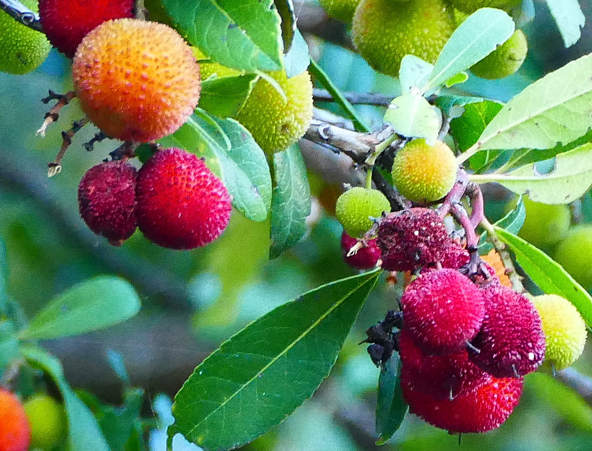
Arbutus unedo, commonly known as the strawberry tree, is an evergreen shrub or small tree distinguished by its red, strawberry-like fruits and delicate, bell-shaped white to pink flowers. Native to the Mediterranean region and parts of Western Europe, Arbutus unedo is valued both for its ornamental appeal and its edible fruits, often used in traditional recipes. In folk medicine, this plant is recognized for its potential antioxidant, diuretic, and anti-inflammatory properties.
Botanical Classification
- Kingdom: Plantae
- Clade: Tracheophytes
- Class: Magnoliopsida
- Order: Ericales
- Family: Ericaceae
- Genus: Arbutus
- Species: Arbutus unedo
Plant Characteristics
Arbutus unedo is a slow-growing, evergreen shrub or small tree that can reach heights of 5–10 meters. It has dark green, leathery, serrated leaves and produces clusters of small, bell-shaped flowers in autumn. The flowers, which range from white to pink, often appear alongside the fruits, creating an attractive display. The fruits are round, red, and bumpy, resembling strawberries. They take about a year to mature, transitioning from green to orange and then to bright red when fully ripe.
Chemical Composition and Structure
The various parts of Arbutus unedo, particularly its fruits, leaves, and bark, contain bioactive compounds that contribute to its medicinal and nutritional properties:
Antioxidants: Polyphenols and flavonoids, which help combat oxidative stress and protect cells from free radical damage.
Arbutin: A phenolic glycoside primarily found in the leaves, known for its antimicrobial and skin-brightening properties, used in some skincare treatments.
Tannins: Astringent compounds that may offer anti-inflammatory effects and have been used in traditional remedies for gastrointestinal issues.
Organic Acids: Including malic and citric acids, which contribute to the slightly tart flavor of the fruits and aid digestion.
Vitamins and Minerals: Contains vitamin C and other nutrients that support immune health and add to the fruit’s nutritional value.
Studies
Medical
In traditional medical science, the fruits and leaves of Arbutus unedo have been used as diuretics, antiseptics, laxatives and to treat high blood pressure.
In the phytochemical composition of the fruits we find (1)
- phenolic compounds: gallic acid, protocatechuic acid, gentisic acid, p-hydroxybenzoic acid, vanillic acid, catechin, procyanidin, ellagic acid
- unsaturated fatty acids: α-linolenic (36%), linoleic (21%) and oleic (21%)
- saturated fatty acids: palmitic acid (8%)
- vitamins: vitamin E, α-, β-, γ- and δ-tocopherol and α-tocotrienol, vitamin C
- sugars: fructose and glucose
In the phytochemical composition of the leaves we find
phenolic compounds: arbutin (hydroquinone β-glucoside), chlorogenic acid, quercitrin, isoquercitrin
- flavanols: catechins
- flavonols: quercetin, kaempferol
- vitamins: α-tocopherol
In the phytochemical composition of the root we find:
- flavanols: catechins
- phenolic compounds: benzoic acid, caffeic acid, gallic acid
Now let us see what properties and contraindications are attributed to this plant by the scientific literature: antioxidant activity in the fruit and leaves, anti-fungal activity in the leaves, anti-inflammatory activity in the leaves, antibacterial activity in the root. However, it should be borne in mind that all these properties are conditioned by important factors that determine their quality and effectiveness: harvest time, climate, possible environmental pollution and more.
Food safety
Arbutin is the phenolic component of the leaves that has shown antioxidant activity and a low potential for DNA damage, but it seems to be understood that excessive doses of this component could somehow have an undesirable effect (2).
Cosmetics
The antifungal activity of phenolic compounds is useful in cosmetic formulations to prevent fungal formations from attacking the product over time. The antioxidant activity helps with preservation.
Read more:

