



Salvia sclarea
Description
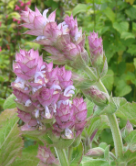
Salvia sclarea, commonly known as clary sage, is a biennial or short-lived perennial herb of the family Lamiaceae, native to the Mediterranean basin and parts of Western Asia, and now cultivated in many temperate regions. The plant forms a basal rosette of large, rugose, grey-green leaves, softly hairy and strongly aromatic. In the second year it develops tall, branching flowering stems bearing showy spikes of flowers with coloured bracts ranging from whitish to pink and lilac.
The flowers and bracts exude a characteristic sweet, herbaceous and musky aroma, which has made Salvia sclarea one of the classic plants for the production of essential oil used in perfumery, cosmetics, aromatherapy and certain flavour applications. Traditionally, clary sage has also been used in herbalism as an aromatic plant, and in some regions as a flavouring in wines and liqueurs.
Botanical classification
Common names: clary sage, muscatel sage
Botanical name: Salvia sclarea
Botanical family: Lamiaceae
Native range: Mediterranean regions and south-western Asia
Habit: biennial or short-lived perennial herb
Height: 60–120 cm
Lifespan: biennial or short-lived perennial
Cultivation and growth conditions
Climate
Prefers temperate and Mediterranean climates.
Tolerates drought and moderate heat quite well.
Sensitive to severe and prolonged frosts at early growth stages.
Exposure
Grows best in full sun, where aroma and essential oil content are maximized.
Tolerates light partial shade, but with reduced flowering and aroma.
Soil
Prefers soils that are:
calcareous or loamy-sandy,
well drained,
moderately fertile.
Avoid heavy, waterlogged soils.
Ideal pH: 6.0–7.5.
Irrigation
Requires moderate watering:
water regularly after transplanting;
once established, it needs little irrigation;
avoid waterlogging to prevent root rot.
Temperature
Optimal range: 18–28 °C.
Mature plants withstand down to about –5 °C.
Young plants should be protected from hard frost.
Fertilization
Does not need heavy fertilization.
You can add small amounts of:
nitrogen (N) for initial leaf growth,
phosphorus (P) and potassium (K) to support flowering and aromatic oil production.
Avoid excessive nitrogen, which can dilute essential oil concentration.
Crop care
Keep the crop free of weeds, especially in the first months.
Remove spent flower spikes to encourage new growth and maintain shape.
In cold regions, mulch around the base to protect the crown in winter.
Monitor for pests such as aphids, spider mites and leaf fungi in very humid conditions.
Harvest
Leaves can be harvested from spring to summer.
Flowering tops are collected at full bloom in summer, when essential oil content is highest.
For medicinal and aromatic uses, harvest in the morning after the dew has dried.
Propagation
Main methods:
seed, the most common,
semi-woody cuttings in summer,
division of clumps in spring.
Seeds need a light substrate and mild temperatures (around 15–20 °C) for good germination.
Indicative nutritional values per 100 g (dried leaves)
(Approximate values for herbal dry matter; in typical use, intake is much lower.)
Energy: 250–330 kcal
Carbohydrates: 30–40 g
Total fibre: 25–30 g
Protein: 5–8 g
Total fat: 4–7 g
Major minerals: calcium, potassium, magnesium, iron
Vitamins: small residual amounts of B-group vitamins and vitamin C
Key constituents
Volatile compounds (essential oil)
Linalyl acetate (often the dominant ester in high-quality clary sage oil)
Linalool
Sclareol (characteristic diterpene)
Other mono- and sesquiterpenes contributing to the sweet, musky, slightly spicy aroma
Non-volatile phytochemicals
Phenolic acids (e.g. caffeic, rosmarinic, ferulic acids)
Flavonoids (including luteolin, apigenin and their glycosides)
Tannins
Bitter substances and additional terpenoids
Nutrient minerals and trace elements naturally present in the plant tissue
Production process
Cultivation
Clary sage is usually grown in temperate climates on well-drained, moderately fertile soils with good sun exposure. Crops are often managed in multi-year rotations to maintain soil health.
Harvesting
For herbal uses, leaves and flowering tops are harvested at the onset or during full bloom, when essential oil content and aromatic intensity are highest.
Cleaning and drying
Fresh material is cleaned to remove soil and foreign plant parts, then dried at low temperature in well-ventilated conditions or controlled dryers, to preserve colour and volatile constituents.
Cutting and grading
Dried leaves and tops are cut and sieved to suitable particle size for herbal teas, blends or as starting material for extraction.
Essential oil production
The essential oil is obtained by steam distillation of freshly cut flowering tops (and sometimes leaves). The distillate is separated into aqueous phase and essential oil, which is then decanted, dried and filtered before storage.
Stabilisation and packaging
Herbal material is packed in airtight, light-protected containers.
Essential oil is filled into dark glass or other suitable containers, with minimal headspace, and stored in cool conditions to limit oxidation and loss of volatiles.
Physical properties
Dried leaves and tops: grey-green, slightly rough surface, characteristic aromatic odour, low bulk density.
Essential oil: clear, from colourless to pale yellow, mobile liquid with high volatility.
Solubility: herbal components are extracted reasonably well by hot water; essential oil is lipophilic and soluble in organic solvents and cosmetic oils, but not in water except with emulsifiers or solubilisers.
Sensory and technological properties
Aroma: intense sweet, herbaceous, floral-musky scent with soft balsamic and slightly spicy facets, highly valued in fine fragrance and aromatherapy.
Flavour: mildly bitter, aromatic and warm, requiring moderate doses in food and herbal preparations.
Technological behaviour:
In herbal infusions, clary sage contributes aroma and a gentle bitter note; extraction efficiency depends on particle size and infusion conditions.
In perfumes and cosmetics, clary sage oil offers good tenacity and works well as a heart to base note in many compositions, blending particularly well with citrus, lavender, woody and amber notes.
The presence of oxidation-sensitive terpenes requires appropriate antioxidants and packaging to maintain stability in finished products.
Food applications
Herbal teas and blends: dried leaves and flowering tops are used in aromatic infusions, on their own or in combination with other Lamiaceae and botanicals.
Flavouring of beverages and liqueurs: in some traditional recipes, clary sage is used to aromatise liqueurs, fortified wines or regional spirits.
Culinary use (limited): occasional use as an aromatic herb in savoury dishes or bakery products, generally in small amounts due to its strong flavour.
In all cases, clary sage is used as a seasoning or herbal ingredient, not as a bulk food.
Nutrition and health
From a nutritional standpoint, Salvia sclarea is not consumed in large quantities, so its contribution in terms of macronutrients is modest. Its interest lies mainly in the phytochemical profile, particularly essential oil components and phenolic compounds.
Traditional herbal practice has associated clary sage with digestive and aromatic uses, as well as with a general sense of olfactory relaxation due to its soft, enveloping scent. The phenolic acids and flavonoids contribute to a typical antioxidant profile similar to other Lamiaceae. Herbal infusions are generally well tolerated when consumed in moderate amounts as part of a balanced diet.
The essential oil, being a concentrated mixture of volatile compounds, should be used with caution and only within recognised guidelines for food or aromatherapy use. It is not intended for high-dose ingestion or uncontrolled internal use.
Portion note
For a standard herbal infusion of clary sage:
About 1–2 g of dried leaves or flowering tops in 200 ml of hot water, with an infusion time of 5–10 minutes, is a common reference.
This provides a noticeable but not excessive aroma and bitter-aromatic taste.
Allergens and intolerances
Clary sage is not among the major food allergens defined in common regulatory lists. However:
People with known sensitivity to Lamiaceae (mint family plants) or to strong aromatic herbs may experience mild reactions.
The essential oil can cause skin irritation or sensitisation in susceptible individuals if used undiluted or at excessive concentrations in topical products.
As with many aromatics, a cautious approach is advisable for pregnant or breastfeeding women, children and people with specific medical conditions, especially when considering essential oil use.
Herbal infusions at typical doses are generally well tolerated in healthy adults.
Storage and shelf-life
Dried herb:
Store in airtight containers, protected from light, heat and moisture.
Typical shelf-life: about 12–24 months, with gradual loss of aroma over time.
Essential oil:
Store in dark glass bottles (or other suitable light-protective packaging), tightly closed, in a cool place.
Typical shelf-life: around 24–36 months under good storage conditions; oxidation may lead to changes in odour and potentially increased irritancy.
Any sign of off-odours, strong oxidation notes or visible changes suggests the material should be re-evaluated before use.
Safety and regulatory
Dried leaves and flowering tops of Salvia sclarea are considered safe herbal ingredients when produced under good agricultural and collection practices and used in normal amounts. They must comply with general regulations on botanicals, including limits for pesticide residues, heavy metals, mycotoxins and microbiological quality.
The essential oil is subject to specific quality and safety standards, including:
Requirements on identity and purity (e.g. characteristic ranges of linalyl acetate, linalool, sclareol, etc.).
Control of residual solvents (if relevant), contaminants and adulteration.
Compliance with regulations for flavourings, cosmetic ingredients or aromatherapy products, depending on use.
In the cosmetic field, clary sage oil and extracts must be assessed in accordance with applicable cosmetic regulations, including safety assessment, maximum recommended concentrations and labelling of any relevant allergens (e.g. linalool, limonene, etc., when present above regulatory thresholds).
Labelling
For food, herbal and cosmetic products containing Salvia sclarea, labelling usually covers:
Ingredient name: explicit indication of botanical name (e.g. “Salvia sclarea”) and plant part (“leaf”, “flowering tops”, “oil”, “extract”).
Ingredient list: clary sage listed among other ingredients in descending order by weight (for foods) or according to cosmetic labelling rules (INCI).
Instructions for use: for teas, recommended dosage, volume of water, infusion time and frequency; for essential oil-containing products, usage instructions and any dilution guidance.
Storage conditions: advice such as “store in a cool, dry place away from light”.
Warnings (if applicable): e.g. not suitable for young children, not to be used undiluted on the skin, not intended to replace a varied diet and healthy lifestyle, and any additional guidance required by national laws.
Troubleshooting
Weak aroma in herbal material
Possible causes: old stock, poor drying, or excessive exposure to air and light.
Actions: improve harvest timing, drying conditions and packaging; use fresher batches.
Infusion too bitter or overpowering
Possible causes: excessive dose of herb or prolonged infusion time.
Actions: reduce herb amount, shorten steeping time, blend with milder botanicals to balance flavour.
Oxidised or harsh-smelling essential oil
Possible causes: storage at high temperature, prolonged exposure to oxygen or light.
Actions: improve container closure, use dark glass, store cool, consider adding appropriate antioxidants where permitted.
Moisture problems in dried herb
Possible causes: insufficient drying or storage in humid conditions.
Actions: verify final moisture content, improve warehouse climate, use suitable packaging and, where allowed, desiccants.
Sustainability and supply chain
Clary sage can be readily cultivated, which reduces pressure on wild populations and supports a controlled, traceable supply chain. Key sustainability aspects include:
Agronomic practices: use of crop rotations, reduced agrochemical inputs, and soil conservation measures to maintain long-term productivity.
Water and energy use: optimisation of irrigation and distillation processes to minimise resource consumption.
By-product management: utilisation of spent plant material from distillation as mulch, compost or other agricultural inputs, limiting waste.
Traceability: documentation of origin, cultivation conditions and processing steps to support quality, safety and responsible sourcing.
Environmental monitoring: control of BOD/COD and other indicators in effluents from distillation and cleaning operations to reduce environmental impact.
When grown and processed with good practices, Salvia sclarea fits well within sustainable aromatic plant supply chains and can contribute to local rural economies.
Main INCI functions (cosmetics)
In cosmetics and personal care products, clary sage-derived ingredients appear under INCI names such as Salvia Sclarea Oil, Salvia Sclarea Extract or similar. Their main functions include:
Fragrance: providing a natural, musky, herbaceous-floral scent in perfumes, creams, lotions and toiletries.
Skin conditioning: helping to keep the skin in good condition, contributing to a pleasant feel.
Toning and refreshing: inclusion in tonics and lotions for a mild toning sensation.
Antioxidant contribution: the polyphenolic fraction may support the protection of formulas and, indirectly, the skin surface from oxidative processes.
Aromatic use in aromatherapy products: used for its characteristic relaxing and balancing olfactory profile, within the constraints of safety and regulatory frameworks.
Conclusion
Salvia sclarea (clary sage) is an aromatic plant of high value, combining a distinctive musky-herbaceous fragrance with a rich phytochemical profile typical of the Lamiaceae family. While its role in nutrition is minor in quantitative terms, it is widely appreciated as a herbal ingredient in infusions and as a flavouring in selected traditional beverages. Its greatest importance lies in the production of essential oil, a key material for perfumery, cosmetics and aromatherapy.
When cultivated and processed responsibly, with attention to quality, safety and environmental performance, clary sage offers a versatile and sustainable resource for food, herbal and cosmetic industries, linking botanical tradition with modern product development.
Studies
Clary sage essential oil has been used in traditional medical science as a remedy for gingivitis and other oral ailments. Linoleic acid is the main fatty acid, then we find oleic acid and linolenic acid, both of which are fatty acids and are found in the seeds in percentages of 18%, 22% and 50% respectively. The percentages vary greatly depending on the area of cultivation, climatic conditions, harvest time (1). These fatty acids are promoters of antioxidant, anti-inflammatory, neuroprotective, anti-obesity and gut flora regulation activities along with the dominant volatile compounds beta-pinene and limonene. Another interesting component, Sclareol, a natural diterpene used as a perfume, together with the alcohol monoterpene Linalool and the ester monoterpene Linalyl acetate have demonstrated antifungal activity against different strains of the Candida genus and inhibited the growth of the pathogenic fungi Rhizoctonia solani, Botrytis cinerea, Fusarium oxysporum and Alternaria solania (2).
Other components: camphor, camphene, bornyl acetate, 1,8-cineole.
Cosmetics
Sclareol diterpene is of value to the cosmetics industry as a raw material for ambergris substitutes used in high-end perfumes and is found in the trichomes of Salvia sclarea. It is also included in cosmetic formulas as an antiseptic and anti-inflammatory. It is credited with astringent properties on the skin that can tighten pores and heal small wounds. Aromatherapy.
For more information:
Typical commercial product characteristicsClary Sage Oil
| Appearance | Pale yellow to Dark green |
| Boiling Span | 179℃ |
| Specific Gravity | 0.88600 to 0.92900 @ 25.00°C g/ml 0.890 - 0.930 @ 20°C |
| Refractive Index | 1.45800 to 1.47300 @ 20.00 °C 1.455 - 1.470 @ 20°C |
| Optical Rotation | -6.00 to -20.00 -26° to -6°; -10 -3°—+24° |
| Saponification value | 14—57 |
| Saponification value after acetylation | 56—98 |
| Camphor | ≥32% |
| Thujone | ≥30% |
| Eucalyptol | ≥19% |
| Shelf Life | 2 years |
Mini-glossary
Linalyl acetate: a major ester in clary sage essential oil, providing sweet, fruity-floral and slightly musky notes.
Linalool: a terpene alcohol with a floral, lavender-like scent, common in many aromatic plants.
Sclareol: a characteristic diterpene of Salvia sclarea, contributing to aroma and used as a starting point for certain fragrance materials.
Lamiaceae: botanical family including sage, mint, rosemary, thyme, lavender and many other aromatic herbs.
GMP/HACCP (good manufacturing practice / hazard analysis and critical control points): systems that ensure controlled, hygienic production and systematic management of safety-critical steps.
BOD/COD (biochemical oxygen demand / chemical oxygen demand): parameters used to evaluate the organic load of wastewaters and the environmental impact of processing plants.

