



Sorbitan sesquioleate (SSO) is a chemical compound obtained synthetically by the esterification of sorbitan (dehydrated sorbitol) with fatty acids. The fatty acids used to synthesise sorbitan esters generally include, palmitic acid, lauric acid, oleic acid and stearic acid. The esterification process involves a reaction between an alcohol, in this case sorbitol, and a carboxylic acid, oleic acid, to produce the ester Sorbitan sesquioleate.
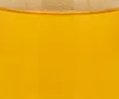
It appears as a viscous yellowish liquid that is slightly soluble in ethanol, ethyl acetate, in fatty and mineral oils, petroleum and toluene, and dispersible in water. Insoluble in cold and hot water.
What it is used for and where
Cosmetics
Sorbitan esters are non-ionic lipophilic surfactants that are commonly used as emulsifiers and stabilisers in the formulation of cosmetic creams.
Surfactant - Emulsifying agent. Emulsions are thermodynamically unstable and are used to soothe or soften the skin and emulsify, so they need a specific, stabilising ingredient. This ingredient forms a film, lowers the surface tension and makes two immiscible liquids miscible. A very important factor affecting the stability of the emulsion is the amount of the emulsifying agent. Emulsifiers have the property of reducing the oil/water or water/oil interfacial tension, improving the stability of the emulsion and also directly influencing the stability, sensory properties and surface tension of sunscreens by modulating the filmometric performance.
Emulsifier in water/oil solutions with a value of 3.7 HLB. Generally, the hydrophilic-lipophilic balance (HLB) range is between 1.6 - 8.6, which makes them dissolvable in polar organic solvents and oils.
Food
Sorbitan sesquioleate functions as an emulsifier in food products. Emulsifiers have the property of directly influencing the stability, sensory properties and surface tension of sunscreens by modulating their filmometric performance.
Other Uses
Co-solvent and anti-rust agent for petroleum and oil.
Applications
- Skin Care Products - Due to its emollient properties, it's found in various skincare products like moisturizing creams and lotions.
- Makeup Products - Can be used in foundations, concealers, and other makeup products to improve their consistency and application.
- Hair Care Products - Used in conditioners and hair treatments due to its conditioning properties.
- Pharmaceutical - Can be used as a vehicle in topical pharmaceutical preparations.
Safety
Sorbitan sesquioleate has a modest allergy index. A study by the Cosmetic Ingredient Review Expert panel was credited with an allergy rate of less than 1% (1).
Typical commercial product characteristics Sorbitan sesquioleate
| Appearance | Viscous Liquid Pale Yellow or Brown |
| Boiling Point | 738.7ºC at 760 mmHg |
| Flash Point | 205.1ºC |
| Density | 0.993g/cm3 0.989 g/mL at 25 °C(lit.) |
| PSA | 292.20000 |
| LogP | 13.24590 |
| Refraction Index | 1.493 |
| Vapor Pressure | 0.81 psi ( 20 °C) |
| Acid value | 8.5 mgKOH/g |
| Hydroxyl value | 188 mgKOH/g |
| Saponification Value | 149 mgKOH/g |
| Water Content | ≤ 1 % |
| Viscosity | 1500 mPa.s |

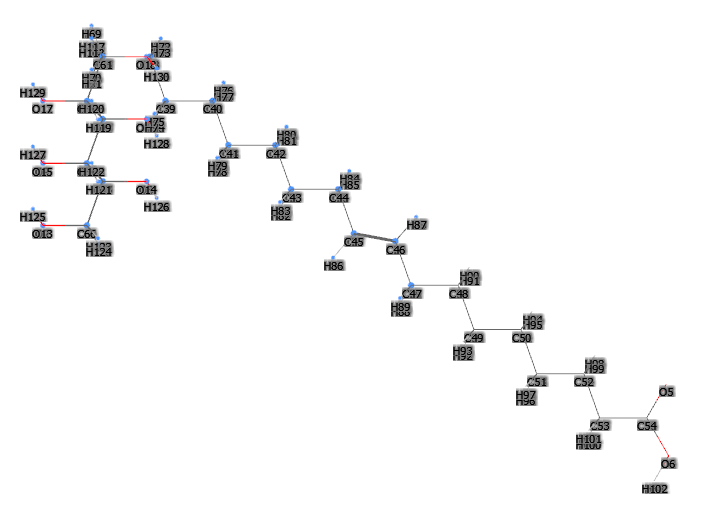
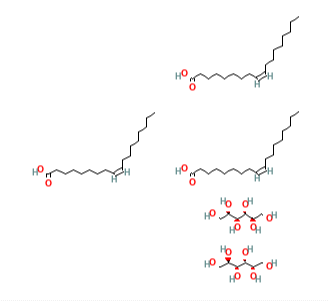
- Molecular Formula C66H126O16
- Molecular Weight 1175.70000
- Exact Mass 1174.90000
- CAS 8007-43-0
- UNII 0W8RRI5W5A
- EC Number 232-360-1
- DSSTox Substance ID
- IUPAC (2R,3R,4R,5S)-hexane-1,2,3,4,5,6-hexol;(Z)-octadec-9-enoic acid
- InChl=1S/3C18H34O2.2C6H14O6/c3*1-2-3-4-5-6-7-8-9-10-11-12-13-14-15-16-17-18(19)20;2*7-1-3(9)5(11)6(12)4(10)2-8/h3*9-10H,2-8,11-17H2,1H3,(H,19,20);2*3-12H,1-2H2/b3*10-9-;;/t;;;2*3-,4+,5-,6-/m...11/s1
- InChl Key CUNWUEBNSZSNRX-RKGWDQTMSA-N
- SMILES CCCCCCCCC=CCCCCCCCC(=O)O.CCCCCCCCC=CCCCCCCCC(=O)O.CCCCCCCCC=CCCCCCCCC(=O)O.C(C(C(C(C(CO)O)O)O)O)O.C(C(C(C(C(CO)O)O)O)O)O
- MDL number MFCD00151568
- PubChem Substance ID 329824531
- RTECS WG2934330
- NACRES NA.25
- RXCUI 1363058
Synonyms
- Span® 83
- Sorbitan, (Z)-9-octadecenoate (2:3)
- Arlacel® 83
- Sorgen 30
- Sorbitanum sesquioleylatum
- Anhydrohexitol sesquioleate
- (2R,3R,4R,5S)-hexane-1,2,3,4,5,6-hexol;(Z)-octadec-9-enoic acid

