

|

|
| App | Log in |
|
|
|
| App | Log in |

 | "Descrizione" by CarPas (5099 pt) | 2022-Sep-05 18:34 |
Review Consensus: 10 Rating: 10 Number of users: 1
| Evaluation | N. Experts | Evaluation | N. Experts |
|---|---|---|---|
| 1 | 6 | ||
| 2 | 7 | ||
| 3 | 8 | ||
| 4 | 9 | ||
| 5 | 10 |
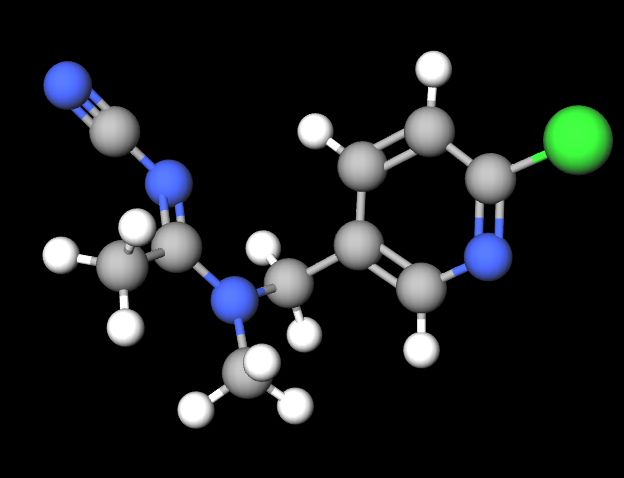
Acetamiprid is a natural product found in Streptomyces canus (Nouioui et al. 2018), a species of bacterium and, in synthetic form, commercially available as an insecticide.
It appears in the form of a white powder stable to hydrolysis, in water it undergoes slow photodegradation.

What it is used for and where
First-generation broad-spectrum neonicotinoid insecticide, nicotinic acetylcholine receptor of insects used to control aphids on vegetables and fruit. It appeared on the market in 1980, gained notoriety for its low toxicity and was used worldwide as an active ingredient for pest control. Most neonicotinoids act as systemic pesticides while the application of Acetamiprid is directly on foliage. The warning is not to apply it during flowering as bumblebees and other pollinating insects may take it up through nectar or pollen. Another important warning is not to take the fruit of the tree on whose leaves Acetamiprid was sprayed for at least 14 days after spraying.
The intensive use of insecticides has developed resistance against insecticides in general. This study provides information on the management of resistance development in field populations of certain aphids (1). The best results in combating aphids by Acetamiprid were found on aphids in apples, cucumbers, tobacco and citrus fruit as the effect of Acetamiprid effectively combats pests that show resistance to pyrethroid, carbamate and organophosphorus pesticides. Furthermore, Acetamiprid, although belonging to the same series as the insecticide Imidacloprid, has a broader spectrum of action.
Safety
It is considered a safe insecticide, some studies have found some toxicity, but the data remain contradictory (2). Acetamiprid has not been recognised as persistent in soil and its degradation is exhausted in about 43 days (3).
For more information: Acetamiprid studies
Typical commercial product characteristics Acetamiprid
| Appearance | White powder |
| Boiling Point | 352.4±52.0 °C at 760 mmHg |
| Melting Point | 101-103ºC |
| Flash Point | 166.9±30.7°C |
| Solubility | 1 mM 4.4910 mL 22.4548 mL 44.9095 mL 5 mM 0.8982 mL 4.4910 mL 8.9819 mL 10 mM 0.4491 mL 2.2455 mL 4.4910 mL |
| PSA | 52.28000 |
| LogP | 0.62 |
| Refraction Index | 1.571 |
| Vapor Pressure | 0.0±0.8 mmHg at 25°C |
| Water | ≤1.0% |
| Loss on drying | ≤2.0% |
| Sulphated ash | ≤0.2%/g |
| Residue on ignition | ≤0.1% |
| Impurities | ≤0.05% |
| Storage | 2-8°C |
| Safety | 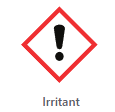 |
 |  |
 |  |
Price
100 mg €121.00
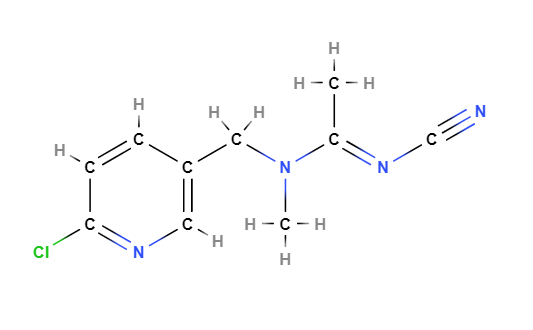
- Molecular Formula C10H11ClN4
- Molecular Weight 222.67
- Exact Mass 222.067230
- CAS 160430-64-8 135410-20-7
- UNII 5HL5N372P0
- EC Number 603-921-1
- DSSTox Substance ID DTXSID0034300 DTXSID901015148
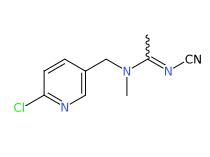
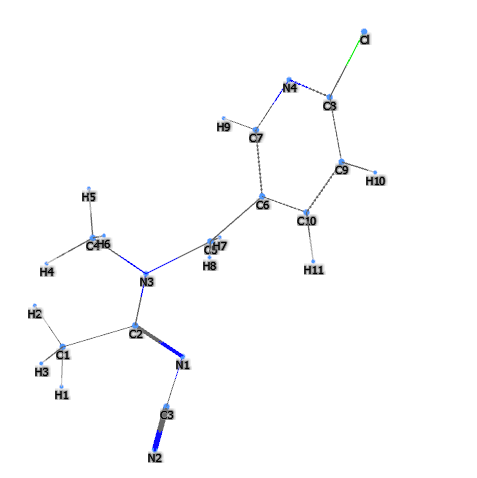
- IUPAC N-[(6-chloropyridin-3-yl)methyl]-N'-cyano-N-methylethanimidamide
- InChI=1S/C10H11ClN4/c1-8(14-7-12)15(2)6-9-3-4-10(11)13-5-9/h3-5H,6H2,1-2H3
- InChl Key WCXDHFDTOYPNIE-UHFFFAOYSA-N
- SMILES CC(=NC#N)N(C)CC1=CN=C(C=C1)Cl
- MDL number MFCD06201842
- PubChem Substance ID 329754617
- ChEBI 39163 39164
- NACRES NA.24
- RTECS KJ4235200
- RIDADR UN 2811
- HS Code 2933399022
Synonyms
- N-[(6-chloropyridin-3-yl)methyl]-N'-cyano-N-methylethanimidamide
- N-(6-Chloro-3-pyridylmethyl)-N-cyano-N-methylacetamidine
- Mospilan
- Ethanimidamide, N-((6-chloro-3-pyridinyl)methyl)-N'-cyano-N-methyl-, (E)-
References_______________________________________________________________________
(1) Ullah F, Gul H, Tariq K, Desneux N, Gao X, Song D. Acetamiprid resistance and fitness costs of melon aphid, Aphis gossypii: An age-stage, two-sex life table study. Pestic Biochem Physiol. 2021 Jan;171:104729. doi: 10.1016/j.pestbp.2020.104729.
(2) Calderón-Segura ME, Gómez-Arroyo S, Villalobos-Pietrini R, Martínez-Valenzuela C, Carbajal-López Y, Calderón-Ezquerro Mdel C, Cortés-Eslava J, García-Martínez R, Flores-Ramírez D, Rodríguez-Romero MI, Méndez-Pérez P, Bañuelos-Ruíz E. Evaluation of genotoxic and cytotoxic effects in human peripheral blood lymphocytes exposed in vitro to neonicotinoid insecticides news. J Toxicol. 2012;2012:612647. doi: 10.1155/2012/612647.
(3) European Food Safety Authority (EFSA). Statement on the impact of the harmonised classification on the conclusion on the peer review of the pesticide risk assessment of the active substance flutianil. EFSA J. 2018 Jul 27;16(7):e05383. doi: 10.2903/j.efsa.2018.5383.

