



Siberian fir (Abies sibirica Ledeb.)
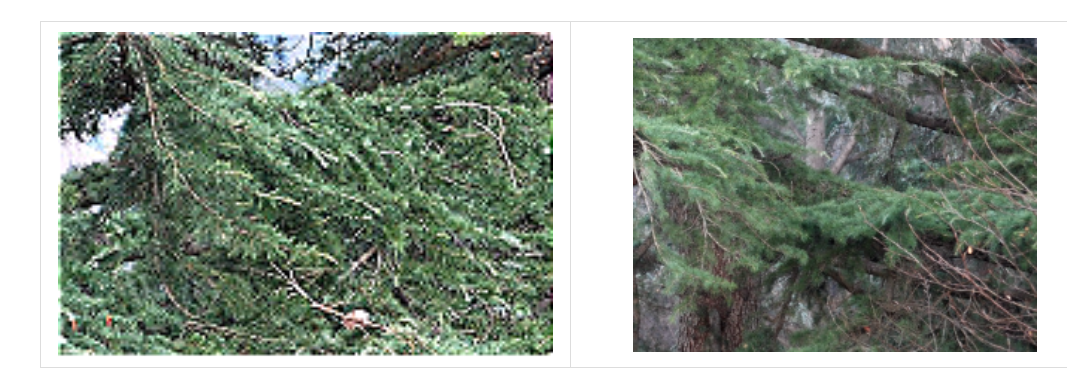
The term Siberian fir refers to Abies sibirica Ledeb., an evergreen tree species native to the boreal and cold continental regions of northern Asia, widespread especially in the taiga of central–eastern Siberia and parts of the Urals. It is adapted to harsh climates, with very long winters and temperatures frequently below zero, moderate precipitation, and acidic, well-drained soils often rich in organic matter. The tree has a conical crown, regularly arranged branches, and relatively short, flat needle-like leaves, dark green in colour with a slightly glaucous underside; the cones are cylindrical, borne upright on the branches and contain winged seeds.
From a morphological and forest–technical standpoint, Siberian fir is valued for its regular growth, the production of straight, light wood, and its suitability as a source of raw material for resinous and aromatic extracts. The wood, light in colour and fine–textured, is used in construction, carpentry, panel production, and various craft applications. The foliage is the main source of essential oil, obtained by steam distillation of needles and young twigs.
The composition of Siberian fir includes a fraction of essential oil characterised by monoterpenes and oxygenated derivatives (including α-pinene, borneol, bornyl acetate and other terpenic compounds), which are responsible for the typical resinous, balsamic notes. The percentage and quality of the essential oil can vary according to pedoclimatic conditions, altitude, harvest time, and processing methods used for the plant material. In addition to essential oil, the plant contains resins, small amounts of phenolic compounds, and minor constituents typical of conifers.
From an application perspective, Siberian fir is used in the forestry and industrial sectors for timber and derived products, while aromatic materials (essential oil and extractive fractions) are employed in the food chain as technical flavourings, in herbal preparations, and, to a lesser extent, in the cosmetics and detergent industries as components of balsamic–type fragrances. The quality of the raw material depends on origin, selection of harvested material, absence of contaminants, proper management of extraction processes, and control of compositional parameters (oil yield, terpenic profile, residual moisture), in order to ensure uniformity and suitability for use in the various applications.
Botanical classification (APG IV)
Botanical name: Abies sibirica Ledeb.
Common name: Siberian fir
Family: Pinaceae
Order: Pinales
Modern clades (phylogenetic):
Tracheophytes
Spermatophytes
Gymnosperms
Conifers
Domain: Eukaryota
Kingdom: Plantae
Cultivation and growth conditions
Climate
Siberian fir is characteristic of boreal continental climates, with very long, cold winters and short, cool summers. It tolerates extremely low winter temperatures (well below –30 °C) and heavy, prolonged snow cover. It prefers cool, humid air and fresh soils. Persistent heat, dry summers, and typical Mediterranean-type climates are generally unsuitable and cause strong stress.
Exposure
In its native range it grows in full sun, but young trees often benefit from light partial shade. It does not like very exposed, windy, and dry sites. In regions with warmer summers, a slightly sheltered position is preferable to limit heat and wind stress.
Soil
Optimal conditions include soils that are:
Deep and very well drained;
Moderately to clearly acidic (pH roughly 5.0–6.5);
Rich in organic matter, with stable, fresh moisture;
Of loam or loam-sandy / loam-silty texture.
Calcareous, dry, compact, or waterlogged soils hamper development, favour physiological stress, and reduce tree longevity.
Irrigation
In natural forest environments, irrigation is not required. In ornamental plantings or outside its native range:
After planting, regular watering is needed to ensure good establishment.
In warm periods, the soil should be kept fresh but not saturated.
Deep, spaced waterings stimulate a deep root system; frequent, shallow waterings and waterlogging should be avoided.
Temperature
The favourable temperature range during active growth is roughly 6–18 °C. Siberian fir is among the most frost-tolerant conifers and mature trees easily withstand temperatures far below –30 °C. Conversely, high temperatures combined with drought induce needle scorch, reduced growth, and increased susceptibility to pests and diseases.
Fertilization
Nutrient requirements are relatively low:
Light applications of organic amendments (compost, well-rotted leaf mould, bark) are generally sufficient to maintain soil structure and biological activity.
Moderate levels of macronutrients (N, P, K) may be useful on very poor soils, avoiding heavy nitrogen inputs.
A surface layer of organic material mimics natural forest litter and improves moisture retention and root health.
Crop care
Pruning:
Minimal structural pruning is recommended.
Remove only dead, damaged, or diseased branches.
Strong shaping cuts are not advisable, as they alter the natural architecture and can induce weak, poorly attached new shoots.
Young plant care:
Mulching around the base helps maintain soil moisture, limit weed competition, and protect roots from temperature extremes.
Supplemental watering is important in the first years in climates warmer or drier than the native range.
Pests and diseases:
In suitable cool, humid environments the species is generally healthy.
In warm, dry sites, trees are more prone to mites, aphids, and various fungal pathogens.
Good site selection (cool, fresh, well-drained soils) is the main preventive measure.
Harvest
Siberian fir is not usually grown as an “agronomic crop.” However, in traditional or technical–herbal contexts:
Buds and young needles may be collected in spring.
Harvest must be moderate and selective, avoiding heavy removal from young or ornamental trees, to prevent long-term damage.
Propagation
Propagation is carried out mainly by:
Seed:
The most common method for forest and ornamental production.
Seeds require a period of cold stratification to break dormancy and ensure uniform germination.
Seedlings are slow-growing at first and need cool, moist, well-aerated substrates.
Cuttings:
Difficult and not widely used; rooting percentage is often low and variable.
Grafting:
Used where uniformity is required (for selected forms or specific ornamental traits), generally onto compatible Abies rootstocks.
Seed propagation produces robust, long-lived trees and is the standard approach for Siberian fir in forestry and landscape planting.

