



Borax: properties, uses, pros, cons, safety, alternatives
Borax or Sodium Tetraborate or Sodium borate, is a mineral and chemical compound in the refined form of natural sodium borate. It is composed of boron trioxide, sodium oxide and water.
Description of the raw materials:
- Boracite - A boron mineral from which borax is extracted. Boracite is found in evaporite deposits in various parts of the world.
- Water - Water is used in the extraction and purification process of borax.
Borax can be found in nature in the form of minerals such as borax. Therefore, its natural synthesis involves the process of extracting and purifying borax-containing minerals.
- Extraction of borax mineral. The borax-containing mineral is extracted from the mine or natural sources.
- Refining. The borax mineral undergoes refining processes to remove any impurities and obtain a pure Borax product.
- Purification. The extracted Borax is purified through washing and filtration processes to remove any residual impurities.
- Drying. The purified Borax is dried to remove residual moisture and obtain a solid product.
- Crushing and grinding. The solid product is crushed and ground to obtain the desired form, such as powder or crystals.
Summary of the industrial chemical synthesis process:
- Preparation of reagents. The reagents needed for the synthesis of Borax, such as boric acid and sodium carbonate, are collected and prepared.
- Chemical reaction. Boric acid and sodium carbonate react with each other in a reactive system, such as a chemical reactor, to form sodium borate, which is Borax.
- Crystallization. The solution containing sodium borate is cooled and subjected to crystallization processes to precipitate Borax crystals.
- Filtration and washing. The Borax crystals are separated from the solution through filtration and washing processes to remove any impurities or residues.
- Drying. The Borax crystals are dried to remove moisture and obtain a solid product.
- Crushing and grinding. The solid product is crushed and ground to obtain the desired form of Borax, such as powder or crystals.
- Packaging of Borax in appropriate containers for distribution and use.
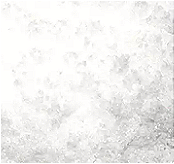
It appears as a white, crystalline, alkaline granular powder that melts in glass at 878°C. Easily soluble in water and glycerine, it is efflorescent when exposed to dry air.
What it is used for and where
Medical
The addition of borax, for tissue engineering applications on mesenchymal stem cells, induces osteogenesis by stimulating growth factor receptors and fibronectin-binding integrins (1).
The use of borax or boric acid buffers in ophthalmology is also approved by the Medicines and Healthcare products Regulatory Agency for paediatric use in children under 2 years of age (2). It acts as a mild antiseptic and cleaning agent.
In biomedicine, borax hydrogels, together with locust bean gum and gellan gum, have demonstrated good mechanical properties with excellent self-healing and thermo-processability properties (3).
Present in tooth-whitening formulas.
Food
A food additive labelled E285 on the European food additive list as a preservative, but banned in the US, Thailand, China and the current trend is to reduce or eliminate its use. In 2013, the European Food Safety Authority (EFSA) stated that boric acid and its salts are toxicologically acceptable as preservatives in caviar as the intake of this expensive fish product does not occur on a regular basis and it is considered unlikely that the boron dose of 0.16 mg per kg body weight/day (ADI) would be exceeded (4).
Safety
Borax is toxic to humans and can induce reproductive and developmental toxicity, neurotoxicity and nephrotoxicity.
Borax concentrations above 52 mM (20 mg mL-1) are toxic to cells, while borax concentrations above 15.7 mM (6 mg mL-1) inhibit the formation of myotubes (5), a type of cell that develops into muscle fibres.
Jewellery
Melting metals such as gold and silver and for their cleaning as borax removes oxides on the metal surface and, when mixed with water, improves melting point uniformity. It softens tungsten in pre-soldering with zinc and improves solderability.
Replaces mercury in gold mining in small-scale mines with less toxic characteristics.
Cosmetics
It is a restricted ingredient as II/1396 a Relevant Item in the Annexes of the European Cosmetics Regulation 1223/2009. Substance or ingredient reported: Boric acid, Borates and Tetraborates, Sodium Perborate and Perboric Acid
- Buffering agent. It is an iingredient that can bring an alkaline or acid solution to a certain pH level and prevent it from changing, in practice a pH stabiliser that can effectively resist instability and pH change.
Agriculture
It is considered a dynamic covalent cross-linking agent as a water retention agent.
Insecticides
Useful as an ant and insect repellent.
Biochemistry
Used as a buffer in biochemical and chemical laboratories and nucleic acid buffer most commonly used in DNA gel electrophoresis, as TBE or BBS, saline buffered borate gel, SB, gel without chemical reactions or solvents, SB or BBS (saline buffered borate) in coating procedures. Borate buffers (usually pH 8) are also used as the preferred equilibrium solution in DMP-based cross-linking reactions.
Other uses
Chemical cross-linking agent. Flame retardant in insulation products in fireproofing paints, textile stain removal, porcelain manufacture.
Glass. Production of high quality glass. Raw material for boron oxide in the manufacture of thermally insulated glass wool, heat-resistant glass, borosilicate glass, glass fibre weaving, optical glasses, sealing glass.
Metals. When welding iron and steel, mixed borax and ammonium chloride are used to lower the melting point of unwanted iron oxide. In metal drawing it functions as a lubricant carrier.
Construction. Slackener in cement and concrete.
Chemical industry. In paraffin production it is the pH value buffering agent in the water system and emulsifier.
Water treatment.
In compounds containing boron, borax is the basic raw material.
Fertiliser in agriculture.
Also: detergent, rust binder, fire retardant, emulsifier, stabiliser etc.
Alternatives
| Option (INCI) | Product type | Key advantages |
|---|---|---|
| Sodium Citrate (and) Citric Acid | Buffer system (citrate) | Cleaner, more predictable pH control with broad compatibility; a standard replacement for borate buffering. |
| Sodium Bicarbonate | pH adjuster (weak base) | Useful to gently raise pH and provide moderate buffering; simple and widely available (optimize for CO₂/sensory). |
| Tromethamine | Buffer / pH adjuster | Good buffering capacity and pH stability over time; helpful when tighter control is needed than bicarbonate can provide. |
| Tetrasodium Glutamate Diacetate (GLDA) | Eco-positioned chelator | Supports stability/performance by binding metal ions; often selected for a more biodegradable positioning vs legacy chelators. |
| Glyceryl Stearate Citrate | O/W emulsifier | If borax was part of a wax/emulsion structuring approach (e.g., cold-cream type systems), it provides structure and stability without borates. |
For more information:
Typical commercial product characteristics Sodium tetraborate decahydrate
| Appearance | White granular powder |
| Boiling Point | 320°C |
| Melting Point | 75°C |
| Density | 1.73 g/mL at 25°C(lit.) |
| PSA | 184.57000 |
| Water Solubility | 60 g/L (20 ºC) |
| Boron monoxide B2O | ≥ 36.47% |
| Sulfur dioxide SO2 | ≤ 0.1% |
| Chloride Cl | ≤ 0.05% |
| Iron Fe | ≤ 0.001% |
| Sodium oxide Na2O | ≥16% |
| Boron trioxide B2O3 | ≥ 35% |
| Insoluble in water | 0.04% Max |
| Safety |  |
 |  |
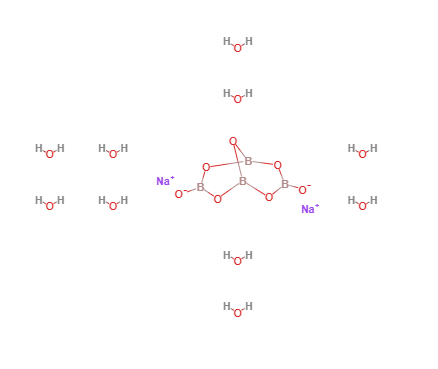 | 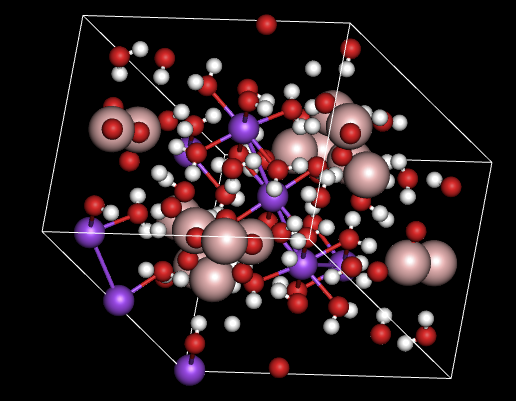 |
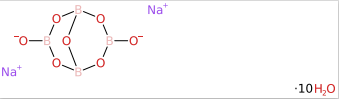
- Molecular Formula B4H20Na2O17 B4O7Na2. 10H2O
- Linear Formula Na2B4O7 · 10H2O
- Molecular Weight 381.4
- Exact Mass 382.086823
- CAS 1303-96-4
- UNII 91MBZ8H3QO
- EC Number 603-411-9 215-540-4
- DSSTox Substance ID DTXSID701014356 DTXSID2034384
- IUPAC disodium;3,7-dioxido-2,4,6,8,9-pentaoxa-1,3,5,7-tetraborabicyclo[3.3.1]nonane;decahydrate
- InChI=1S/B4O7.2Na.10H2O/c5-1-7-3-9-2(6)10-4(8-1)11-3;;;;;;;;;;;;/h;;;10*1H2/q-2;2*+1;;;;;;;;;;
- InChl Key CDMADVZSLOHIFP-UHFFFAOYSA-N
- SMILES B1(OB2OB(OB(O1)O2)[O-])[O-].O.O.O.O.O.O.O.O.O.O.[Na+].[Na+]
- MDL number MFCD00149193
- PubChem Substance ID 329824630
- RXCUI 36680
- ICSC 0567
- NACRES NA.21
- RTECS VZ2275000
Synonyms
- Sodium tetraborate decahydrate
- Borax decahydrate
- Sodium borate decahydrate
- Sodium pyroborate decahydrate

