



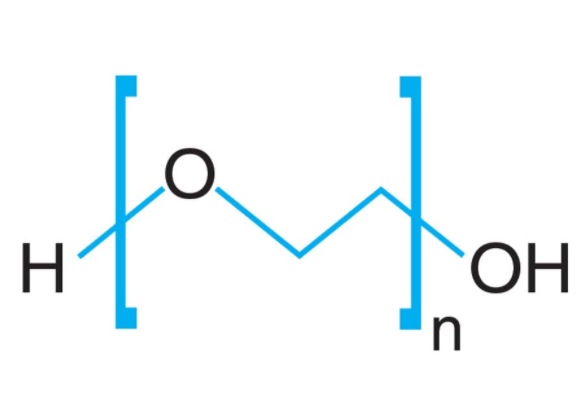
Macrogol 3350 is a PEG, a biologically inert mixture of long, linear, non-absorbable and non metabolisable polymers of ethylene glycol. It occurs as a fine white powder or transparent colorless liquid.
What it is for and where
Medical
Take only under medical supervision
Normally used for the treatment of constipation in children, adults and the elderly, although recent studies have preferred lactulose (1) or electrical stimulation of the colon especially in the presence of Parkinson's disease (2).
Commercially, it is quite similar to Macrogol 4000. The ability of Macrogol 4000 to improve colon transit and/or faecal frequency, improve faecal consistency and increase water production in faeces, have little effect on intestinal microbial composition, be free of clinically relevant electrolytic disturbances (i.e. very small or addiruttura no loss of sodium, potassium and chloride in faeces) (3).
Macrogol 4000 is inserted into tablets usually with Hydroxypropyl Methylcellulose where it acts as a stabilizing excipient to prevent particles from aggregating and clogging the spray nozzle that forms the coating.
Like all drugs it can cause side effects. Always ask the physician.
Typical optimal characteristics of a commercial product Macrogol 4000
| Appearance | Fine powder clear, colorless |
| Boiling point | >250°C |
| Melting point | 64-66 °C |
| Refractive index | n20/D 1.469 |
| Water solubility | H2O: 50 mg/mL |
| Flash point | 270 °C |
| Purity | 99% |
| pH | 5-7 |
| Hydroxyl Value: | 12-16mgKOH/g |
| Loss on drying | ≤2.0% |
| Shelf life | 2 years |
 |  |
 | 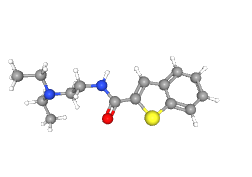 |
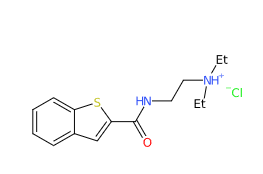
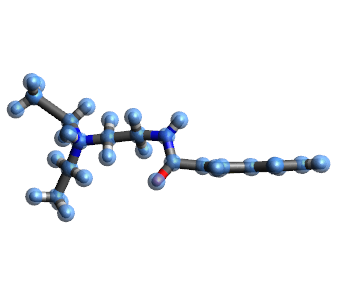
- Formula molecolare: C15H21ClN2OS (C2H4O)nH2O
- Molecular Formula: C15H21ClN2OS (C2H4O)nH2O
- Molecular Weight: 312.9 g/mol
- CAS: 25322-68-3 15272-95-4
- UNII FZ46ONU496
- EC Number: 500-038-2
- DSSTox Substance ID:
- MDL number
- PubChem Substance ID
- InChl 1S/C15H20N2OS.ClH/c1-3-17(4-2)10-9-16-15(18)14-11-12-7-5-6-8-13(12)19-14;/h5-8,11H,3-4,9-10H2,1-2H3,(H,16,18);1H
- InChI Key TZBAVQKIEKDGFH-UHFFFAOYSA-N
- SMILES CC[NH+](CC)CCNC(=O)C1=CC2=CC=CC=C2S1.[Cl-]
- IUPAC 2-(1-benzothiophene-2-carbonylamino)ethyl-diethylazanium;chloride
- Merck 14,7568
- NSC 108963
Synonyms:
- Benzo(b)thiophene-2-carboxamide, N-(2-(diethylamino)ethyl)-, monohydrochloride
- Macrogol 4000
Where to buy Macrogol
___________________________
A premise on PEG.
Since the PEG family is numerous and is found in many cosmetic, cleaning and medicinal products and others, we need a cognitive premise on the subject that is rather complex from the point of view of safety because these products not only come into contact with the skin but, as in the case of medicine, they are also ingested.
PEG or polyethylene glycols polymerise the condensed ethylene oxide and water and are called polyethylene glycols, but in reality, they are complex chemical components, polymers bound together. For example, plastic is polyethylene and has a hard consistency, while polyethylene aggregated to the glycol forms a liquid.
The number that appears after the initials PEG represents the molecular weight and the higher this number is, the less it penetrates the skin.
Here below are some studies in Medicine that refer to the use of PEG Polyethylene glycol in various fields.
Intestine
Polyethylene glycol with or without electrolytes is effective for the treatment of functional constipation, both in adults and in paediatric patients, with great safety and tolerability. These preparations are the most effective osmotic laxatives (more than lactulose) and are the first-line treatment for functional constipation in the short- and long-term. They are as effective as enemas in faecalomas, avoid the need for hospitalisation and are well tolerated by patients (especially when given without electrolytes) (4).
In the preparation for colonoscopy, polyethylene glycol tablets confirmed efficacy, acceptability, tolerance and safety similar to those of sodium phosphate (5).
For peripheral nerve repair (6).
Eyes
Dry eye syndrome is a disorder that affects 5-34% of the world's adult population with reduced quality of life. Artificial or lubricating tears are the most used therapy for treating this condition due to their low side effects profile, which attempt to modify the properties of the tear film. Polyethylene glycol has demonstrated clinical efficacy in the treatment of this condition (7).
Brain
Polyethylene glycol facilitates the neuroprotective effects of magnesium in head injuries (8).
Tumours
For transarterial chemoembolization, Polyethylene glycol is effective and safe for the treatment of liver cancer, as indicated by good tolerability, quality of life and high tumour response (9).
Cosmetics
Many types of PEG are hydrophilic and are used as creams, topical dermatological preparations and in cosmetic products such as surfactants, emulsifiers, detergents, humectants and skin conditioners.
Safety varies from type to type given the structural complexity (10).

