



Sodium myreth sulfate is a chemical compound, an anionic surfactant, ethoxylated (reaction by polymerisation of ethylene oxide).
The name defines the structure of the molecule:
- Sodium (Na). Sodium is an alkaline metal, a chemical element with the symbol Na (from the Latin "Natrium") and the atomic number 11. Sodium is soft and silvery-white in color. It is highly reactive, especially with water, and is commonly found in salts and minerals.
- Myreth refers to a synthetic compound that is derived from miristyl alcohol, a fatty alcohol that is often used in cosmetics and personal care products.
- Sulfate refers to a salt or ester of sulfuric acid. Sulfates are often used in cosmetics and personal care products for their ability to create a foam, common in shampoos and body washes.
The synthesis process takes place in several stages:
- Ethoxylation. Myristyl alcohol, which is obtained from natural sources such as coconut oil or can be synthesized from myristic acid and made to react with ethylene oxide in a treatment called ethoxylation. The number of ethylene oxide units added varies in general, but for sodium myrtle sulfate, the "myreth" indicates that on average 10 units of ethylene oxide per molecule of Myristyl alcohol are added.
- Sulfation. Myristyl alcoholl ethoxylate is reacted with sulfur trioxide (SO3) to add a sulfate group, forming the corresponding sulfuric acid ester.
- Neutralization. The sulfuric acid ester is neutralized with sodium hydroxide (NaOH) to form Sodium Myreth Sulfate.
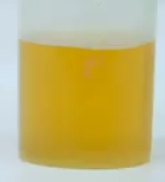
It typically appears as a clear to yellowish liquid at room temperature. It is water-soluble and is often used in aqueous solutions.
What it is used for and where
Cosmetics
Surfactant-foaming (1) emulsifying agent that facilitates amalgamation between the various ingredients. Emulsifiers have the property of directly influencing the stability, sensory properties and surface tension of sunscreens by modulating their filmometric performance.
INCI functions:
Cleansing agent. Ingredient that cleanses skin without exploiting the surface-active properties that produce a lowering of the surface tension of the stratum corneum.
Foaming. Its function is to introduce gas bubbles into the water for a purely aesthetic factor, which does not affect the cleaning process, but only satisfies the commercial aspect of the detergent by helping to spread the detergent. This helps in the commercial success of a cleansing formulation. Since sebum has an inhibiting action on the bubble, more foam is produced in the second shampoo. In practice, it creates many small bubbles of air or other gases within a small volume of liquid, changing the surface tension of the liquid.
Surfactant - Cleansing agent. Cosmetic products used to cleanse the skin utilise the surface-active action that produces a lowering of the surface tension of the stratum corneum, facilitating the removal of dirt and impurities.
Surfactant - Emulsifying agent. Emulsions are thermodynamically unstable and are used to soothe or soften the skin and emulsify, so they need a specific, stabilising ingredient. This ingredient forms a film, lowers the surface tension and makes two immiscible liquids miscible. A very important factor affecting the stability of the emulsion is the amount of the emulsifying agent. Emulsifiers have the property of reducing the oil/water or water/oil interfacial tension, improving the stability of the emulsion and also directly influencing the stability, sensory properties and surface tension of sunscreens by modulating the filmometric performance.
Use
- Shampoo 1%
- Shower 8%
- Hair dye 2,5%
Safety
After the ethoxylation procedure, scientific literature reports that it is not uncommon to find residues of ethylene oxide and 1,4-dioxane, chemical compounds that are considered carcinogenic, in the final product. It would therefore be necessary for the manufacturer to declare the purity of the ethoxylated chemical to be sure that the ingredient is harmless.
The CIR Expert Panel is of the opinion that Sodium myreth sulfate is safe as a cosmetic ingredient in the concentrations and uses established by cosmetic standards (2).
The most relevant studies on this ingredient have been selected with a summary of their contents:
| Appearance | Powder |
| PSA | 102.50000 |
| LogP | 5.29490 |
 |  |
 | 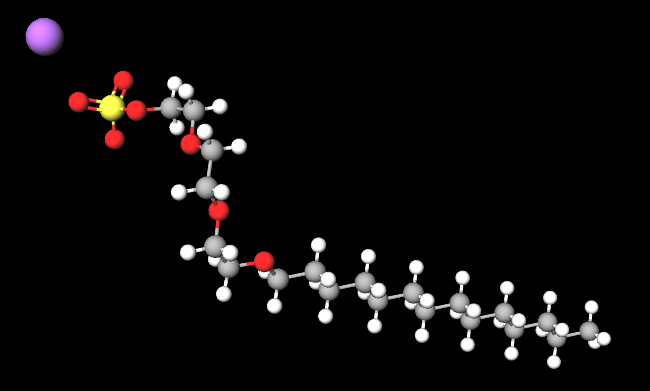 |
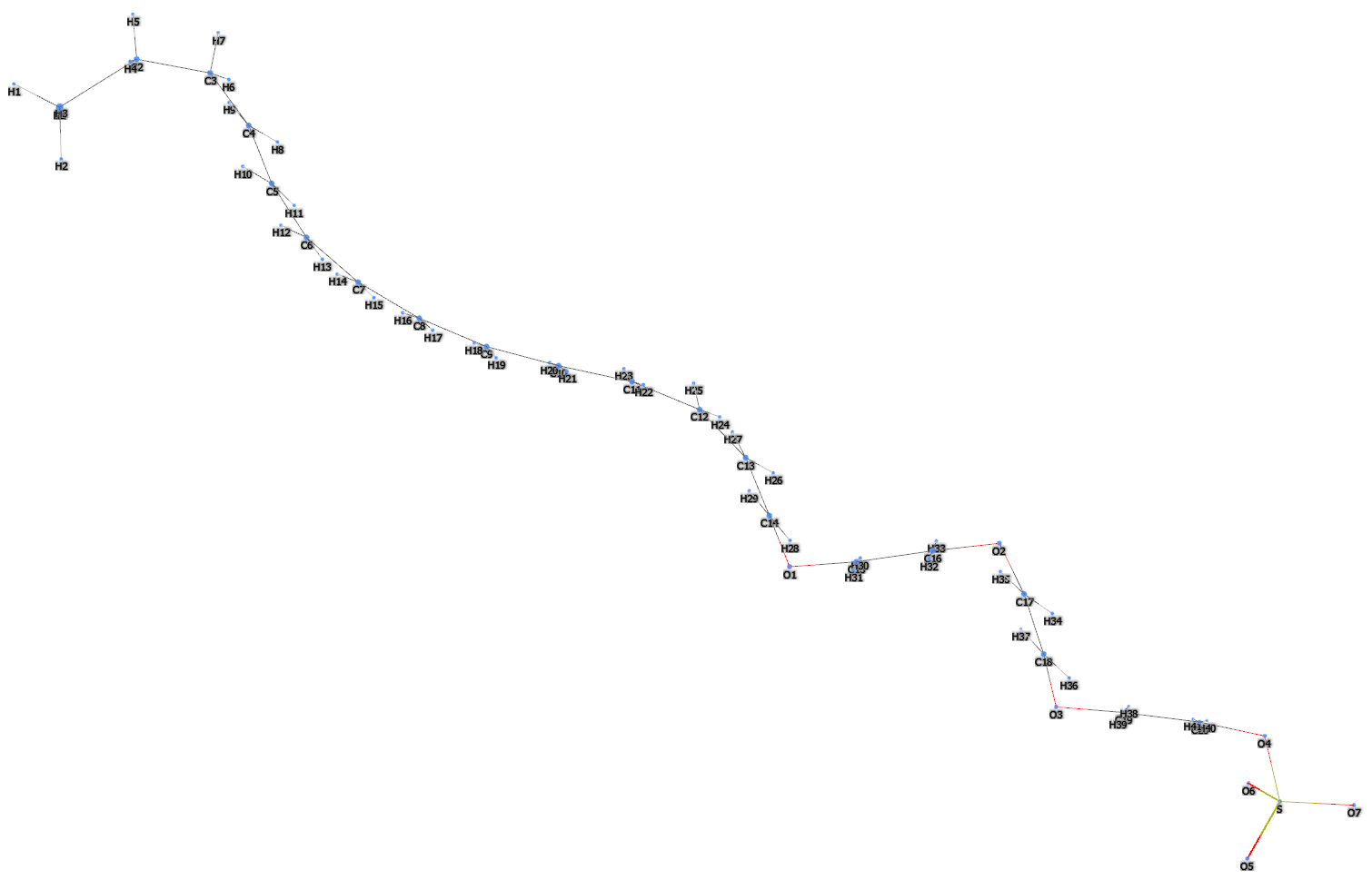
- Molecular Formula C20H41NaO7S
- Molecular Weight 448.6
- Exact Mass 448.24700
- CAS 25446-80-4
- UNII 2VLC033A4E
- EC Number 246-986-8
- DSSTox Substance ID DTXSID6067096
- IUPAC sodium;2-[2-(2-tetradecoxyethoxy)ethoxy]ethyl sulfate
- InChI=1S/C20H42O7S.Na/c1-2-3-4-5-6-7-8-9-10-11-12-13-14-24-15-16-25-17-18-26-19-20-27-28(21,22)23;/h2-20H2,1H3,(H,21,22,23);/q;+1/p-1
- InChl Key MDSQKJDNWUMBQQ-UHFFFAOYSA-M
- SMILES CCCCCCCCCCCCCCOCCOCCOCCOS(=O)(=O)[O-].[Na+]
- MDL number
- PubChem Substance ID
- RTECS KM2931050
Synonyms:
- sodium 2-[2-[2-(tetradecyloxy)ethoxy]ethoxy]ethyl sulphate
- Polyethylene glycol (1-4) myristyl ether sulfate,sodium salt
- Ethanol,2-(2-(2-(tetradecyloxy)ethoxy)ethoxy)-,hydrogen sulfate,sodium salt
- 2-(2-(2-(Tetradecyloxy)ethoxy)ethoxy)ethanol hydrogen sulfate sodium salt

