



Glyphosate [N-(phosphonomethyl) glycine] is a chemical compound, organophosphorus herbicide discovered in 1970 by John Franz, a chemist at Monsanto© , the US multinational company that incorporated Glyphosphate into Roundup©, the world's best-selling herbicide.
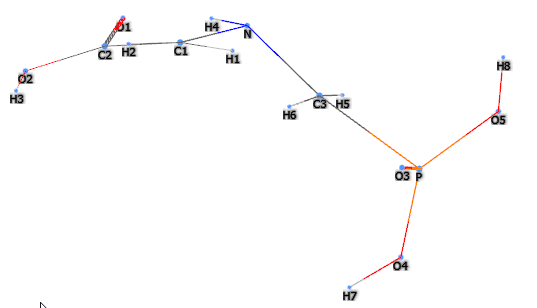
The name describes the structure of the molecule:
- "Glypho-" indicates that the compound is a glycophosphate, which is a functional group containing a phosphate and a glycine group.
- "-sate" indicates that the compound is a phosphonic acid salt.
The synthesis process takes place in different steps:
- Preparation of phosphonic acid. Starting from a compound containing a phosphonic group, such as phosphonic acid itself, a neutralization is performed with an appropriate base to form the corresponding phosphonic acid salt.
- Preparation of ammonium glycinate. Glycine reacts with ammonia to form ammonium glycinate.
- Condensation reaction. The phosphonic acid and ammonium glycinate are reacted in the presence of a condensing agent, such as formaldehyde, to form glyphosate.
- Purification. The synthesized glyphosate undergoes purification processes, such as crystallization or distillation, to obtain the final pure glyphosate product.
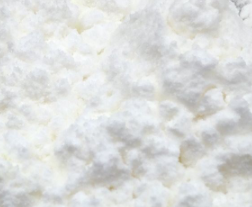
It takes the form of a fine white powder. Soluble in water, insoluble in common organic solvents. Non-flammable.
Safety
In 2015, the World Health Organisation reclassified glyphosate as possibly carcinogenic to humans (1).
In July 2023, EFSA published a study that does not confirm the concerns raised so far about glyphosate: No critical areas of concern; data gaps identified (2).
What it is used for and where
It is a non-selective, non-residual herbicide used against annual or biennial herbaceous monocotyledonous broadleaf weeds, herbaceous dicotyledons and perennial malignant weeds in rubber, mulberry, tea, orchards, sugarcane, cereals, peas, beans, oilseed rape, flax and mustard. As a direct spray in vines and olives, orchards, pastures, forestry with use up to 4.3 kg/ha.
Prevents the synthesis of essential aromatic amino acids necessary for protein biosynthesis. Inhibitor of 5-enolpyruvylshikimate-3-phosphate synthase (EPSPS), an enzyme in the aromatic acid biosynthetic pathway. Highly absorbed by soil.
| Appearance | |
| pH | 4.0~8.5 |
| Boiling Point | 465.8±55.0°C at 760 mmHg |
| Melting Point | 230°C |
| Flash Point | 235.5±31.5°C |
| Density | 1.7±0.1 g/cm3 |
| Refractive Index | 1.576 |
| Water Solubility | 1.2 g/100 mL |
| Glyphosate mass | 355.0±17.0 g/l |
| Glyphosate Isopropylamine Salt | 480 g/l |
| Nitroso glyphosate | ≤1.0 mg/kg |
| Formaldehyde | ≤0.8% |
| Ammonium | ≥75.7% |
| PSA | 116.67000 |
| LogP | -2.36 |
| Vapour Pressure | 0.0±2.5 mmHg at 25°C |
| Storage | 4°C |
| Safety | 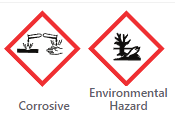 |
 |  |
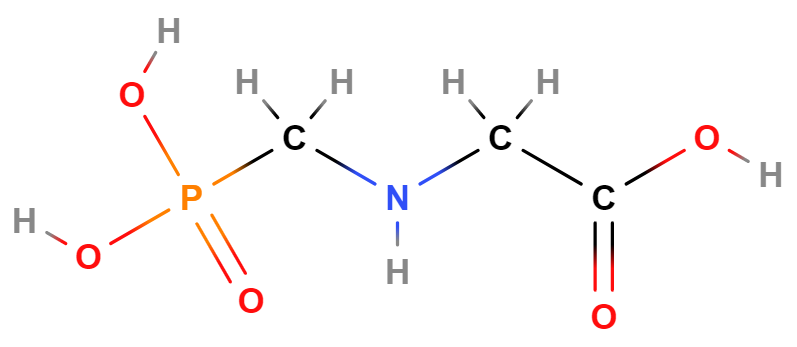 | 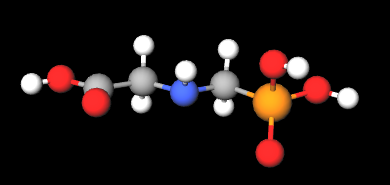 |
- Molecular Formula C3H8NO5P
- Linear Formula (HO)2P(O)CH2NHCH2CO2H
- Molecular Weight 169.07
- Exact Mass 169.014008
- CAS 1071-83-6
- UNII 4632WW1X5A
- EC Number 213-997-4
- DSSTox Substance ID DTXSID1024122
- IUPAC 2-(phosphonomethylamino)acetic acid
- InChI=1S/C3H8NO5P/c5-3(6)1-4-2-10(7,8)9/h4H,1-2H2,(H,5,6)(H2,7,8,9)
- InChl Key XDDAORKBJWWYJS-UHFFFAOYSA-N
- SMILES C(C(=O)O)NCP(=O)(O)O
- MDL number MFCD00055350
- PubChem Substance ID 329756808
- ChEBI 27744
- ICSC 0160
- NSC 151063
- RTECS MC1075000
- UN 3077 2783
- Beilstein 2045054
- NACRES NA.24
Synonyms:
- Glyphosate, N-(Phosphonomethyl)glycine
- Roundup©

