



Mentha aquatica
Description
Mentha aquatica, commonly known as water mint, is a perennial herb of the Lamiaceae family that grows naturally in wet environments such as riverbanks, marshes, ditches, ponds and periodically flooded soils. It has quadrangular stems, often reddish at the base, and a vigorous system of rhizomes and stolons that allows it to form dense colonies. Leaves are opposite, ovate to ovate-lanceolate, deep green sometimes with purplish hues, slightly pubescent and characterised by a fresh, penetrating mint aroma with a more herbaceous and “aquatic” profile than peppermint. Inflorescences are terminal or subterminal spikes, sometimes globular, composed of small lilac-pink flowers rich in nectar and highly attractive to pollinators.
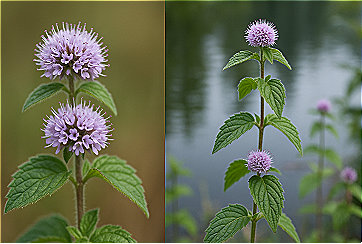
Common name: water mint
Scientific name: Mentha aquatica
Family: Lamiaceae
Genus: Mentha
Origin: Europe, North Africa, Western Asia; naturalised in many other temperate regions
Growth habit: perennial, rhizomatous, aromatic herb, often bushy, typical of wet areas
Cultivation and growing conditions
Climate
Prefers temperate and cool–temperate climates.
Quite hardy: tolerates winter cold well; the aerial part may die back and sprout again in spring.
Tolerates cool, humid locations better than dry, very hot conditions.
Exposure
Prefers bright partial shade.
Can grow in full sun if the soil remains constantly moist or if it is near water (ditch banks, ponds, streams).
In full sun and warm climates, it is important to provide plenty of water and, if possible, some shade during the hottest hours.
Soil
Likes moist or periodically flooded soils, rich in organic matter.
Adapts to slightly acidic to neutral soils.
Can also grow in heavy, silty or clay soils, as long as water availability is high.
In ornamental cultivation it can be grown in pots partially immersed in water at the edge of a pond.
Irrigation
It is a hygrophilous species: it requires high water availability.
The soil should never dry out completely; unlike many other aromatic plants, it tolerates waterlogging.
In pots it must be watered very frequently or placed in deep saucers kept filled with water.
Temperature
Optimal growth between 15 and 24 °C.
Tolerates frost well: the rhizomes remain viable in the soil and the plant restarts in spring.
High temperatures are not a problem if soil moisture remains high.
Fertilization
Moderate nutrient requirements, but benefits from soils rich in organic matter.
In spring, work in some mature compost or other organic fertilizer.
Very high nitrogen inputs are not necessary and can make tissues too soft.
Cultivation care
Remove old, damaged or overly elongated stems to stimulate new shoots.
Keep rhizome spread under control: in wet soils it can become very vigorous; use barriers or containers if necessary.
Keep the area free of weeds, especially in the early stages of growth.
Monitor for aphids and any fungal diseases under conditions of high humidity and poor air circulation.
Harvest
Leaves and flowering tops are harvested from late spring to early autumn.
For maximum aromatic content, harvest just before or at the beginning of flowering.
Cut shoot tips with clean scissors to encourage new growth and a more compact habit.
Plant material can be used fresh or dried in a shaded, well-ventilated place away from direct light.
Propagation
By division of rhizomes or clumps: the simplest and most reliable method, carried out in spring or autumn, ensuring each portion has roots and buds.
By herbaceous cuttings: in late spring or summer; cuttings root easily in water or in a light, moist substrate.
By seed: possible, but less used in home cultivation because it gives less uniformity in plant characteristics.
Indicative nutritional values per 100 g (fresh leaves)
Energy: ~40–60 kcal
Water: ~80–85 g
Total carbohydrates: ~8–12 g
sugars: ~4–6 g
Dietary fibre: ~5–7 g
Protein: ~3–4 g
Total fat: ~0.5–1 g
SFA (saturated fatty acids): very low
MUFA (monounsaturated fatty acids): traces
PUFA (polyunsaturated fatty acids, n-6/n-3): traces
TFA (natural trans fatty acids): negligible
Vitamins: vitamin C, carotenoids (provitamin A), small amounts of B-group vitamins
Minerals: potassium, calcium, iron, magnesium, manganese
Bioactive compounds: essential oil (monoterpenes and oxygenated monoterpenes), polyphenols, flavonoids, organic acids
(Water mint is normally consumed in much smaller quantities than 100 g; values are indicative for compositional reference.)
Key constituents
Essential oil (chemotype-dependent)
menthol, menthone, isomenthone (in some chemotypes)
menthofuran (sometimes present at relevant levels depending on population)
1,8-cineole (eucalyptol)
terpinyl acetate (in certain populations)
limonene, β-caryophyllene and other mono- and sesquiterpenes in minor amounts
Polyphenols
rosmarinic acid
caffeic acid and derivatives
other phenolic acids (e.g., ferulic, p-coumaric)
Flavonoids
luteolin, apigenin and their glycosides
Other components
chlorophylls, carotenoids
plant sterols and triterpenoids in specific extracts
organic acids and variable amounts of tannins
Production process
Cultivation preferably in humid zones or near water bodies, in soils rich in organic matter and with constant water availability
Propagation by division of clumps or rhizome segments, with rapid soil coverage and need for containment in managed systems
Harvesting of aerial parts (leaves and flowering tops) near the flowering stage, when essential oil and polyphenol concentrations are highest
Sorting and cleaning to remove soil, damaged material and foreign matter
Low-temperature drying (<40 °C) in ventilated, shaded environments to preserve colour, aroma and polyphenolic fraction
Steam distillation of aerial parts to obtain essential oil, with separation from hydrosol and optional clarification
Storage of dried herb in tightly closed containers away from light, heat and humidity; storage of essential oil in well-filled dark glass bottles
Packaging as fresh bunches or trays, sachets or jars (dried herb), or technical bottles (essential oil)
Physical properties
Perennial herb with quadrangular stems often showing reddish pigmentation; height typically 20–80 cm
Fresh leaves: ovate, sometimes with weakly crenate margins, herbaceous texture, distinctly minty aroma
Dried leaves: olive-green turning brownish with time, brittle and lightweight
Essential oil: clear liquid, colourless to pale yellow, low viscosity, high volatility
Essential oil density: ~0.88–0.93 g/mL depending on chemotype and temperature
Sensory and technological properties
Aroma: fresh, minty, balsamic with herbaceous and slightly camphoraceous notes; perceived as “greener” and less sweet than peppermint
Taste: cooling and refreshing, with a menthol-derived “cold” sensation that becomes pungent at high doses
Medium-high flavouring power, often used in blends (teas, herbal mixtures) for more balanced aromatic profiles
Essential oil is sensitive to oxidation (light, heat, oxygen), which alters its aroma and chemical profile over time
In some food and cosmetic matrices, extracts may contribute to antioxidant and antimicrobial effects depending on formulation and dosage
Food applications
Herbal teas and infusions, alone or more commonly blended with other herbs (e.g., lemon balm, chamomile, liquorice)
Traditional flavouring in regional savoury dishes (legumes, vegetables, fresh sauces, condiments)
Use in refreshing drinks and selected sweet preparations requiring a milder mint profile than peppermint
Ingredient in natural flavour blends for beverages, herbal preparations and functional products
Nutrition and health
Contributes vitamin C, carotenoids, minerals and polyphenols to the diet, especially when consumed habitually in herbal teas
Polyphenols such as rosmarinic acid and flavonoids are associated with antioxidant activity and potential anti-inflammatory modulation in experimental models
Traditionally used to support digestion, reduce bloating and promote mild gastrointestinal comfort
Essential oil is sometimes used for topical or inhalation preparations (baths, ointments), always with proper dilution
Oral use of essential oil requires caution: monoterpene ketones and menthofuran may carry toxicological concerns and must follow regulated limits
Portion note
Fresh leaves in culinary preparations: approx. 2–10 g per serving
Dried leaves for infusion: typically 1–2 g per cup, often in blends
Essential oil: only within formulated foods, supplements or herbal medicinal preparations according to regulations; never ingest pure oil
Allergens and intolerances
Generally well tolerated at common culinary and herbal dosages
Possible reactions in individuals allergic to Lamiaceae species
Essential oil, if undiluted or oxidised, may cause irritation to skin or mucosa in sensitive individuals
Water mint is not among major regulated food allergens in EU law, although cross-contamination in complex products remains possible
Storage and shelf-life
Fresh herb: around 3–5 days in the refrigerator (~4 °C) in breathable or perforated packaging
Dried herb: up to ~12 months if stored airtight and protected from light, heat and humidity
Essential oil: typical shelf-life 2–3 years in dark glass bottles, well closed; oxidation alters aroma and may increase irritant potential
Safety and regulatory
All stages of cultivation, handling and processing should comply with GMP and HACCP principles
Essential oil use as a flavour or cosmetic ingredient is regulated, especially regarding monoterpene ketones and menthofuran
Ingestion of pure essential oil is not recommended; additional caution is required for pregnant and breastfeeding individuals, children and people with liver conditions or hypersensitivity
Use in functional foods or supplements requires safety evaluation, approved claims and compliance with dosage and labelling rules
Labelling
Fresh or dried herb:
sales name (“water mint”, “mentha aquatica”)
origin, net weight, lot number, best-before date, storage instructions
Essential oil:
botanical name Mentha aquatica, plant part, extraction method (steam distillation), country of origin
safety warnings (“for external use”, “do not use undiluted”, “keep out of reach of children”)
Flavoured foods and supplements:
declaration of flavour according to flavouring legislation (e.g., “natural mint flavour”)
Cosmetic products:
appropriate INCI name (e.g., “Mentha Aquatica Leaf Extract”, “Mentha Aquatica Extract”)
Troubleshooting
Weak aroma in dried herb: may indicate slow or high-temperature drying, exposure to light/air, or unsuitable containers
Premature browning of leaves: typically caused by excess residual moisture or poor storage conditions; improve drying parameters
Oxidised or resinous essential oil: caused by exposure to light, heat or repeated bottle opening; reduce storage time and store in cool, dark conditions
Mint note too weak or too harsh in finished product: may result from under- or overdosing or chemotype variability (menthol/menthone/menthofuran ratios); adjust dosage and standardise raw material
Sustainability and supply chain
Mentha aquatica is rustic and well adapted to wetland environments, requiring limited external inputs when grown appropriately
Can contribute to phytoremediation and vegetative filtration systems by absorbing nutrients and certain pollutants, thereby improving water quality
Steam distillation generates wastewater and spent biomass; sustainable management includes monitoring BOD and COD and valorising biomass as compost or bioenergy feedstock
Short supply chains, local harvesting and processing reduce transport-related environmental impact and enhance local resource value
Main INCI functions (cosmetics)
fragrance / perfuming – provides fresh, minty, slightly herbaceous notes
skin conditioning – contributes to a fresh, pleasant skin feel in gels, lotions and cleansing products
masking – helps reduce undesirable odours from other raw materials
refreshing / tonic – associated with cooling and invigorating sensations on skin and scalp
antioxidant – polyphenol-rich extracts may support product stability and provide mild protective effects on the skin
purifying / decontaminating – used in formulations aimed at skin exposed to pollutants or impurities
Conclusion
Mentha aquatica is a distinctive mint species adapted to wetlands, offering a fresh, herbaceous and clearly mentholated aromatic profile. Its phytochemical richness makes it suitable for culinary, herbal and cosmetic uses, and its traditional digestive and refreshing properties are supported by experimental evidence of antioxidant and antimicrobial potential. Beyond its organoleptic value, the plant plays an ecologically relevant role in water-rich environments and can be integrated into sustainable supply chains. Essential oil use requires strict adherence to safety and regulatory guidelines, but when properly managed, water mint represents a versatile, high-value botanical resource.
Mini-glossary
SFA – Saturated fatty acids: fats with no double bonds; high intake relative to unsaturated fats may increase cardiovascular risk.
MUFA – Monounsaturated fatty acids: fats with one double bond; considered beneficial when replacing saturated fats.
PUFA – Polyunsaturated fatty acids: fats with two or more double bonds (n-6/n-3 families); support normal heart function in a balanced diet.
TFA – Trans fatty acids: fats with at least one trans double bond; intake should be kept very low, though water mint contains only natural trace amounts if present.
GMP – Good manufacturing practices: hygiene and quality standards ensuring proper production and handling.
HACCP – Hazard analysis and critical control points: preventive system for identifying and controlling safety hazards in food and related supply chains.
BOD – Biological oxygen demand: indicator of biodegradable organic load in wastewater.
COD – Chemical oxygen demand: indicator of total oxidisable substances in wastewater.
Studies
This study examined the content of mentha aquatica and confirmed the antioxidant and antibacterial activity of methanol and chloroform extracted from the plant's aerial parts as well as other polyphenol compounds, sterols and triterpenoids (1).
The neuroprotective activity of mentha aquatica was detected in research aimed at studying the potential activities of traditional medicinal plants on the central nervous system. Among four species of mint (Mentha aquatica, Mentha longifolia, Mentha pulegium, Mentha suaveolens and M. x piperita), mentha aquatica has shown better neuroprotective results (2).
Sixteen edible plants in southern Italy have been evaluated for their anti-proliferation properties in vitro. Aquatic mint showed selective anti-proliferation activity in breast cancer (3).

