



Sodium nitrite is a chemical compound, sodium ion with inorganic sodium salt and a physiological derivative of nitric oxide to which it can be bioactivated. It is very soluble in water and liquid ammonia, stable under anaerobic conditions. Slightly soluble in ether, ethanol, methanol and other organic solvents. It reacts with oxygen to form sodium nitrate when exposed to air.
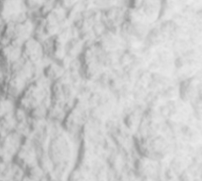
It occurs as a white or yellowish crystalline powder.
What it is used for and where it is used
It is used in medicine, food, fertiliser, fixative in dyes, biological insecticide, antifreeze, raw material in the production of caffeine and saccharin, corrosion inhibitor for steel, bleaching agent for silk and linen, heat treatment agent for metals, bleaching, electroplating.
Chromatography: to determine mercury, potassium and chlorate. Nitrification and diazotization reagent (temporary generation of sodium nitrite and hydrochloric acid). Soil analysis. Serum bilirubin measured in liver function tests.
Medicine
Sodium nitrite is an analytical reagent, a vasodilator that generates nitric oxide in tissues by involving haemoglobin, an antidote to cyanide poisoning.
It also has antimicrobial activity by inhibiting enzymes or disrupting electron transport in various microbes (1), can improve cardiac function and, as an effective cardioprotective treatment, is also cost-effective.
This study investigated the protective response in the presence of ischaemia or hypoxic conditions and concluded that exogenous sodium nitrite had protective effects against hepatic ischaemia-reperfusion injury (2).
Sickle cell skin ulceration has a negative impact on quality of life. Topical sodium nitrite has been shown to reduce the size of sickle cell leg ulcers. This study examined how topical sodium nitrite affected quality of life scores in patients with sickle cell leg ulcers. Topical sodium nitrite has the potential to improve quality of life, especially in younger people. Longer duration of treatment and randomised trials are needed to confirm the efficacy of this topical therapy (3).
Sodium nitrite can be considered an effective therapeutic agent for diseases of the central nervous system (4).
Sodium nitrite (Medicine) studies
Its use in food is permitted but at concentrations strictly established by European food additive legislation (Regulation (EC) No 1333/2008). It is labelled with the number E250 on the European additives list as a preservative and is subject to an Acceptable Daily Intake (ADI).
Typical optimal characteristics of the commercial product Sodium nitrite
| Appearance | Colorless or yellow crystal |
| Content of sodium nitrite % | ≥98.5 |
| Boiling Point | 320 °C |
| Melting Point | 271 °C(lit.) |
| Density | 1.29 g/mL at 25 °C |
| PSA | 52.49000 |
| LogP | 0.25060 |
| Water Solubility | 820 g/L (20 ºC) |
| Water insoluble matter | ≤0.05% |
| Sodium nitrate | ≤0.8% |
| Chloride | ≤50ppm |
| Moisture % | ≤2.0 |
| Storage | 2-8°C |
| Safety | 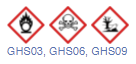 |
 |  |
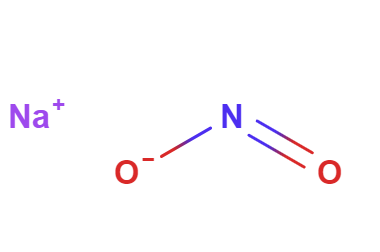 | 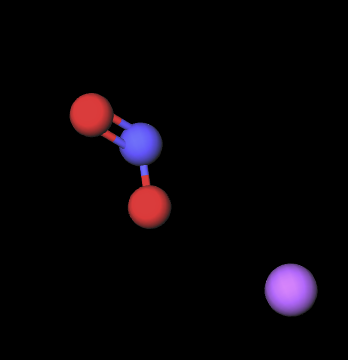 |
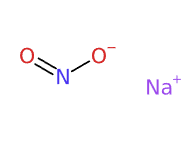
- Molecular Formula : NNaO2
- Molecular Weight : 68.995
- Exact Mass 68.982674
- CAS : 7632-00-0
- UNII M0KG633D4F
- EC Number 231-555-9
- DSSTox Substance ID DTXSID0020941
- IUPAC sodium;nitrite
- InChI=1S/HNO2.Na/c2-1-3;/h(H,2,3);/q;+1/p-1
- InChl Key LPXPTNMVRIOKMN-UHFFFAOYSA-M
- SMILES N(=O)[O-].[Na+]
- MDL number MFCD00011118
- PubChem Substance ID 329752451
- ChEBI 78870
- ICSC 1120
- NSC 77391
- RTECS RA1225000
- UN 1500 3287
Synonyms :
- Nitrous acid, sodium salt
- Nitrite, Sodium

