Senna (Cassia angustifolia / Senna alexandrina)
Description
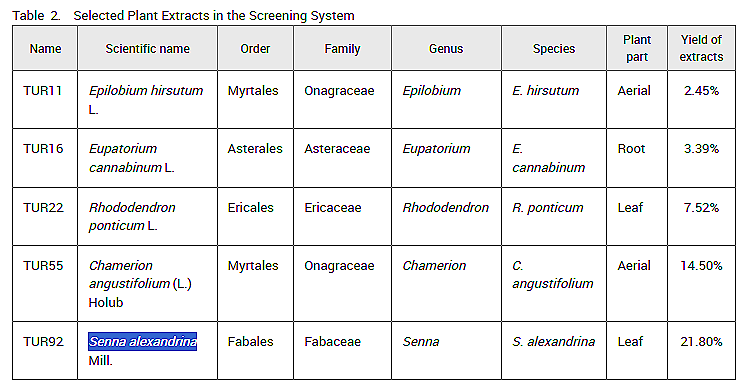
Senna (Cassia angustifolia, oggi più correttamente Senna alexandrina) is a small perennial shrub of the Fabaceae family, best known for its dried leaves and pods used as a stimulant laxative rather than as a food. It is native to semi-arid regions of north-eastern Africa and the Indo-Pakistani area, where it grows in hot, dry and very sunny environments, on sandy or gravelly soils that are poor in organic matter but well drained.
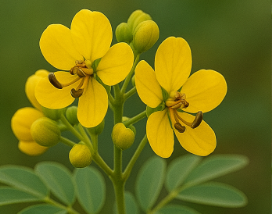
The plant shows a bushy, relatively low habit, generally under 1 m in height. Stems are slender, green-yellowish, erect or slightly branching. The leaves are paripinnate, composed of several pairs of small, lanceolate leaflets, light green to grey-green in colour. These leaflets, together with the flat pods, constitute the main herbal drug used in phytotherapy. The flowers are bright yellow, typical of many legumes, and are grouped in axillary or sub-terminal inflorescences; they precede the formation of the fruit.
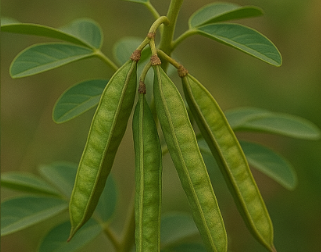
After pollination, the plant produces flat, slightly curved pods, which turn from green to yellow-brown or dark brown at full maturity and contain multiple flattened seeds. Leaves and pods are harvested, dried and selected to obtain a botanical material concentrated in anthracene glycosides (sennosides), which are responsible for the characteristic stimulant laxative action. The dried drug appears fragile, with thin leaflets and papery pods, has a faint herbal odour and a distinctly bitter, somewhat harsh taste, clearly unsuitable for normal culinary use.
Senna is therefore a plant with a modest aerial structure but a very strong functional identity: highly adapted to dry, sunny climates and poor soils, it has become one of the reference herbal laxatives in traditional and modern herbal medicine, used for centuries in teas, extracts and pharmaceutical preparations for the short-term treatment of occasional constipation.
 |  |
Botanical classification
Common name: Senna (senna leaves)
Clade: Angiospermae
Order: Fabales
Family: Fabaceae
Genus: Senna
Species: Senna alexandrina Mill. (syn. Cassia angustifolia Vahl)
Climate
Senna is an officinal species typical of hot, dry environments, originally from semi–arid regions. It prefers a subtropical or dry tropical climate, with mild winters and hot, sunny summers. It tolerates drought fairly well, but is sensitive to intense cold: even short frosts can damage the aerial parts and compromise leaf and pod production.
Exposure
The ideal exposure is full sun, which is essential for good vegetative growth and a high yield of leaves, the main medicinal part. In shaded positions, the plant develops weaker stems, less dense foliage and a lower concentration of active constituents.
Soil
Senna grows well in sandy or sandy–loam soils, loose, low in organic matter but very well drained. It prefers soils from neutral to slightly subalkaline, typical of semi–arid areas. Waterlogging is highly unfavourable, as it promotes root rot, so compact, poorly structured clays should be avoided.
Irrigation
In cultivation, senna requires moderate irrigation, especially in the early growth stages, keeping the soil only slightly moist. Once well established, the plant is fairly resistant to water shortage and can be managed with supplementary watering only in periods of prolonged drought. It is advisable to let the topsoil dry between irrigations.
Temperature
The optimal temperature range for germination and growth is generally between 20 and 30 °C. The plant tolerates intense heat well, provided soil moisture is not completely lacking, while temperatures close to or below 0 °C can damage shoots and leaves. In areas at risk of late cold snaps, sowing should be scheduled to avoid the most sensitive stages coinciding with frost.
Fertilization
Senna is relatively undemanding in nutrients, being adapted to poor soils. Usually a light application of well–matured organic matter before planting is enough to improve soil structure. Excess fertilization, especially with nitrogen, is unnecessary and may encourage overly soft growth that is less suited to dry conditions and potentially poorer in active principles.
Crop care
Crop care focuses mainly on weed control during early development, using light hoeing that does not damage the root system. It is important to keep the soil surface loose and to ensure good drainage at all times. In very humid climates, attention must be paid to possible rot and fungal diseases, limiting waterlogging and improving air circulation between plants.
Harvest
Harvesting concerns mainly the leaves, which are rich in anthracene derivatives. It is generally carried out when the plants are well developed, by collecting healthy, fully expanded leaves, often just before or at the beginning of flowering. In some production systems, mature pods are also harvested. The plant material is then dried in a shaded, well–ventilated place to preserve its active constituents.
Propagation
Propagation is by seed, usually direct–sown in the field on well–prepared, finely worked soil. Seeds may benefit from slight scarification or brief soaking to aid imbibition and improve germination. After emergence, thinning is carried out to give each plant enough space to develop a good leaf canopy, which is important for achieving satisfactory yields of dried leaves.
Indicative nutritional values per 100 g
(dried leaves or pods)
Senna is not used as a food. Its leaves and pods are not intended for nutritional intake, only for medicinal / herbal use in small doses.
For this reason, classic nutritional values per 100 g are not meaningful and are generally not reported.
Key constituents
Anthracene glycosides (sennosides A, B, C, D, etc.)
main active group responsible for stimulant laxative effects
Anthraquinone derivatives and aglycones
such as rhein, chrysophanol, emodin, aloe-emodin
Flavonoids
derivatives of kaempferol, isorhamnetin and related structures
Mucilages and plant polysaccharides
Mild tannins, resins, organic acids
Minor amounts of sugars and minerals (nutritionally negligible)
Production process
Cultivation
grown in warm, semi-arid climates with low rainfall
prefers sandy or sandy-loam, well-drained soils
sown or transplanted in open field, with moderate irrigation
Harvesting
leaves harvested from well-developed plants, commonly within the first 1–2 years of growth
pods collected when fully formed and near maturity, but still intact and healthy
Drying
thin layers, in shade and well-ventilated areas, or in low-temperature dryers
proper drying supports both stability and optimal sennoside formation
Selection and packaging
damaged or discoloured material is removed
dried herbal material is packed in suitable containers protected from light and moisture
For pharmaceutical use, senna is often further processed into standardised extracts with defined sennoside content.
Physical properties
dried leaves: thin, lanceolate, yellow-green or grey-green
dried pods: flat, papery legumes, yellow-brown to dark brown, containing flattened seeds
the dried herbal drug is brittle and easy to crumble
ground senna: brownish powder with variable particle size
low residual moisture is required for stable storage
Sensory and technological properties
taste: distinctly bitter, somewhat harsh and unpleasant, often masked by blending with other herbs or flavours
odour: faint, herbal, slightly green
technological behaviour:
active glycosides extract well in water and hydroalcoholic solvents
reasonably stable when protected from light, air and high humidity
readily formulated into teas, powders, dry extracts, tablets, syrups, oral drops
Food applications
Senna has no food application.
teas or infusions containing senna are considered medicinal preparations, not ordinary beverages
preparations are intended for short-term relief of occasional constipation, not for regular nutritional use
Nutrition and health
In the context of “nutrition and health”, senna is relevant as a herbal medicinal laxative, not as a nutrient source.
sennosides reach the colon largely unchanged and are transformed by colonic flora into active compounds (anthrones)
these stimulate intestinal motility and reduce water reabsorption, leading to softer stools and accelerated transit
effect is typically strong, with laxative action appearing after several hours (often 8–12 h)
Risks and cautions
prolonged or excessive use may cause:
abdominal cramps, pain, diarrhoea
fluid and electrolyte loss (especially potassium)
risk of laxative dependence and reduced spontaneous bowel motility
not recommended in:
intestinal obstruction, acute inflammatory bowel diseases, unexplained abdominal pain
pregnancy and breastfeeding unless specifically advised by a healthcare professional
Senna must therefore be regarded as a powerful herbal drug, suitable only for short-term use and under appropriate guidance.
Portion note
There is no serving size in the dietary sense.
doses are expressed in mg of dried drug or mg of sennosides per day, according to pharmacopoeial or product guidance
administration is typically in the evening, to obtain an effect the following morning
Allergens and intolerances
possible hypersensitivity reactions in individuals sensitive to senna or related species
excessive use may irritate the intestinal mucosa and aggravate pre-existing conditions
individuals with irritable bowel, chronic inflammatory bowel disease or other intestinal pathologies should use senna only under medical supervision
Storage and shelf-life
keep dried herbal material in closed containers, protected from light, heat and humidity
leaves tend to degrade faster than pods; limiting exposure to air and light helps preserve sennoside content
dry and liquid extracts must be stored according to manufacturer instructions (often in well-closed, opaque containers)
With correct storage, senna preparations maintain their characteristics for the declared shelf-life of the product.
Safety and regulatory
in Europe and many other regions, senna (leaves/pods) is classified as a herbal medicinal product for the short-term treatment of occasional constipation
its use is regulated via:
defined ranges of sennoside content
clear indications, duration limits and age restrictions
senna is not regarded as a food ingredient and is not used as such
Labeling
For teas, extracts or herbal medicines based on senna, labels should indicate:
botanical name: Cassia angustifolia (or synonym Senna alexandrina), and plant part (leaf, pod)
dosage form (tea, dry extract, tablets, drops, etc.)
sennoside content or equivalent amount of herbal drug, where applicable
indication for occasional constipation, recommended maximum duration of treatment and excluded groups (young children, pregnancy, etc.)
warnings on possible side effects (cramps, diarrhoea, risk of prolonged use)
Troubleshooting
In use (laxative effect)
no effect → dose too low, preparation incorrectly made, or herbal material of poor quality with low sennoside content
marked abdominal cramps → dose too high, individual sensitivity, or presence of underlying conditions; reduce or stop use and seek medical advice
intense diarrhoea → overdose; stop use, rehydrate, and monitor symptoms
In storage
loss of efficacy over time → possible degradation of sennosides due to prolonged storage, light or heat; check production date and replace with fresher material
darkening or stale odour → oxidised or degraded drug; replace with properly stored material
Main INCI functions (cosmetics)
In cosmetics, senna is not a major ingredient, but may appear as:
a botanical extract in products with a “detox / purifying” concept
a mild skin conditioning component due to its phenolic and flavonoid content
However, the main role of senna remains phytotherapeutic and medicinal, particularly as a stimulant laxative, rather than cosmetic.
Conclusion
Senna (Cassia angustifolia) is not a food plant but a pharmacologically active medicinal species. A modest-looking semi-arid shrub with compound leaves, yellow flowers and flat pods, it owes its importance to the dried leaves and fruits, rich in sennosides, which provide a strong stimulant laxative effect at low doses.
Used correctly, for short periods and under appropriate professional advice, senna is a useful tool for managing occasional constipation. Misuse or prolonged use, however, may lead to adverse effects — cramps, diarrhoea, electrolyte loss, and potential dependence on laxatives — making caution essential.
Overall, senna is a paradigmatic example of a powerful herbal remedy: morphologically unassuming but chemically very active, perfectly adapted to harsh environments, and capable of producing pronounced clinical effects in small, carefully controlled quantities. Its place is not on the plate, but firmly within herbal medicine and pharmacognosy.
Mini-glossary
Anthracene glycosides / sennosides: active compounds in senna responsible for stimulant laxative action at colon level
Stimulant laxative: agent that increases intestinal motility and secretions, accelerating transit
Phytotherapy: rational use of medicinal plants or their extracts for health support or therapeutic purposes
Skin conditioning: cosmetic function attributed to ingredients that help keep skin in good condition (softness, comfort, overall appearance)
Studies
Senna is used for both its antibacterial and laxative properties.
The mechanism by which Senna acts as a laxative concerns the selective action on the nervous plexus of the intestinal smooth muscle which increases intestinal motility (1)
It is also used to treat skin diseases, helminthic and parasitic infections (2).
The seeds are soft, dicotyledonous and contain about 50% endosperm.
Worldwide, a major cause of morbidity and mortality is diabetes mellitus. This study provides evidence that extracts of radish (Raphanus sativus Linn) and Cassia angustifolia (Vahl.) improve metabolic abnormalities associated with diabetes and may delay the risk of complications due to chronic hyperglycemia. The beneficial effects of both extracts in diabetes seem to be attributed to the synergistic effects of its bioactive compounds such as flavonoids, saponins, and glycosides (3).
This study revealed extensive anthelmintic activity of both Cassia angustifolia and Cassia alata and Cassia occidentalis (4).
Senna Cassia angustifolia studies
Safety
Care should be taken not to ingest significant amounts of this plant as long-term use of Senna can lead to laxative dependence and liver damage (1)