

| "Descrizione" by Al222 (23254 pt) | 2025-Nov-24 19:42 |
Cabbage
(From Brassica oleracea var. capitata, family Brassicaceae)
Description
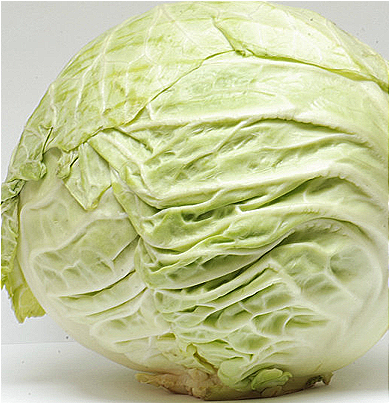
Cabbage (Brassica oleracea var. capitata) is a leafy vegetable forming a compact head of overlapping leaves.
The most common types are white/green head cabbage and red/purple cabbage.
Flavour ranges from mild and slightly sweet (green types) to more pronounced and slightly pungent (red types).
It is consumed raw (salads, coleslaw), cooked (soups, stews, stir-fries) and fermented (sauerkraut, kimchi).
Indicative nutritional values per 100 g
(raw head cabbage, edible portion)
Energy: 22–30 kcal
Carbohydrates: 4–6 g
sugars: 2–3 g
Fibre: 2–3 g
Protein: 1–1.5 g
Lipids: 0.1–0.3 g
SFA (first occurrence – saturated fatty acids): <0.05 g (excess dietary SFA is associated with increased cardiovascular risk, but cabbage contributes only negligible amounts)
MUFA: traces
PUFA: traces
TFA: not naturally present
Vitamins: high vitamin C, vitamin K, folate; small amounts of B6
Minerals: potassium, calcium, phosphorus; traces of iron and magnesium
Values vary with variety (green vs red) and preparation (raw, cooked, fermented).
Key constituents
Glucosinolates (e.g. glucobrassicin, sinigrin)
Isothiocyanates and related sulphur compounds (formed from glucosinolates)
Anthocyanins (in red/purple cabbage)
Vitamin C
Vitamin K
Dietary fibre (insoluble and soluble fractions)
Minerals: K, Ca, P
Production process
Cultivation and growth
cool-season crop;
harvested when the head is fully formed and firm.
Harvesting and trimming
cutting at the stem;
removal of outer damaged or dirty leaves.
Washing and sorting
removal of soil and foreign matter.
Cutting / further processing
whole heads, wedges, shreds, coleslaw mixes, ready-to-cook strips.
Optional industrial processes:
fermentation for sauerkraut, kimchi and other lactic-fermented products;
blanching and freezing for frozen mixes;
pasteurisation for ready soups and cooked vegetable bases.
Packaging
whole heads in crates;
shredded products in bags or trays, often in modified atmosphere (MAP).
All operations follow GMP/HACCP.
Physical properties
Appearance: compact head of overlapping leaves.
Colour: light to dark green or red–purple depending on variety.
Texture: crisp and crunchy when raw; soft and tender after cooking.
Moisture: approx. 90–92%.
Sensory and technological properties
Flavour: mild, slightly sweet and vegetal; can become more pungent and sulphurous with long cooking.
Aroma: fresh, green; sulphur notes during extended cooking.
Technological behaviour:
excellent suitability for fermentation (sauerkraut, kimchi);
good resistance in slow cooking (braises, stews);
releases sulphur compounds with prolonged heating;
shreds well for industrial slicing and salad mixes.
Food applications
Raw: salads, coleslaw, shredded mixes, wraps.
Cooked: soups, stews, braised cabbage, stir-fries, side dishes.
Fermented: sauerkraut, kimchi, acidified and pickled cabbage products.
Food industry: vegetable mixes, ready soups, fillings (dumplings, rolls), vegetable extracts and powders.
Nutrition & health
Good source of vitamin C, vitamin K and dietary fibre.
Contains glucosinolates and their breakdown products (isothiocyanates), which are of nutritional and scientific interest when consumed as part of a varied diet.
Low energy density makes cabbage suitable for low-calorie diets.
Vitamin K content may be relevant for individuals on vitamin K–sensitive anticoagulant therapy.
Can cause bloating and gas in some individuals sensitive to FODMAPs or sulphur compounds.
Portion note
Typical serving as a vegetable side (raw or cooked): 80–100 g.
Allergens & intolerances
Cabbage is not a major allergen, but cross-reactions are possible in people allergic to other Brassicaceae.
Some individuals may experience gastrointestinal discomfort due to FODMAPs and sulphur compounds.
In fermented or prepared products, other allergens (e.g. fish sauce in some kimchi recipes) must be considered in the final formulation.
Storage & shelf-life
Whole fresh heads:
1–3 weeks refrigerated at 0–4 °C with high relative humidity.
Cut / ready-to-eat (fresh-cut, MAP):
typically 3–7 days refrigerated, depending on process and packaging.
Frozen:
12–24 months at –18 °C.
Fermented products (e.g. sauerkraut):
up to 12 months if pasteurised and properly packed;
3–6 months refrigerated for unpasteurised products.
Safety & regulatory
Control points:
microbiological safety (especially Listeria, Salmonella in fresh-cut and IV range products),
pesticide residues,
heavy metals depending on soil and water.
For fermented products:
monitoring of pH, salt concentration, lactic acid bacteria, and absence of pathogens.
Production in accordance with GMP/HACCP.
Labeling
Typical names:
“cabbage”,
“white cabbage / green cabbage / red cabbage”,
“shredded cabbage”,
“sauerkraut” for fermented finely shredded cabbage.
Additional ingredients (salt, vinegar, spices, antioxidants, preservatives) must be declared.
In multi-ingredient foods, cabbage is listed in descending order of weight.
Troubleshooting
Leaf browning / discoloration:
oxidation and dehydration → reduce air exposure, use MAP and adequate humidity.
Strong sulphur odour:
excessively long cooking → prefer shorter cooking times or gentle methods.
Loss of crunch in fresh-cut products:
excess moisture and long storage → improve drainage, packaging and cold chain.
Fermentation defects (soft, slimy sauerkraut):
incorrect salt level or temperature → adjust fermentation parameters.
Sustainability & supply chain
Robust crop adapted to temperate climates.
Main environmental aspects: water use, plant protection products, soil management.
Field leaves and trimming residues can be valorised as animal feed or compost.
In industrial processing, washing water and effluents must be managed and monitored (e.g. via BOD/COD).
Main INCI functions (cosmetics)
(as “Brassica Oleracea Capitata Leaf Extract”)
Antioxidant
Skin conditioning
Mild soothing
Purifying action
Used mainly in natural and botanical-themed cosmetic formulations.
Conclusion
Cabbage is a versatile, low-calorie and functionally rich vegetable ingredient, suitable for raw, cooked and fermented preparations.
Its combination of vitamin C, fibre and Brassicaceae-specific sulphur compounds makes it attractive both in everyday diets and industrial product development.
Within well-managed supply chains and under GMP/HACCP, cabbage is a safe, stable and high-quality ingredient for domestic use, foodservice and the food industry.
Mini-glossary
SFA – Saturated fatty acids: dietary fats that should be moderated; cabbage contains only negligible amounts.
MUFA – Monounsaturated fatty acids: generally neutral or beneficial fats, present only in traces in cabbage.
PUFA – Polyunsaturated fatty acids: essential fats more prone to oxidation; present in very small amounts here.
TFA – Trans fatty acids: associated with negative health effects when industrially produced; not naturally present in cabbage.
GMP/HACCP – Good Manufacturing Practices / Hazard Analysis and Critical Control Points, systems for hygiene, safety and quality in food production.
BOD/COD – Biological / Chemical Oxygen Demand, indicators of the pollution load of processing wastewater.
FODMAPs – Fermentable short-chain carbohydrates that can trigger digestive symptoms in sensitive individuals.
References__________________________________________________________________________
Kapusta-Duch J, Kopeć A, Piatkowska E, Borczak B, Leszczyńska T. The beneficial effects of Brassica vegetables on human health. Rocz Panstw Zakl Hig. 2012;63(4):389-95.
Abstract. The products of plant origin are a rich source of biologically active substances, both nutritive and referred as anti-nutritive. A large group of these compounds are substances with antioxidant activity that fights against free radicals. In the family of Brassicaceae vegetables, Brassica, is the largest and most widely consumed a group of plants in Europe and all over the world. They are characterized by different levels of nutrients. However because of their large and frequent consumption, they may become a significant source of nutrients and bioactive compounds in the daily diet. The beneficial effects of Brassica vegetables on human health have been somewhat linked to phytochemicals. They prevent oxidative stress, induce detoxification enzymes, stimulate immune system, decrease the risk of cancers, inhibit malignant transformation and carcinogenic mutations, as well as, reduce proliferation of cancer cells. Brassica vegetables contain a lot of valuable metabolites, which are effective in chemoprevention of cancer, what has been already documented by numerous studies. Due to the presence of vitamins C and E, carotenoids and antioxidant enzymes such as catalase, superoxide dismutase (SOD) and peroxidase, these vegetables are considerable source ofantioxidants, and due to the presence of polyphenols and the sulfur-organic compounds exert also antimutagenic action. Moreover, these vegetables are also rich in glucosinolates, which are unstable compounds and undergo degradation into biologically active indoles and isothiocyanates under the influence of enzyme presented in plant tissues- myrosynase. These substances through the induction of enzymatic systems I and II phase of xenobiotics metabolism may affect the elimination or neutralization of carcinogenic and mutagenic factors, and consequently inhibit DNA methylation and cancer development. Despite many healthy benefits upon eating of cruciferous vegetables, it has been also seen a negative impact of their certain ingredients on the human body.
Rokayya S, Li CJ, Zhao Y, Li Y, Sun CH. Cabbage (Brassica oleracea L. var. capitata) phytochemicals with antioxidant and anti-inflammatory potential. Asian Pac J Cancer Prev. 2014 Jan;14(11):6657-62. doi: 10.7314/apjcp.2013.14.11.6657.
Abstract. Background: The objective of this study was to investigate antioxidant and anti-inflammatory activity of cabbage phytochemicals. Materials and methods: Color coordinates were evaluated by colorimetry, and the antioxidant and anti-inflammatory activities were analyzed by spectrophotometer for some common cabbage varieties. Results: Red heads had the highest total antioxidant contents followed by Savoy, Chinese and green heads. The Chinese variety had the highest ABTS (2,2-azino-di-(3-ethylbenzthiazoline-sulfonic acid) antioxidant activity, was 5.72 μmol TE/g fw (Trolox equivalent). The green variety had the highest DPPH (free radical scavenging activity) antioxidant activity, which was 91.2 μmol TE/g fw. The red variety had the highest FRAP (ferric reducing antioxidant power) antioxidant activity, which was 80.8 μmol TE/g fw. The total phenol amounts were 17.2-32.6 mM trolox equivalent antioxidant capacity (TEAC) and the total flavonoid amounts were 40.0-74.2 mg quercetin per gram. Methanolic extracts of different cabbage heads showed different anti-inflammatory activity values. Chinese, Savoy and green heads had the highest anti-inflammatory activity, while red heads had the lowest. Conclusions: The results suggest that these varieties of cabbage heads could contribute as sources of important antioxidant and anti-inflammatory related to the prevention of chronic diseases associated to oxidative stress, such as in cancer and coronary artery disease.
Lučić D, Pavlović I, Brkljačić L, Bogdanović S, Farkaš V, Cedilak A, Nanić L, Rubelj I, Salopek-Sondi B. Antioxidant and Antiproliferative Activities of Kale (Brassica oleracea L. Var. acephala DC.) and Wild Cabbage (Brassica incana Ten.) Polyphenolic Extracts. Molecules. 2023 Feb 15;28(4):1840. doi: 10.3390/molecules28041840.
Abstract. Brassicaceae are rich in healthy phytochemicals that have a positive impact on human health. The aim of this study was to analyze the phenolic compounds and antioxidant and anticancer potential of traditional Croatian kale (Brassica oleracea L. var. acephala DC.) and wild cabbage (Brassica incana Ten.) extracts. The phenolic groups and antioxidant activity were determined by spectrophotometry, selected phenolic compounds (ferulic acid, sinapic acid, salicylic acid, kaempferol, and quercetin) were analyzed by LC-MS/MS, and anticancer potential was evaluated in vitro using HeLa cells. The extracts of both plant species are rich in phenolic compounds and showed significant antioxidant activity at similar levels. LC-MS/MS detected sinapic acid as the most abundant phenolic acid, followed by ferulic acid, while salicylic acid was present at lower concentrations. A comparative analysis showed that wild cabbage contained significantly more sinapic acid, while kale contained more kaempferol and quercetin. Both Brassica extracts at a concentration of 50 µg mL-1 showed an antiproliferative effect on HeLa cells, while they did not affect the proliferation of normal human skin fibroblasts. Wild cabbage extract also showed an antiproliferative effect on HeLa cells at a lower applied concentration of 10 µg mL-1 of extracts. The clonogenic analysis also revealed the inhibitory effect of the extracts on HeLa colony growth.
Morales-López J, Centeno-Álvarez M, Nieto-Camacho A, López MG, Pérez-Hernández E, Pérez-Hernández N, Fernández-Martínez E. Evaluation of antioxidant and hepatoprotective effects of white cabbage essential oil. Pharm Biol. 2017 Dec;55(1):233-241. doi: 10.1080/13880209.2016.1258424.
Abstract. Context: There have been no reports of the extraction of essential oil (EO) from white cabbage [Brassica oleracea L. var. capitata (L.) Alef. f. alba DC. (Brassicaceae)] (Bocfal) or its chemical composition, antioxidant activity, or hepatoprotective effects. Objective: To extract Bocfal EO, to identify and quantify its chemical components, to assess their antioxidant capacity, and to evaluate the hepatoprotective properties of Bocfal EO. Materials and methods: Bocfal EO was obtained using hydrodistillation (200 mm Hg/58 °C). The chemical composition was analyzed using GC-MS and was quantified using GC-FID. The antioxidant activity of Bocfal EO and its main constituents was evaluated using TBARS in rat brain homogenates. A Bocfal EO hepatoprotective effect (192 mg/kg) on acute carbon tetrachloride (CT)-induced liver damage was determined in rats using biochemical markers and histological analysis. Diallyl disulphide (DADS) (1 mmol/kg) was used as a control for comparison. Results: Bocfal EO contained organic polysulphides (OPSs), such as dimethyl trisulphide (DMTS) 65.43 ± 4.92% and dimethyl disulphide (DMDS) 19.29 ± 2.16% as major constituents. Bocfal EO and DMTS were found to be potent TBARS inhibitors with IC50 values of 0.51 and 3 mg/L, respectively. Bocfal EO demonstrated better hepatoprotective properties than did DADS (p < 0.05), although both slightly affected the hepatic parenchyma per se, as observed using histopathology. Discussion and conclusion: The antioxidant properties of Bocfal EO and DMTS may be the mechanism of hepatoprotective action; the parenchymal disturbances by Bocfal EO or DADS alone may be related to the high doses used.
| Evaluate |