



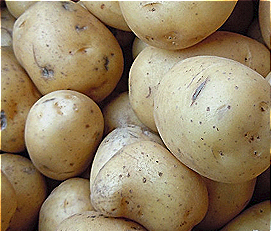
Indicative nutrition values (per 100 g edible portion, raw; typical ranges)
• Energy: ~70–85 kcal
• Carbohydrate: ~15–18 g (starch predominant; sugars ~0.5–1 g)
• Dietary fiber: ~1.5–3 g
• Protein: ~1.8–2.5 g
• Fat: ~0.05–0.2 g — SFA (saturated fatty acids, keep overall dietary intake low), MUFA and PUFA negligible
• Potassium: ~300–500 mg • Vitamin C: ~10–20 mg (declines with cooking) • Vitamin B6: ~0.2–0.3 mg
• Sodium: very low (rises when salted/seasoned)
• Note: cooking and cooling can increase resistant starch (RS).
Key constituents
• Starch (A/B granules; gelatinizes ~58–70 °C) and resistant starch (↑ after cooling).
• Fibers (cellulose/hemicelluloses/pectins), potato proteins, minerals (K, Mg), vitamin C and B6.
• Phenolics (e.g., chlorogenic acid), carotenoids/anthocyanins in colored varieties.
• Glycoalkaloids (solanine + chaconine): naturally present—manage via good practices.
Production process
• Cultivation: varietal selection, fertilization/irrigation management, IPM (integrated pest management).
• Harvest and initial curing/storage to set skin.
• Grading: by size, defects, dry matter; directed to fresh market or processing (peeling, cutting, cooking, drying, frying, etc.).
• Post-harvest: sprout control with compliant methods; cold chain/logistics under GMP/HACCP.
Physical properties
• Typical dry matter 18–24% (varietal/soil dependent); density used as a technological proxy.
• Reducing sugars (glucose/fructose) affect browning and potential acrylamide in frying.
• High aw in fresh tubers; pulp pH ~5.5–6.5.
• Waxy varieties hold shape; floury varieties fall apart (ideal for mash/bake).
Sensory and technological properties
• Starch gelatinization → body/viscosity; retrogradation → more RS (firmer texture when cooled).
• Frying color governed by reducing sugars/moisture/temperature; acrylamide risk rises with over-browning.
• Cooking performance: waxy for salads/stews; floury for mash/gnocchi/baking.
• Skins are edible and nutritious when well washed; discard green/bitter areas.
Food applications
• Fresh: boiled/steamed, baked, mashed, gnocchi, fries/chips, salads, soups.
• Industry: potato flakes/granules, starch, par-fried/frozen, extruded snacks, chilled/ready meals.
• Gastronomy: clean binder/bulking in fillings and plant-based patties; thickener for soups/sauces.
Nutrition & health
Potato is low in fat and a good potassium source, with vitamin C in the flesh (better preserved by steaming or microwave with little water than by prolonged boiling/peeling). Starch provides ready energy; cooling after cooking (and serving cold or reheated) increases resistant starch, which may support post-prandial glycaemic moderation and microbiota benefits.
Glycaemic impact varies with variety, cooking method, and serving temperature (hot vs cold). Saturated fat (sfa) in potatoes is negligible; lipid impact of the dish depends on cooking fats and toppings.
For safety, avoid potatoes with pronounced greening, sprouts, or strong bitterness (glycoalkaloids): peel generously and discard green/damaged parts.
In low-sodium diets potatoes help (very low intrinsic Na); for weight control, portion size, cooking method, and condiments are key.
Portion note: As a side, 150–200 g cooked potatoes (≈ 250–300 g raw with skin) is a practical serving. For higher RS, cook–cool and serve as salad or reheat gently.
Quality and specifications (typical topics)
• Declared variety/use (waxy/floury), size, defects (greening, sprouts, bruises), reducing sugars, dry matter.
• Residues: pesticides ≤ MRL; contaminants within limits.
• Microbiology: clean surface; decay-free; for minimally processed (fresh-cut) strict criteria apply.
• Glycoalkaloids: monitor per guidance/limits; mitigate via darkness, careful handling.
• For processing: targets for frying color, time/temperature, yield and oil uptake.
Storage and shelf-life
• Fresh: store dark, well ventilated, RH 85–95%; avoid light (greening) and too low temperatures (cold-sweetening) or too warm (sprouting).
• Home storage: avoid prolonged refrigeration; industrial storage controlled (~6–10 °C per end use).
• Shelf-life: weeks to months by variety/conditions; peeled/cut products need protective atmosphere and cold chain.
Safety and regulatory
• Fresh produce subject to marketing standards (category/size) and cleanliness.
• Processed items: compliance with GMP/HACCP, allergen management (e.g., sulfites only if used for anti-browning), hygiene/traceability labeling.
• Acrylamide mitigation in fried/baked products via good processing practices.
Labeling
• Name: “potatoes” (+ variety/origin if required). For processed items state treatments (e.g., pre-fried, frozen) and ingredients/additives used.
• Provide storage and cooking instructions; optionally advise discarding green/sprouted parts.
Troubleshooting
• Enzymatic browning after cutting → use cold water/brief acidulation; keep low temperature during prep.
• Too dark when fried → high reducing sugars or excessive temperature → select suitable lots, optimize time/temperature, blanch if needed.
• Breaking apart in boiling → floury variety → choose waxy for salads.
• Bitter/green taste → light exposure/sprouting → trim or discard; improve storage.
• High oil uptake in frying → surface moisture high or low oil temperature → dry thoroughly and fry at correct temperature.
Sustainability and supply chain
• High yield per hectare; peel/pulp side-streams valorized for feed/biogas; wastewater managed to BOD/COD targets with heat/water recovery.
• Favor sound agronomy (rotations, efficient irrigation, IPM), optimized cold logistics, and recyclable packaging; supplier programs and residue control under GMP/HACCP.
INCI functions (cosmetics)
• Solanum Tuberosum (Potato) Starch/Extract: absorbent/opacifying, viscosity-controlling, mild exfoliant in powders/scrubs; usage/claims per cosmetic regulations.
Conclusion
Potato is a versatile, nutritionally sound ingredient—low in fat, notable for potassium—with technological performance tunable by variety, cooking method, and reducing-sugar management. Final quality hinges on varietal choice, proper storage, process specs, and portioning/condiments in the finished dish.
Mini-glossary
• SFA: Saturated fatty acids — Excess intake may raise LDL-cholesterol; potatoes contribute negligible amounts.
• MUFA: Monounsaturated fatty acids — Favorable when replacing saturates.
• PUFA: Polyunsaturated fatty acids — Beneficial when balanced and protected from oxidation.
• RS (resistant starch): Starch fraction not digested in the small intestine; increases with cooling/retrogradation.
• GI (glycaemic index): Post-prandial glycaemic response measure; varies by variety and cooking.
• MRL: Maximum residue limits — Legal limits for pesticide residues.
• IPM: Integrated pest management — Field pest-control strategy combining methods.
• GMP/HACCP: Good manufacturing practice / hazard analysis and critical control points — Preventive hygiene and process-control systems.
• BOD/COD: Biochemical/chemical oxygen demand — Wastewater impact metrics guiding treatment.
• aw: Water activity — Lower aw improves microbial stability in processed products.

