



Tomato (Solanum lycopersicum L., family Solanaceae)
Description
Fleshy berry grown in many eco-types/cultivars (round slicers, Roma/plum, cherry/grape, ribbed, oxheart, etc.).
Sensory profile: balanced sweet–tart, pronounced natural umami (glutamate); texture ranges from juicy to meaty depending on cultivar and ripeness.
Formats: fresh (whole, sliced), processed (crushed/diced, passata/purée, peeled, concentrates, ready sauces), semi-dry/dried, juices.
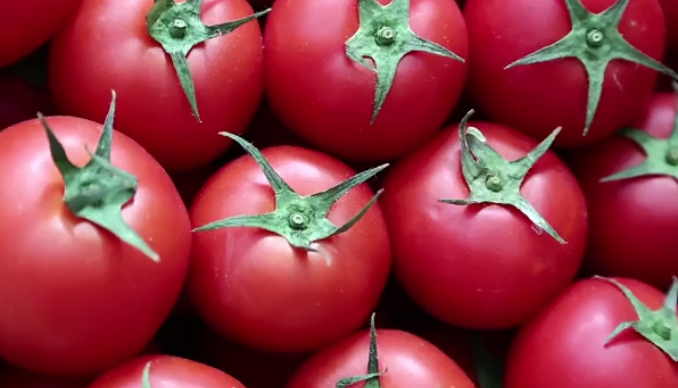
In first place for production is China, followed by the United States, Turkey and Mexico.
Joseph Campbell produced the first tomato soup in 1897.
The first tomato recipe is attributed to Maria Parloa in her 1872 book Appledore Cook.
Caloric value (per 100 g)
Fresh: ~15–25 kcal/100 g (varies with °Bx/soluble solids).
Typical: water ~93–95%, carbs ~3–4.5 g (sugars ~2.5–3.5 g), fiber ~1–1.5 g, protein ~0.8–1.2 g, fat ~0.2 g; sodium naturally low.
Concentrates (double/triple) have higher °Bx and therefore more kcal at equal weight.
Key constituents
Carotenoids: lycopene (primary marker in red types), β-carotene; lutein in some cultivars.
Organic acids: citric and malic (govern pH and perceived acidity).
Free amino acids/umami: glutamic acid; sugars glucose/fructose (~1:1).
Pectin/fiber, polyphenols (e.g., chlorogenic acid), vitamin C (heat-labile), potassium.
Typical analytical markers: °Bx (soluble solids), pH (fresh/derivatives ~4.0–4.6), color (CIE a*), lycopene (HPLC), Bostwick/viscosity, mold count for concentrates.
Production process
Fresh: harvest at processing ripeness → sorting, grading, ventilated packing.
Peeled/passata/diced: washing, optical sorting, blanch & peel, de-seeding, crushing → hot break (pectinesterase inactivation) or cold break → concentration to target °Bx → hot-fill or retort; salt/acidifier per recipe.
Semi-dry/dried: cut and controlled drying (air/sun/kiln) → optionally packed in oil.
Full traceability and hygiene under GMP/HACCP with CCP on pH, foreign bodies, and thermal process.
Sensory and technological properties
Pulp yield and serum separation depend on cultivar and heat regime (hot break increases body/viscosity).
Peelability improves after blanching; sweetness/body track with °Bx and maturity.
Color/aroma are sensitive to oxygen, light, and time/temperature (carotenoid oxidation, volatile loss).
Food uses
Salads, pizza/pasta sauces (marinara, arrabbiata), soups/stews, ready sauces and ketchup, juices/veloutés, confit and dried.
As a tomato base, often >50% of sauce; tune reduction and particle size in pilot trials to meet body/flow targets.
Nutrition and health
Low energy, supplies fiber and potassium; vitamin C declines with prolonged cooking.
Lycopene bioavailability increases with cooking and a small amount of fat (e.g., olive oil).
Watch sodium in ready-to-eat preserves; avoid unauthorized health claims.
Individual sensitivities occur (reflux, intolerance, histamine/liberators).
Lipid profile
Total fat negligible; SFA, MUFA, PUFA present only in traces, with no meaningful impact at culinary portions.
General health note: relatively higher MUFA/PUFA vs SFA is typically favorable/neutral for blood lipids (not material here).
Quality and specifications (typical topics)
Fresh: size, uniform ripeness, firmness, absence of rot/splits, residues within limits.
Processed: °Bx (passata ~8–12°Bx; concentrates much higher), pH, Bostwick/viscosity, color a*, seeds/peel within limits, mold count, declared NaCl, commercial sterility.
Metals/pesticides compliant; foreign bodies absent.
Storage and shelf-life
Fresh: avoid prolonged refrigeration (chilling sensitive); ideal 12–15 °C; once cut, refrigerate and use within 1–2 days.
Shelf-stable preserves: store cool/dry/dark, 18–24 months unopened; once opened, refrigerate and use within 3–5 days.
Dried/in oil: if in oil, refrigerate after opening; apply FIFO.
Allergens and safety
Tomato is not a major EU allergen; allergy/LTP syndrome occurs in predisposed individuals.
Manage CCP for thermal steps, vacuum/closures, metal detection; prefer BPA-NI packaging where specified.
INCI functions in cosmetics
Listings: Solanum Lycopersicum (Tomato) Fruit Extract, Solanum Lycopersicum (Tomato) Seed Oil (from by-products).
Roles: antioxidant (lycopene), skin conditioning, mild astringency; assess color/oxidative stability and sensitization potential.
Troubleshooting
Watery/separation: select high-°Bx cultivars (e.g., Roma), use hot break, increase reduction, fine screening.
Over-acidity: extend cook for natural sweetness, add a pinch of sugar, blend with sweeter lots; as last resort, micro-dose bicarbonate (mind flavor).
Bitter/metallic notes: excess seeds/skins → improve de-seeding/peeling; avoid over-extraction.
Dull color: minimize oxygen pickup (closed systems), use dark glass, limit time/temperature.
Sustainability and supply chain
Favor irrigation-efficient farms and IPM; valorize skins/seeds for lycopene extracts and seed oil.
In-plant: effluent control to BOD/COD targets, energy recovery on evaporators, recyclable packs; full traceability under GMP/HACCP.
Conclusion
Tomato offers exceptional versatility, yield, and sensory range across applications. Careful raw-material selection (°Bx, maturity) and sound process engineering (hot/cold break, reduction, packaging) ensure consistent, safe, and flavor-rich products.
Mini-glossary
°Bx — Degrees Brix: measure of soluble solids (sugars/solids), correlates with body and sweetness.
HPLC — High-performance liquid chromatography: assays lycopene and other markers.
Bostwick — Consistometer test for sauce flow/viscosity.
SFA — Saturated fatty acids: excess may raise LDL; trace in tomatoes.
MUFA — Monounsaturated fatty acids (e.g., oleic): generally favorable/neutral for blood lipids; trace here.
PUFA — Polyunsaturated fatty acids (n-6/n-3): beneficial when balanced; trace here.
ALA — Alpha-linolenic acid (n-3): trace in tomatoes; limited nutritional relevance.
EPA/DHA — Long-chain n-3 fatty acids typical of fish; absent in tomatoes.
TFA — Trans fatty acids: avoid industrial TFA; absent in non-hydrogenated produce.
MCT — Medium-chain triglycerides: not characteristic of tomatoes.
GMP/HACCP — Good Manufacturing Practice / Hazard Analysis and Critical Control Points: hygiene and preventive-safety systems with defined CCP.
CCP — Critical control point: step where a control prevents/reduces a hazard.
BOD/COD — Biochemical/Chemical oxygen demand: processing effluent impact indicators.
FIFO — First in, first out: inventory rotation using older lots first.
Studies
The tomato is rich in vitamins A and C and lycopene , the pigment that turns it red and is being studied for the prevention of many types of cancer, as it has antioxidant properties.
It is referred to by many studies as a prevention for prostate cancer (1).
Tomato varieties are many, including: Solanum arcanum, Solanum cheesmaniae, Solanum chilense, Solanum chmielewskii, Solanum corneliomuelleri, Solanum galapagense, Solanum habrochaites, Solanum huaylasense, Solanum neorickii, Solanum pennelli, Solanum perivianum, Solanum pimpinellifolium.
GMO tomatoes. Tomatoes have also been genetically modified, but European legislation requires that the term GMO be indicated on the label. There is no distinction in the USA. In terms of the components contained in the transgenic tomato Calcium and Magnesium are more abundant than the natural tomato.
Health Benefits
Tomatoes have been associated with various health benefits, including the prevention of chronic diseases such as cancer, cardiovascular, and neurodegenerative diseases. The presence of antioxidants like lycopene plays a key role in these benefits.
Tomatoes have been associated with various health benefits, including the prevention of chronic diseases such as cancer, cardiovascular and neurodegenerative diseases. The presence of antioxidants such as lycopene plays a key role in these benefits.
Tomatoes are rich in vitamins A and C and lycopene, the pigment that produces the characteristic red coloring and is being studied for the prevention of many types of cancer, as it has antioxidant properties and plays a protective role for cardiovascular disease (1).
It is indicated by many studies as a prevention for prostate cancer (2), inhibits serum lipid peroxide production by improving the lipid profile (3)

