



Allantoin is a natural compound and a major metabolic intermediate in most living organisms, including bacteria, fungi, animals.and in a genus of plants of the Dioscoreaceae family, a rather large family, with about 600 species. Generally, the plant is called yam. The major constituents of yam are allantoin, dioscorin, sapogenins, prosapogenin, gracillin, choline, l-arginine, polysaccharides, and proteins (1). This plant and in particular its rhizome, is used in the medical field for the prevention of inflammation and ulcers (2) and it has been used to improve diabetic disorders (3).
It is a diuretic chemical compound (substance in which the molecule contains twice the bivalent radical from urea) of glyoxylic acid.
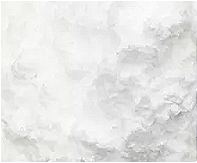
As an industrial chemical compound, it appears as a white crystalline powder, odorless, .slightly soluble in water and alcohol, insoluble in ether and chloroform and other organic solvents.
What it is used for and where
Medical
The aims of this study are to investigate the antioxidant and antitumor activities of the water and ethanol extracts isolated from Chinese yam (Dioscorea opposite Thunb.) flesh (CYF) and peel (CYP) and the effective compounds. this study demonstrated that CYP-W exerted better antitumor activity than flesh extracts and the scavenging ROS effects were also significantly higher in the CYP-W in vitro. Moreover, the data indicated that allantoin may play an important role on antioxidative and antitumor capacity in yam peel (4).
Reducing post-interventional inflammation and pain in odontostomatological surgery procedures, such as tooth extractions, implants or oral biopsies is a relevant clinical goal. Chlorhexidine oral rinse is commonly used with this aim. Recently a new product containing chlorhexidine, dexpanthenol, allantoin and chitosan (Bexident Post [BP]) in a gel formulation has been developed. We evaluated the efficacy of BP in controlling postsurgical inflammation and pain and in promoting cicatrization in subjects undergoing molar extractions. In this trial BP performed better than bicarbonate in controlling pain and inflammation in subjects undergoing dental surgery, reducing the consumption of analgesics and favoring better cicatrization (5).
Allantoin is used to treat dermatitis, redness, acne, eczema and in some burns. Its efficacy has been established in wound healing and in improving pigmentation and flexibility of scars (6).
Cosmetics
Allantoin promotes cell growth by increasing the water content of the skin's extracellular matrix, which leads to an overall improvement in the condition of the skin, which remains more moisturised and resistant. It also has good exfoliating properties and can remove dead cells in, for example, face washing.
Plants that contain Allantoin:
- Symphytum officinale
- Dioscorea polystachya
- Dioscorea oppositifolia
- Dioscorea bulbifora
- Memora nodosa (Silva Manso)
- Miers (Bignoniaceae)
For more information: Allantoin studies
Typical commercial product characteristics Allantoin
| Appearance | White powder, white crystals |
| pH | 4.00-6.00 |
| Boiling Point | 478°C |
| Melting Point | 230°C |
| Flash Point | 230-234°C |
| Density | 1.7±0.1 g/cm3 |
| Refraction Index | 1.616 |
| PSA | 113.32000 |
| LogP | -2.89 |
| Heavy metals | 10min mg/kg |
| Loss on drying | <0.10% |
| Burnt residue | 0.10 % |
| Ash | <0.10% |
| Sulfate | ≤ 10ppm |
| Optical rotation | -0.1° - +0.1° |
| Molds and Yeast | 73.50max cfu/g |
| Aerobic Bacterial | 50max cfu/g |
| Chemical Risk | 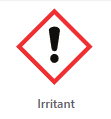 |
 |  |
 |  |
Price
25 g $21.80
100 g $29,30
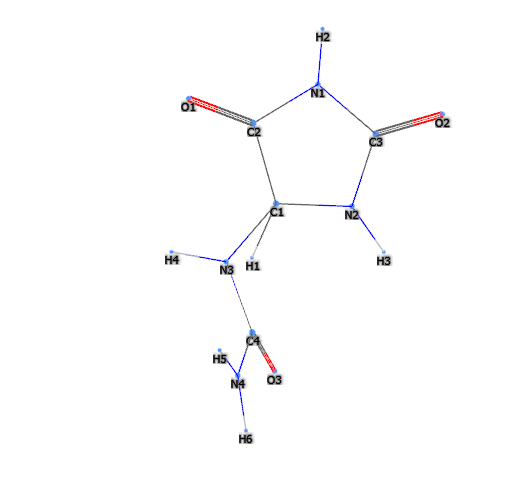
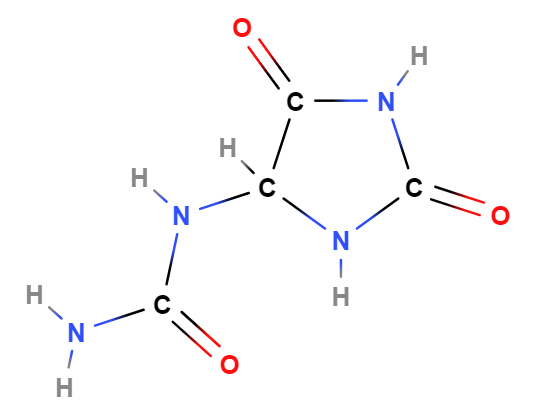
- Molecular formula C4H6N4O3
- Molecular weight 158.12
- Exact Mass 158.043991
- CAS 97-59-6
- UNII
- EC Number 202-592-8
- DSSTox Substance ID DTXSID3020043
- IUPAC (2,5-dioxoimidazolidin-4-yl)urea
- InChl=1S/C4H6N4O3/c5-3(10)6-1-2(9)8-4(11)7-1/h1H,(H3,5,6,10)(H2,7,8,9,11)
- InChl Key POJWUDADGALRAB-UHFFFAOYSA-N
- SMILES C1(C(=O)NC(=O)N1)NC(=O)N
- MDL number MFCD00005260
- PubChem Substance ID 329748141
- ChEBI 15676
- RTECS YT1600000
- NCACRES NA.22
- NSC 757792 7606
Synonyms :
- 5-ureidohydantoin
- Glyoxylic(acid) diureide
- 5-Ureidohydantoin
- (2,5-dioxoimidazolidin-4-yl)urea
- Psoralon
- 5-Ureido-2,4-imidazolidindion
- 1-(2,5-dioxoimidazolidin-4-yl)urea
- 2,5-dioxo-4-imidazolidinyl urea
- 1-(2,5-Dioxo-4-imidazolidinyl)urea
- Urea, N-(2,5-dioxo-4-imidazolidinyl)-
- Sebical
- 4H-imidazole-2,5-diol, 4-[(hydroxyiminomethyl)amino]-
- Urea, (2,5-dioxo-4-imidazolidinyl)-

