



The Velvet Underground, complete biography, avant-garde rock, New York underground, concerts, and discography
Profile
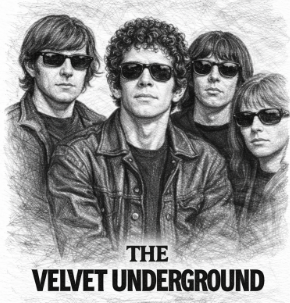
The Velvet Underground are an American rock band formed in New York in the mid-1960s, considered one of the most influential and radical projects in the history of modern music. The most representative lineup includes Lou Reed (vocals, guitar), John Cale (viola, keyboards), Sterling Morrison (guitar), and Maureen Tucker (drums).
Despite limited commercial success during their active years, The Velvet Underground exerted a deep and lasting influence on alternative rock, punk, post-punk, noise, indie, and the avant-garde, redefining the very idea of what a rock band could be.
Cultural context and New York in the 1960s
The Velvet Underground emerged in a New York far from the traditional music industry, immersed in an urban environment shaped by:
artistic avant-garde,
visual and performative experimentation,
cross-pollination between music, art, cinema, and literature.
The band sits at the crossroads of rock, minimalism, contemporary music, and underground culture, in a context where the popular song becomes a vehicle for explicit, urban, and often disturbing themes.
Origins and formation of the band (1964–1965)
The project grew out of the meeting between Lou Reed and John Cale, two profoundly different but complementary figures. Reed brought direct, narrative, urban songwriting; Cale introduced elements of:
experimental music,
drones,
minimalist repetition,
timbral tension.
The addition of Sterling Morrison and Maureen Tucker completed a lineup that consciously rejected traditional virtuosity, privileging structure, repetition, and emotional impact.
Andy Warhol and the integration of the arts
A decisive moment was the encounter with Andy Warhol, who became the band’s producer and mentor. The collaboration placed The Velvet Underground within a broader artistic project, where music, visual art, and performance coexist.
This integration helped to:
strengthen the band’s conceptual identity,
legitimize rock as a form of contemporary art,
expand the performative language beyond the traditional concert.
The Velvet Underground & Nico and the aesthetic rupture (1967)
The debut album represents a sharp break with the rock of its era. It addressed themes that were then unprecedented in popular music:
addiction,
explicit sexuality,
urban alienation,
social marginality.
Sonically, the record combines:
simple melodies,
noise and dissonance,
continuous drones,
a minimalist approach to the rhythm section.
It is a work that redefines the boundary between pop song and experimental art.
White Light/White Heat and radicalization (1968)
With White Light/White Heat, the band pushed even further into radical territory. The sound became:
noisier,
more aggressive,
less compatible with radio formats.
This album stands as one of the earliest examples of extreme, noise-based rock, anticipating later developments in noise rock and punk.
Transition and identity shift (1969)
John Cale’s departure marks a significant change. The band remained unconventional, but moved toward more linear, melodic songwriting, while retaining urban themes and atmospheres.
This phase shows that The Velvet Underground were not a static project, but a laboratory in constant evolution.
Loaded and the end of the band (1970)
With Loaded, the band made an attempt at greater accessibility without renouncing their personality. Soon after, Lou Reed left, effectively bringing the group’s coherent life cycle to an end.
The dissolution occurred without major media clamor, yet it marked the conclusion of one of the most innovative experiences in twentieth-century rock.
Musical style (discursive analysis)
The Velvet Underground’s language is built on elements that, at the time, were deeply subversive:
hypnotic repetition,
intentional use of noise and dissonance,
narrative and brutally direct lyrics,
rejection of traditional rock rhetoric,
an almost “anti-musical” approach to song form.
The band proved that rock could be conceptual, minimalist, and provocative without losing communicative force.
Concerts and the performative dimension
Live, The Velvet Underground offered an immersive and often destabilizing experience. Their concerts were not conceived as entertainment, but as:
an extension of sonic research,
artistic performance,
direct confrontation with the audience.
This approach anticipated many later practices of alternative and experimental music.
Andy Warhol and Nico period (1967)
Studio albums
| Year | Album | Main tracks |
|---|---|---|
| 1967 | The Velvet Underground & Nico | Sunday Morning · Venus in Furs · Heroin · I’m Waiting for the Man |
Experimental and radical period (1968)
Studio albums
| Year | Album | Main tracks |
|---|---|---|
| 1968 | White Light / White Heat | White Light / White Heat · Sister Ray · The Gift |
Maturity and melodic shift (1969)
Studio albums
| Year | Album | Main tracks |
|---|---|---|
| 1969 | The Velvet Underground | Pale Blue Eyes · What Goes On · Candy Says |
Final period with Lou Reed (1970)
Studio albums
| Year | Album | Main tracks |
|---|---|---|
| 1970 | Loaded | Sweet Jane · Rock & Roll · Oh! Sweet Nuthin’ |
Post–Lou Reed period (1973)
Studio albums
| Year | Album | Main tracks |
|---|---|---|
| 1973 | Squeeze | Little Jack · Friends |
(Album recorded without original core members, often excluded from the artistic canon.)
Official standalone singles (not included on studio albums)
| Year | Single |
|---|---|
| 1966 | All Tomorrow’s Parties |
| 1966 | Sunday Morning |
| 1968 | White Light / White Heat |
| 1969 | Who Loves the Sun |
| 1970 | Sweet Jane (single edit) |
Major live albums
| Year | Album | Note |
|---|---|---|
| 1974 | 1969: The Velvet Underground Live | Historic live recordings |
| 1993 | Live MCMXCIII | Original lineup reunion |
| 2001 | Bootleg Series Vol. 1: The Quine Tapes | Live 1969 |
| 2004 | Bootleg Series Vol. 2: Final V.U. 1971–1973 | Final performances |
Key official compilations and archival releases
| Year | Album | Content |
|---|---|---|
| 1975 | VU | Unreleased tracks and outtakes |
| 1985 | Another View | Songs left off studio albums |
| 1989 | Peel Slowly and See | Comprehensive box set |
| 1995 | Gold | Anthology |
| 2009 | The Velvet Underground (45th Anniversary Edition) | Remastered editions and demos |
Final overview
Studio albums: 5
Major live albums: 4
Official compilations: 5+
Years active: 1964–1973

