



Son House, complete biography, Delta blues, historic recordings, concerts and discography
Profile
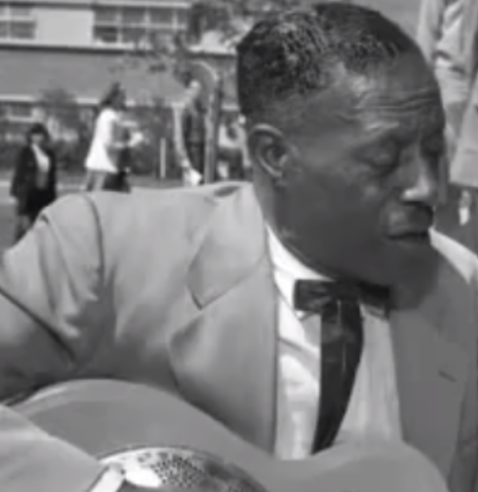
Son House (Edward James House Jr.; Riverton, Mississippi, March 21, 1902 – Detroit, Michigan, October 19, 1988) was an American singer, guitarist, and preacher, and one of the most important figures in Delta blues.
Son House is remembered as a leading exponent of Mississippi blues, central to the development of intensely delivered blues singing and slide guitar, and he exerted direct influence on musicians such as Robert Johnson and Muddy Waters.
Origins and training (1900s – 1920s)
Raised in the Mississippi Delta, Son House was initially oriented toward religious preaching. Only in adulthood did he commit steadily to the blues, developing a style that combines:
powerful, declamatory singing,
slide guitar,
essential blues structures.
His training took place in rural contexts—plantations, local gatherings, and juke joints.
1930s: first recordings and regional circulation (1930–1939)
Key recordings
In 1930 Son House recorded in Grafton, Wisconsin, for Paramount Records.
Notable songs
My Black Mama
Preachin’ the Blues
Dry Spell Blues
Activity and reception
performances mainly in the Mississippi Delta,
records circulated on a regional scale,
direct influence on younger blues musicians active in the area.
His success remained geographically limited, but his style was clearly recognized among local blues musicians.
1940s: reduced activity and non-musical work (1940–1949)
During the 1940s Son House:
almost completely stopped musical activity,
worked as a railroad laborer and in other jobs,
released no new commercial recordings.
In this period his name nearly disappeared from recording and performance circuits.
1950s: historical rediscovery and field recordings (1950–1959)
Recordings
In the 1950s he was located by folk music researchers and scholars, who recorded new performances for archives and small labels.
Circulation
recordings circulated in academic and folk environments,
Son House began to be cited as a key Delta blues figure.
The audience remained limited, but historical and musicological interest increased.
1960s: folk revival and international concerts (1964–1969)
Rediscovery
In 1964 Son House was formally “rediscovered” during the American folk revival.
Concerts and countries
In this period he:
performed at folk festivals in the United States,
gave concerts in the United Kingdom,
played in France and Germany.
Songs commonly performed live
Death Letter
Grinnin’ in Your Face
John the Revelator
Audiences were mainly composed of students, musicians, and enthusiasts of traditional folk and blues.
1970s: last recordings and gradual retirement (1970–1974)
Albums
1970 – The Father of Folk Blues
1974 – Real Delta Blues
Activity
increasingly selective concerts,
reduced activity due to health issues,
definitive retirement from performing by the mid-decade.
Death
Son House died on October 19, 1988 in Detroit, aged 86, from natural causes.
His death was followed by renewed recognition in blues and folk circles, alongside growing reassessment of his historical catalog.
Musical style (practical points)
Son House is known for:
extremely expressive, percussive singing,
intense slide guitar approach,
essential blues structures,
performances suited to acoustic settings.
Discography
Early period / Paramount & Library of Congress (1930–1942)
(A phase dominated by 78 rpm recordings and field sessions; no contemporary LPs existed at the time.)
Key recordings and singles
| Year | Track |
|---|---|
| 1930 | My Black Mama |
| 1930 | Preachin’ the Blues |
| 1930 | Dry Spell Blues |
| 1941 | Walking Blues |
| 1942 | Levee Camp Moan |
| 1942 | County Farm Blues |
Long hiatus (1943–1963)
(Son House withdrew from professional music; no official releases.)
Blues revival and rediscovery (1964–1970)
Studio / live albums
| Year | Album | Main tracks |
|---|---|---|
| 1965 | Father of the Delta Blues: The Complete 1965 Sessions | Death Letter · John the Revelator |
| 1965 | Son House & Brownie McGhee | Walkin’ Blues · My Black Mama |
| 1966 | In Concert | Death Letter (live) · Preachin’ the Blues (live) |
| 1970 | Greatest Hits | Grinnin’ in Your Face · Levee Camp Blues |
Late period and final recordings (1970–1988)
Major albums
| Year | Album | Main tracks |
|---|---|---|
| 1972 | Delta Blues | Devil Got My Woman · Am I Right or Wrong |
| 1985 | Son House: The Original Delta Bluesman | Empire State Express · Son’s Blues |
Posthumous releases and historical compilations
Notable albums
| Year | Album | Key content |
|---|---|---|
| 1992 | The Complete Library of Congress Sessions | Walkin’ Blues · County Farm Blues |
| 2003 | Proper Introduction to Son House | Preachin’ the Blues · Death Letter |
Career indicators (fact-based)
Documented activity in the Mississippi Delta in the 1930s.
Rediscovery and concert activity in the United States and Europe in the 1960s.
Direct influence on key blues musicians of the 20th century.
Conclusion
Son House is one of the foundational figures of Delta blues, with a career marked by:
historic 1930s recordings,
a long period of inactivity followed by international rediscovery,
significant concert activity during the folk revival.

