



Louis Armstrong, complete biography, traditional jazz, musical innovation and full discography
Profile
Louis Daniel Armstrong (New Orleans, Louisiana, August 4, 1901 – New York, July 6, 1971) was an American trumpeter, singer, and entertainer, universally recognized as one of the most decisive figures in the history of jazz. His work transformed jazz from a collective, ensemble-based improvisational music into a language centered on the individual solo, redefining the role of the soloist, the voice, and rhythm in twentieth-century music.
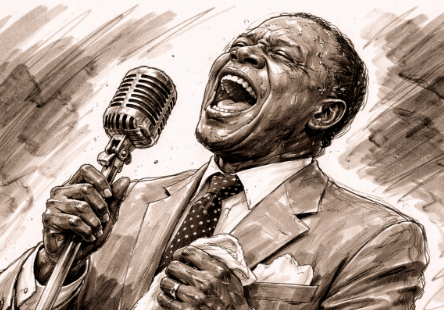
Origins and formation (New Orleans, early years)
Armstrong grew up in extreme poverty in some of New Orleans’ toughest neighborhoods, in a context shaped by racial segregation and social marginalization. A decisive experience came during adolescence, when he was sent to a reform school, where he received his first formal musical education and learned to play the cornet.
Early-twentieth-century New Orleans, with its mix of blues, ragtime, marching bands, and Creole music, provided Armstrong with a unique musical ground that permanently shaped his improvisational language.
Professional rise and meeting King Oliver (1920s)
In the early 1920s Armstrong moved to Chicago, where he joined the band of King Oliver, one of the leading protagonists of early jazz. This experience marked his definitive transition to professional music and allowed Armstrong to emerge as a soloist with extraordinary expressive force.
A subsequent move to New York and collaboration with major orchestras accelerated his artistic maturation, quickly placing him at the center of the national jazz scene.
Hot Five and Hot Seven: the solo revolution (1925–1928)
The recordings with the Hot Five and Hot Seven represent a historic turning point. In these performances Armstrong redefined jazz through structured, coherent, narrative solos based on swing, melodic invention, and rhythmic control.
This period also saw the emergence of his use of the voice as an improvisational instrument, with the development of scat singing, which further expanded the expressive possibilities of jazz vocals.
The 1930s–1940s: global popularity and big bands
In the 1930s Armstrong became an international celebrity, leading big bands and undertaking worldwide tours. His style became more communicative and accessible without losing musical quality.
At the same time, his public role became symbolic: Armstrong was among the first African American musicians to achieve global recognition in an industry still deeply segregated, indirectly contributing to the erosion of cultural and racial barriers.
Second phase: the All Stars and jazz as a living tradition (1940s–1960s)
From the mid-1940s Armstrong led the Louis Armstrong All Stars, returning to smaller ensembles and a jazz rooted in the New Orleans tradition. This phase reaffirmed the value of classic jazz during an era dominated by bebop, showing that communicative power and depth can coexist.
In the 1950s and 1960s Armstrong also achieved major popular success as a singer, further expanding his audience without renouncing his jazz identity.
Musical style and expressive language
Key elements of Louis Armstrong’s style include:
Centrality of the solo: improvisation as individual musical storytelling.
Swing: an elastic sense of time and natural pulse.
A unique vocal timbre: a raspy voice that is immediately recognizable.
Scat singing: the voice used as an improvisational instrument.
Emotional synthesis: a balance of virtuosity, irony, and expressive depth.
Full discography (representative selection)
Historic recordings and studio albums
1925–1928 – Hot Five & Hot Seven Recordings
1933 – Louis Armstrong and His Orchestra
1947 – Louis Armstrong and the All Stars
1954 – Louis Armstrong Plays W.C. Handy
1957 – Ella and Louis
1958 – Louis Armstrong Meets Oscar Peterson
1959 – Satchmo Plays King Oliver
1964 – Hello, Dolly!
1968 – What a Wonderful World
Live albums
1956 – Ambassador Satch
1961 – Satchmo at the Crescendo
Cultural and historical impact
Louis Armstrong shaped twentieth-century music in a structural way, influencing not only jazz but also pop, swing, and modern vocal performance. His improvisational style became a reference model for generations of musicians, while his public persona helped redefine global perceptions of African American culture.
His legacy is best understood as a turning point: after Armstrong, jazz is inconceivable without the solo as a central narrative form.
Critical reading: Louis Armstrong’s contribution to modern music
Louis Armstrong represents the shift from collective jazz to authorial jazz, where the musician’s individuality becomes foundational. His contribution extends beyond technical innovation to a new concept of musical communication, built on immediacy, invention, and humanity.
More than a performer, Armstrong was an architect of the jazz language, whose influence continues to permeate contemporary music.

