



Muddy Waters, complete biography, Chicago electric blues, international concerts and discography
Profile
Muddy Waters (McKinley Morganfield; Issaquena County, Mississippi, April 4, 1913 – Westmont, Illinois, April 30, 1983) was an American singer, guitarist, and bandleader, a decisive figure in the development of Chicago electric blues.
Muddy Waters is widely recognized as one of the principal architects of the shift from acoustic Delta blues to an amplified urban form, with an impact that is historically attested across blues, British rock, and the popular music of the second half of the 20th century.
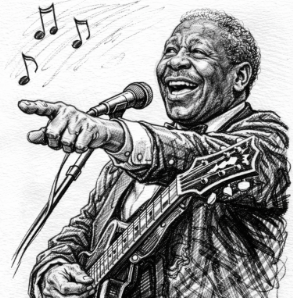
Origins and training (1910s – 1930s)
Raised in the Mississippi Delta region, Muddy Waters came into contact with:
rural blues,
African American vocal traditions,
string instruments played in agricultural and community settings.
In the 1930s he mainly played acoustic guitar and harmonica in local contexts. In 1941–1942 he was recorded by Alan Lomax for the Library of Congress, leaving a direct audio record of his pre-electric style.
1940s: move to Chicago and the electric turn (1943–1949)
In 1943 Muddy Waters moved to Chicago, where he:
initially worked in a factory,
entered the urban blues club circuit,
adopted the electric guitar to project in crowded venues.
Early recordings
Between 1947 and 1949 he recorded for Aristocrat, later Chess Records.
Early songs
I Can’t Be Satisfied
I Feel Like Going Home
These tracks gained strong local radio exposure and consolidated his presence in the Midwest.
1950s: consolidation of Chicago blues (1950–1959)
Key songs
Hoochie Coochie Man
Mannish Boy
I’m Ready
Got My Mojo Working
Albums and singles
In the 1950s, blues output was released primarily as singles, later compiled into albums.
Concert activity and key areas
In this period Muddy Waters:
performed regularly in Chicago clubs (South Side),
played dates across the Midwest and the Southern United States,
became a major reference point for emerging blues musicians.
Success was primarily domestic, with strong urban anchoring.
1960s: international recognition and European touring (1960–1969)
Albums
1960 – At Newport 1960
1964 – Folk Singer
1967 – Super Blues (with Bo Diddley and Little Walter)
Songs commonly performed live
Rollin’ Stone
Baby Please Don’t Go
I’m Your Hoochie Coochie Man
Concerts and countries
In the 1960s Muddy Waters:
appeared at folk and blues festivals in the United States,
toured the United Kingdom,
performed in France, Germany, and the Netherlands.
In Europe he drew significant attention from rock audiences, influencing British artists directly.
1970s: revival, rock audiences, and new tours (1970–1979)
Albums
1971 – Electric Mud
1972 – The London Muddy Waters Sessions
1977 – Hard Again
Concert activity
In this decade he:
performed regularly in Europe and North America,
appeared at blues and rock festivals,
attracted larger young audiences.
Support was especially strong in the United Kingdom, Germany, and France.
1980s: final years of activity (1980–1982)
Album
1981 – King Bee
Live activity
In his final years he:
reduced touring due to health issues,
continued with selected concerts in the United States,
maintained a stable presence in blues circuits.
Death
Muddy Waters died on April 30, 1983 in Westmont, Illinois, aged 70, from cardiac-related complications.
His death prompted widespread tributes in the United States and Europe, with broad recognition of his foundational role in the history of modern blues.
Musical style (practical points)
Muddy Waters is known for:
electric slide guitar,
12-bar blues structures,
a deep, direct vocal delivery,
the use of amplification as an expressive tool.
Discography
Early period / singles era (RPM, Crown) (1949–1959)
(A phase dominated by singles; later LPs compile many of these recordings.)
Key singles
| Year | Single |
|---|---|
| 1951 | Three O’Clock Blues |
| 1953 | You Know I Love You |
| 1954 | Please Love Me |
| 1956 | Sweet Little Angel |
| 1958 | Rock Me Baby |
| 1959 | Worry, Worry |
Classic Crown / Kent LP period (1960–1965)
Studio / live albums
| Year | Album | Main singles |
|---|---|---|
| 1960 | Singin’ the Blues | Everyday I Have the Blues · Sweet Sixteen |
| 1962 | Blues on Top of Blues | Heartbreaker · Sloppy Drunk |
| 1963 | Mr. Blues | I’ve Got a Right to Love My Baby · Get Out of Here |
| 1965 | Live at the Regal (live) | Every Day I Have the Blues (live) · Sweet Little Angel (live) |
ABC Records period / mainstream breakthrough (1966–1974)
Studio albums
| Year | Album | Main singles |
|---|---|---|
| 1966 | Live & Well | I Want You So Bad · Get Off My Back Woman |
| 1968 | Lucille | Lucille · You Move Me So |
| 1969 | Completely Well | The Thrill Is Gone · So Excited |
| 1970 | Indianola Mississippi Seeds | Nobody Loves Me But My Mother · Chains and Things |
| 1971 | B.B. King in London | Caldonia · Ghetto Woman |
| 1974 | Together for the First Time (with Bobby Bland) | Ain’t Nothing You Can Do |
Consolidation and collaborations (1975–1989)
Major albums
| Year | Album | Main tracks / singles |
|---|---|---|
| 1976 | B.B. King & Friends | Let the Good Times Roll |
| 1980 | There Must Be a Better World Somewhere | There Must Be a Better World Somewhere |
| 1988 | King of the Blues: 1989 | Why I Sing the Blues |
Late period and international recognition (1990–2015)
Major albums
| Year | Album | Main tracks / singles |
|---|---|---|
| 1991 | Live at San Quentin | Sweet Little Angel (live) |
| 2000 | Riding with the King (with Eric Clapton) | Riding with the King · Marry You |
| 2003 | Reflections | Exactly Like You · Always on My Mind |
| 2008 | One Kind Favor | See That My Grave Is Kept Clean |
| 2015 | B.B. King & Friends – 80 | The Thrill Is Gone (duet version) |
Career indicators (fact-based)
Continuous concert activity for more than 40 years.
Direct influence on British and American blues-rock.
Strong long-term presence in international blues catalogs after his death.
Conclusion
Muddy Waters built a long-running career grounded in concrete milestones:
a technical and sonic transformation of blues,
sustained live activity in the United States and Europe,
measurable influence on later generations of musicians.

