



Asparagus (Asparagus officinalis)
Description
Asparagus (Asparagus officinalis, family Asparagaceae) is a perennial plant grown for its young shoots (spears), harvested in spring. The edible part is the tender, elongated spear with a compact tip. Colour varies according to cultivation technique and variety: green (grown in light), white (grown under soil/black plastic, without light), and purple types. Flavois delicate, slightly sweet and herbaceous with a characteristic mild bitterness and sulphurous note. Asparagus is widely used in fresh cooking and in industrial products such as canned or frozen vegetables, soups and ready meals.
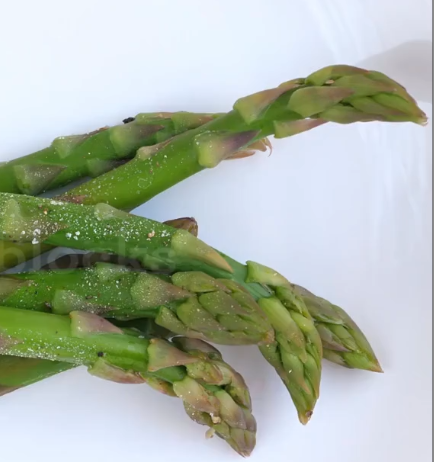
It is a large genus comprising 200/300 species including:
- Asparagus cochinchinensis
- Asparagus pseudoscaber Grecescu
- Asparagus maritimus L.
- Asparagus brachiphyllus Turcz
- Asparagus prostrates Dumort
- Asparagus africanus Lam
- Asparagus racemosus ecc.
- Asparagus laricinus Burch
- Asparagus adscendens
Common name: Asparagus
Parent plant: Asparagus officinalis L.
Kingdom: Plantae
Clade: Angiosperms
Clade: Monocots
Order: Asparagales
Family: Asparagaceae
Genus: Asparagus
Species: Asparagus officinalis L.
Cultivation and growth conditions
Climate:
Asparagus is a perennial crop that thrives in temperate climates.
It tolerates winter cold well (down to about –10/–15 °C), as it enters dormancy in winter.
Ideal spring growth temperatures are 15–22 °C.
Excessive heat (>30 °C) can reduce spear quality.
A period of winter cold is beneficial to stimulate strong spring regrowth.
Sun exposure:
Requires full sun, which is essential for:
storing nutrients in the root system,
abundant spear production,
vigorous plant development.
In overly shaded locations, yields are significantly reduced.
Soil:
Asparagus prefers soils that are:
sandy or sandy–loam,
well drained,
deep (the root system is extensive),
rich in organic matter,
with pH 6.5–7.5.
Heavy, compact soils hinder spear growth and increase the risk of root and crown rot.
Irrigation:
Water requirements are moderate, depending on the growth stage:
Soil should be kept moist during spear growth.
Waterlogging must be avoided to prevent root damage.
In summer, especially in the first years, regular irrigation helps develop the underground organs (rhizomes and fleshy roots).
Temperature:
Germination: 10–15 °C
Optimal spear growth: 12–22 °C
Heat stress above 30–32 °C
Winter dormancy at low temperatures
Fertilization:
An asparagus bed (asparagus field) can last 10–15 years, so the soil must be well fertilized before planting.
Nitrogen: promotes vegetative growth and should be applied in moderate amounts.
Phosphorus: important for root development, especially pre-planting.
Potassium: improves vigor, stress resistance, and spear quality.
Organic matter is essential to enrich the soil and improve drainage and structure.
Crop care:
Hoeing and weeding to keep the soil free from weeds, especially in early years.
Ridging (mounding) of soil for white asparagus production (spears kept in the dark).
Cutting back the aerial parts in autumn after natural yellowing and senescence.
Very long crop rotations: the same field should not host a new asparagus bed for many years.
Monitoring for pests (asparagus fly, asparagus beetles) and diseases (rust, fusarium root and crown rot).
Harvest:
Spear harvesting starts only from the third year after planting:
Harvest is staggered throughout spring.
Spears are cut when they reach about 18–22 cm in height.
For white asparagus, spears are harvested before emerging above the soil surface.
Excessive harvesting weakens the plant and reduces yields in subsequent years.
Propagation:
Asparagus is propagated by:
Crowns (roots/rhizome divisions): the most common method for commercial planting, usually in spring.
Seed: used to produce seedlings for later transplanting; germination is relatively slow.
The plant is dioecious (separate male and female plants); modern hybrids are often selected male lines, which are more productive.
Indicative nutritional values per 100 g (fresh asparagus)
Energy: 18–22 kcal
Water: ≈ 92–94 g
Carbohydrates: ≈ 3–4 g
of which sugars: ≈ 1.5–2 g
Protein: ≈ 2–2.5 g
Total fat: ≈ 0.1–0.2 g
SFA (saturated fatty acids; should be moderated in the overall diet): traces
MUFA (monounsaturated fatty acids; generally favourable for lipid profile): traces
PUFA (polyunsaturated fatty acids; involved in membrane and anti-inflammatory functions): traces
Dietary fibre: ≈ 2 g
Vitamins: vitamin K, vitamin C, folate, some provitamin A (β-carotene)
Minerals: potassium, phosphorus, calcium, iron, manganese
Values may vary with variety, cultivation and freshness.
Key constituents
Dietary fibre (soluble and insoluble)
Inulin and other prebiotic carbohydrates
Saponins (steroidal saponins typical of asparagus)
Sulphur-containing compounds (e.g. asparagusic acid; related to the characteristic odour in urine)
Polyphenols and flavonoids with antioxidant activity
Vitamins (folate, vitamin C, vitamin K) and minerals (especially potassium)
Production process
Cultivation
Perennial crop established from crowns or transplants in well-drained, often sandy soils.
Requires temperate climates and careful weed and water management.
Spears are produced each spring; the productive life of a field can be 8–12 years.
White asparagus is produced by ridging or covering the rows to prevent light exposure and chlorophyll formation.
Harvest
Harvested when spears reach typical commercial length (about 20–25 cm), before the tips open.
Cutting is usually manual or with specialised hand tools that cut spears just below soil level.
Frequent harvesting (daily or near-daily) is required in the main season.
Post-harvest
Rapid cooling to preserve freshness and reduce respiration.
Sorting and grading by diameter, length, colour and tip compactness.
Bundling or packaging in trays with appropriate protection.
Further processing
Production of frozen asparagus, canned/jarred asparagus, purees and ingredients for soups, sauces and ready meals.
Some industrial processes include blanching, trimming and controlled atmosphere packaging.
Physical properties
Cylindrical spears with firm texture and compact tips.
Colour: green, white or purple depending on variety and cultivation.
More tender in the upper portion, more fibrous at the base.
High water content and relatively high respiration rate → perishable if not cooled.
Sensory and technological properties
Flavour: delicate, vegetal, slightly sweet with a light bitter and sulphurous note.
Aroma: fresh, green, characteristic asparagus note intensified by cooking.
Suitable for boiling, steaming, grilling, roasting and sautéing.
The tips have the highest sensory quality and are often used in premium products.
Contributes colour and flavour to broths, creams, sauces, risottos and pasta dishes.
Food applications
Fresh cooked asparagus as a side dish (steamed, boiled, grilled, roasted).
Ingredient in risottos, pasta dishes, quiches, frittatas, savoury tarts.
Use in soups, cream soups and sauces.
Industrial products:
canned or jarred asparagus in brine
frozen spears or cuts
ready-to-eat meals and chilled dishes containing asparagus
Nutrition & health
Low-energy food suitable for light and weight-management diets.
Good source of folate, important for cell division and particularly relevant during pregnancy.
Contains vitamin K, contributing to normal blood coagulation and bone metabolism.
Provides prebiotic carbohydrates (inulin) that can support gut microbiota within a balanced diet.
Rich in water and potassium, making it suitable as part of diets promoting hydration and overall metabolic health.
Sulphur-containing compounds are responsible for the typical urine odour after consumption; this is a normal and harmless phenomenon in individuals who produce and metabolise these compounds.
Portion note
Typical serving size: 150–200 g cooked asparagus (about 8–10 spears), used as a vegetable portion in a meal.
Allergens and intolerances
Asparagus is not among the major EU allergens.
Rare cross-reactions may occur in people allergic to other related plants (e.g. in former “Liliaceae” group, such as onion or leek).
Some individuals may find the sulphurous odour of urine after eating asparagus unpleasant, but this is not an allergy.
Storage and shelf-life
Fresh asparagus
3–5 days in the refrigerator, preferably upright with bases lightly moistened or wrapped to limit water loss.
Highly perishable at room temperature (wilting and loss of sweetness).
Frozen asparagus
12–18 months at proper freezing temperatures, with minimal quality loss if blanched correctly before freezing.
Canned/jarred products
2–3 years unopened, if kept in a cool, dry place;
2–3 days in the refrigerator after opening, stored in a covered container and immersed in brine or liquid.
Safety and regulatory aspects
Must comply with regulations on:
pesticide residues (MRL)
microbiological criteria, especially for processed/preserved products
physical contaminants (foreign bodies, mechanical damage)
Producers and processors must implement GMP (Good Manufacturing Practices) and HACCP (Hazard Analysis and Critical Control Points) to ensure food safety.
Labelling and marketing are regulated by EU and national rules for fresh and processed vegetables.
Labelling
For fresh product:
Name: “asparagus” / Asparagus officinalis.
Country of origin.
Category / class and calibre where applicable (commercial standardisation).
Lot identification and, when used, packing date or harvest date.
Storage instructions (e.g. “keep refrigerated”).
For processed products (canned/frozen):
Ingredient list.
Net weight and drained weight (for canned/jarred).
Best-before date.
Storage conditions (before and after opening).
Troubleshooting
Open or spread tips → product too old or harvested/handled improperly; lower sensory quality.
Stringy, very fibrous base → late harvest, older spears or lower-grade product.
Off-odours or sliminess → microbiological spoilage; product not suitable for consumption.
Discolouration or browning after cooking → overcooking, oxidation or poor handling; use shorter cooking times and rapid cooling if necessary.
Sustainability and supply chain
Perennial crop with moderate environmental impact when well managed.
Fits well into integrated and organic farming systems.
Generates limited waste: tough lower portions can be used for stocks and soups instead of being discarded.
Strong link to local and seasonal production in temperate regions; short supply chains improve freshness and reduce transport impact.
Main INCI functions (cosmetics)
Cosmetic ingredients from asparagus may include:
Asparagus Officinalis Extract – used as an antioxidant, toning and skin-conditioning agent in some botanical formulations.
Use is relatively niche compared with other plant extracts; concentrations are typically low and subject to cosmetic safety evaluation.
Skin conditioning agent. It is the mainstay of topical skin treatment by restoring, increasing or improving skin tolerance to external factors, including melanocyte tolerance. The most important function of the conditioning agent is to prevent skin dehydration, but the subject is rather complex and involves emollients and humectants.
Conclusion
Asparagus is a seasonal vegetable of high gastronomic and nutritional value. Its delicate yet distinctive flavour, low energy density and interesting content of fibre, folate and other micronutrients make it a valuable ingredient for both home cooking and industrial formulations. Proper cultivation, careful harvesting and appropriate cold-chain management are essential to preserve its sensory qualities and nutritional properties from field to table.
Mini-glossary
SFA – Saturated fatty acids; fats that should be moderated due to their association with increased cardiovascular risk when excessive.
MUFA – Monounsaturated fatty acids; generally beneficial for blood-lipid profile.
PUFA – Polyunsaturated fatty acids; important for cell membranes and anti-inflammatory processes.
MRL – Maximum Residue Level; legal pesticide-residue limit for foods.
GMP – Good Manufacturing Practices; set of rules ensuring hygienic and controlled production.
HACCP – Hazard Analysis and Critical Control Points; preventive system for identifying and managing food-safety hazards.
Asparagus contains anti-inflammatory components and a variety of antioxidant nutrients, including beta-carotene, vitamin C, manganese, vitamin E, zinc and selenium (1).
In addition to these interesting components, phytochemical analysis has identified folic acid, vitamin B6, thiamine and rutin.
In traditional medical science, asparagus is used to treat liver diseases, bronchial asthma, gout, bladder and kidney stones and various rheumatic diseases.
Studies have verified the anti-cancer activity of asparagus (2) as well as its anti-arthritic and anti-inflammatory activity (3).

