



Wild garlic (Allium ursinum L.)
Description
Wild garlic (Allium ursinum L.), also known as ramsons, is a perennial herb of the Amaryllidaceae family, closely related to common garlic and other aromatic Allium species. It grows spontaneously in cool, shady and moist woodlands across much of Europe and parts of Asia, often forming dense carpets of green leaves in spring. It prefers humus-rich, fresh, well-drained soils, with a neutral to slightly acidic pH.
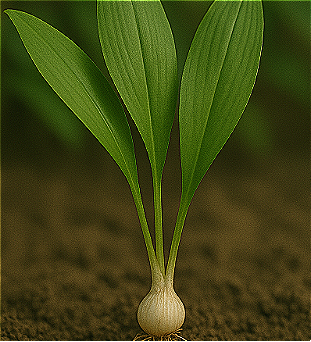
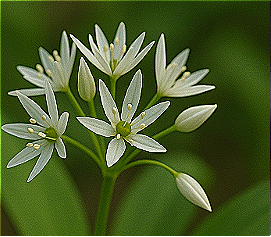
The plant produces broad, lanceolate-oval leaves, bright deep green, smooth and soft to the touch, emerging from the ground in early spring. From the leaf rosette rises a slender, angular (triangular) stem that bears a terminal umbel composed of numerous small, white, star-shaped flowers with six tepals. At full bloom, a subtle garlic scent spreads through the surrounding area.
The most appreciated edible part is the leaf, tender and rich in sulphur-containing aromatic molecules, with a flavour similar to garlic but milder, fresher and more herbaceous, with nuances reminiscent of freshly cut grass, chives and light balsamic notes. Raw, the aroma is intense and penetrating; with cooking it becomes sweeter, rounder and more balanced.
Wild garlic is considered a symbol of spring foraging and natural, seasonal cuisine, thanks to its link with relatively unspoiled habitats and its ability to bring flavour, aromatic complexity and some nutritional value to simple dishes. In regions where it is abundant, it is a traditional ingredient in pestos, soups, flavoured oils, herb butters and herbal recipes.
 |  |
Botanical classification
Common name: Wild garlic
Clade: Angiospermae
Order: Asparagales
Family: Amaryllidaceae
Genus: Allium
Species: Allium ursinum L.
Climate
Wild garlic is typical of cool temperate climates, where it finds moist, shaded conditions, often in broadleaf woodlands. It prefers fresh, humid springs with summers that are not excessively hot. It tolerates winter cold well during the bulb’s dormant period, while it suffers in climates that are too hot and dry, which can shorten the growing season and reduce leaf development.
Exposure
In nature it grows in partial shade or bright shade, under the canopy of trees and shrubs. In cultivation, a sheltered position is recommended, where it receives filtered light and is not exposed to full sun during the hottest hours, especially in warm climates. Sites that are too sunny dry out the soil too quickly and may cause premature yellowing of the leaves.
Soil
Wild garlic prefers fresh, moist, humus–rich soils, similar to woodland soil. Ideal substrates are medium–textured, well drained but moisture–retentive, with slightly acidic to neutral pH. Soils that are too compact or prone to waterlogging are unfavourable, as they increase the risk of bulb rot, while very dry, poor soils do not allow satisfactory leaf growth.
Irrigation
In natural woodland habitats, water requirements are mainly covered by spring rainfall. In cultivation, especially in gardens or beds, it is useful to keep the soil slightly and constantly moist during the vegetative period (late winter–spring), avoiding waterlogging. During the bulb’s summer dormancy, irrigation should be reduced or suspended so as not to keep the soil excessively wet.
Temperature
The optimal temperature range for spring growth is about 8–18 °C. Wild garlic tolerates cold winters well, since the bulb remains dormant in the soil, but it is more sensitive to intense, prolonged heat during active growth. In very warm regions it is easier to grow it in shaded, cool exposures, where temperature fluctuations are more moderate.
Fertilization
Wild garlic benefits from a good supply of organic matter, such as mature compost or leaf mould, which mimics the natural forest litter. In general, heavy mineral fertilization is not necessary; it is enough to enrich the soil in autumn or late winter with a layer of organic material, which improves structure, fertility and water–holding capacity.
Crop care
Crop care is relatively simple. It is important to limit weeds in the early growth stages so they do not compete with the young leaves. Light mulching with dry leaves or other organic material helps keep the soil cool and moist and reproduces natural woodland conditions. Deep soil working should be avoided, as it can damage the bulbs.
Harvest
Leaves are harvested in spring, when they are fully developed but still tender, before the plant completes flowering. It is advisable to take only part of the leaves from each clump so as not to weaken the bulb too much. Flowers and, to a lesser extent, bulbs can also be harvested, but for population conservation, especially in the wild, harvesting of underground parts should be limited.
Propagation
Propagation can be by seed or by bulb division. Sowing is usually done in autumn, in fresh, moist soil, allowing winter cold to promote spring germination. Bulb division is carried out during dormancy, in late summer or early autumn, gently separating the bulbils and replanting them shallowly in an organic–rich substrate, in shady or semi–shady positions. Over time, dense carpets of plants can form, similar to natural wild garlic stands.
Indicative nutritional values per 100 g
(fresh leaves, approximate)
Energy: ~ 35–45 kcal
Water: ~ 85–90 g
Carbohydrates: ~ 6–7 g
Dietary fiber: ~ 1.5–2.5 g
Protein: ~ 2.5–3 g
Total fat: ~ 0.3–0.6 g (very low)
Key minerals: iron, manganese, calcium, magnesium, potassium
Vitamins: vitamin C, folate, carotenoids and other minor antioxidant compounds
Values vary with habitat, growth stage and post-harvest handling.
Key constituents
Sulphur-containing compounds (alliin derivatives and related molecules) responsible for the aroma and many bioactive properties
Natural antioxidants (vitamin C, polyphenols)
Folate and other B-group vitamins
Minerals (iron, manganese, potassium, calcium, magnesium)
Dietary fiber
Polyphenols and flavonoids typical of green leafy plants
Production process
Wild growth
naturally found in moist, deciduous woodland habitats
forms dense colonies with strong spring emergence
Harvesting
leaves and tender aerial parts are collected by hand in spring, usually before or at the beginning of flowering for optimal flavour and texture
immediate selection of healthy, undamaged leaves
Cleaning
careful washing to remove soil, debris and insects
Fresh use
direct use in culinary preparations (raw or lightly cooked)
transformation into pesto, flavoured salts, compound butters, oils and spreads
Drying (optional)
low-temperature drying to preserve at least part of the aroma
use as dried herb, powders or seasoning blends
Physical properties
broad, soft, bright green leaves, lanceolate-oval in shape
tender, juicy leaf tissue
clear garlic-like aroma, especially when the leaf is crushed or cut
delicate structure, prone to wilting and moisture loss if not stored properly
Sensory and technological properties
taste: fresh, garlicky, slightly pungent yet delicate, with green and herbaceous notes
aroma: typical garlic-family scent, but greener, less heavy and less persistent than common garlic
well suited for cold preparations and short cooking methods
good behaviour in oil extractions and in emulsified preparations (pestos, herb butters)
prolonged high-heat cooking can reduce aromatic intensity and volatile compounds
Food applications
pestos and fresh sauces (often in combination with nuts, cheese and oil)
flavoured oils and butters
spring soups, cream soups and purees
fillings for pasta, savoury pies, gnocchi or dumplings
salads, vegetable patties, omelettes and frittatas
aromatic garnish for cheeses, fish and white meats
inclusion in breads, focaccias and savoury doughs as a herb flavouring
Nutrition and health
Wild garlic is valued for its low energy content, its vitamin C and mineral contribution, and its sulphur-containing aromatic compounds, which are related to those found in common garlic.
Key points:
provides vitamin C and phytochemicals that contribute to the overall antioxidant intake of the diet
offers light amounts of fiber and minerals, supporting a varied plant-rich diet
aromatic sulphur compounds contribute mainly flavour and culinary character; any functional effects are moderate in the quantities typically used as a herb
It is best seen as a flavourful, seasonal green herb that enriches plant-based dishes rather than as a nutrient-dense staple.
Portion note
For culinary use, a typical portion ranges from about 10 to 25 g of fresh leaves per person, depending on the recipe and desired flavour intensity.
Allergens and intolerances
belongs to the Allium group; individuals sensitive to garlic, onion or other Allium species may react to wild garlic as well
true primary allergy is relatively rare, but individual sensitivities are possible
excessive consumption may be too pungent or mildly irritating for some digestive systems
Storage and shelf-life
fresh leaves should be stored in the refrigerator, in a closed container or wrapped in slightly damp paper to limit wilting
best consumed within a few days of harvesting for optimal flavour and texture
can be frozen (for example as pesto or chopped leaves in oil) to extend use beyond the short season
drying is possible, but some aromatic intensity is inevitably lost
Safety and regulatory
wild garlic is a generally safe edible plant when correctly identified
a critical safety aspect is plant identification:
leaves may be confused with toxic species such as lily of the valley (Convallaria majalis) or autumn crocus (Colchicum autumnale), which are poisonous
correct recognition and the characteristic garlic smell are essential when foraging
for commercial products, general food hygiene standards and traceability rules apply
Labeling
For packaged or processed wild garlic products, labels should include:
product name: e.g. wild garlic or ramsons
botanical name (optional but common in specialised products): Allium ursinum
country or region of origin
list of ingredients (for mixed products) and any additional allergens present
net weight, best-before date and storage instructions
Troubleshooting
In the kitchen
flavour too strong → reduce quantity, combine with milder herbs or apply brief cooking
weak aroma → leaves too mature or stored for too long; prefer young, fresh leaves harvested early in the season
discolouration or oxidation in pestos → minimise exposure to air, use oil coverage, and/or add a small amount of acid (lemon juice)
In storage
rapid wilting → insufficient humidity or inadequate packaging; use breathable containers and slight moisture to maintain turgor
blackening or sliminess → excessive moisture or prolonged storage; discard compromised leaves
Main INCI functions (cosmetics)
Wild garlic extracts or powders may occasionally appear in cosmetic products as:
skin conditioning ingredients (supporting skin comfort and general condition)
botanical components in “natural” or “herbal-inspired” cosmetics
Their use in cosmetics is limited compared with other Allium extracts; wild garlic remains primarily a culinary herb.
Conclusion
Wild garlic (Allium ursinum L.) is a distinctive spring woodland herb, with a simple morphology and a refined aromatic profile: leafy, fresh, green and delicately garlicky. Growing in cool, humid forests and forming dense carpets of foliage, it embodies the spirit of seasonal foraging and natural cuisine, bringing character and freshness to a wide variety of dishes.
Nutritionally light yet aromatic and rich in plant compounds, it fits perfectly into plant-based and seasonal diets, especially when used in pestos, soups, flavoured oils and simple home-style recipes. Appreciated wherever it grows naturally, wild garlic remains a small emblem of respectful wild harvesting and the culinary use of spontaneous herbs.
Studies
Most of the pharmacological properties of the plant extract are comparable to those of cultivated garlic (Allium sativum), however, some effects of wild garlic are higher or unique, probably due to the presence of some specific components, such as phytosterols and a derivative of galactolipids (1,2-di- O -α-linolenoyl-3- O -β- d -galactopyranosyl-sn-glycerol). This component appears to be specific for Allium ursinum and may be absent in other Allium species (1).
The bioactive components of wild garlic have a highly antioxidant activity mainly due to the activity of superoxide-dismutase, catalase and peroxidase of the bulb and leaves (2).
Mini-glossary
Amaryllidaceae: botanical family including garlic, onions and other bulbous aromatic species.
Sulphur-containing compounds: molecules responsible for the characteristic smell and some bioactive properties of garlic and related plants.
Dietary fiber: non-digestible plant component that supports intestinal health and satiety.
Skin conditioning: cosmetic function of ingredients that help maintain skin comfort and a healthy appearance.

