



Veronica (Veronica officinalis L.)
Description
Veronica officinalis L., commonly known as Veronica, is a small perennial herb of the family Plantaginaceae. Widespread in temperate Europe, it grows in light woodland, meadows, clearings, and shaded field edges. It prefers soft, humus-rich, moist soils, and semi-shaded locations.
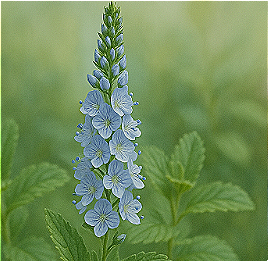
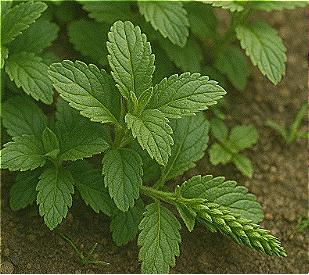
It features thin, creeping stems capable of rooting at their nodes, opposite oval or elliptic leaves with a slightly hairy texture and finely serrated edges, and raceme-type inflorescences carrying small lilac to pale-violet flowers with darker streaks on the petals. Flowering usually occurs from late spring to mid-summer. Historically, the plant has been used in European herbal traditions, especially as an aromatic ingredient for light infusions.
 |  |
Botanical classification
Common name: veronica (heath speedwell)
Clade: Angiosperms
Order: Lamiales
Family: Plantaginaceae
Genus: Veronica
Species: Veronica officinalis L.
Cultivation and growth conditions
Climate
Veronica is typical of temperate climates, widespread in Europe and many regions of Asia. It prefers areas with cool to cold winters and summers that are not excessively hot. The plant tolerates frost well, especially during the resting phase, but suffers during prolonged drought and very high temperatures.
Exposure
It prefers full sun or light partial shade. Good light encourages the development of vigorous shoots and abundant flowering. In locations that are too shaded, growth slows and the flowering becomes poorer.
Soil
Veronica adapts to different soil types but prefers light, moderately moist soils with a fair amount of organic matter. Soils that are very compact or subject to prolonged waterlogging can cause root rot. In natural habitats it colonises meadows, open woodland edges and moist clearings with well-aerated soil.
Irrigation
It requires regular watering: the soil should remain consistently fresh but not soaked. During hot or dry periods it is important to maintain a balanced moisture level, avoiding both complete dryness and standing water. Watering should be moderate but frequent.
Temperature
The species tolerates low temperatures and brief frosts without difficulty. Optimal conditions for growth and flowering are around 10–22 °C. Intense heat, combined with low humidity, can slow development and cause stress to the plant.
Fertilization
Veronica does not need heavy fertilization. The addition of well-matured organic amendments to the soil is usually sufficient to support healthy growth and stimulate leaf and flower production. Excessive fertilizer is not recommended and can upset the vegetative balance.
Crop care
This is a hardy species requiring only limited care. Removing withered inflorescences can extend and improve flowering. It is helpful to control weeds that compete for light and nutrients, keeping the soil loose and clean. Where the plants become very dense, a light trimming or thinning helps maintain a neat, compact habit.
Harvesting
Aerial parts are harvested at full flowering, generally from spring to early summer. Stems are cut with scissors or a knife and then dried in a shaded, well-ventilated place. In ornamental use, harvesting is limited, as veronica is often grown for borders, rock gardens and mixed herbaceous plantings.
Propagation
Propagation can be carried out by seed or by division of clumps. Sowing is done in spring on light, moist substrates. For division, rooted portions of the mother plant are separated and replanted in fresh, well-prepared soil. Both methods are simple and effective, thanks to the species’ high rusticity and good ability to re-establish.
Indicative nutritional values per 100 g
(dried aerial parts – approximate values)
Energy: ~ 230–280 kcal
Water: ~ 6–12 g
Total carbohydrates: ~ 35–45 g
Dietary fibre: present in significant proportion
Protein: ~ 12–18 g
Total fats: ~ 3–6 g
Minerals: calcium, potassium, magnesium, iron, copper, zinc
Vitamins: traces of vitamin C, phenolic antioxidants, organic acids
Values may vary depending on habitat, harvest timing, and drying conditions.
Key constituents
Iridoids (aucubin, catalpol)
Flavonoids (luteolin, apigenin, quercetin derivatives)
Tannins
Phenolic acids
Polysaccharides and mucilage
Trace essential oil compounds
Minerals (calcium, potassium, magnesium, iron, zinc)
Structural dietary fibre
Production process
(for herbal teas, cut herbs, powders, or extracts)
Harvesting
aerial parts during full bloom
selection of healthy plants from clean environments
Cleaning
removal of soil, residues, and damaged leaves
Drying
low-temperature dehydration in ventilated areas
preservation of phenolics and iridoids
Cutting and milling
reduction into tea-cut fractions or fine powders
Optional extraction
aqueous or hydroalcoholic extraction for standardized products
Packaging
moisture-proof conditions
indication of plant parts used
Physical properties
light herbal structure
creeping stems and fine leafy biomass
oval, matte-green leaves, slightly hairy
small lilac-violet flowers
dried product light, layered and hygroscopic
Sensory and technological properties
mild herbal aroma with light balsamic notes
gentle, slightly bitter vegetal taste
pale yellow-green infusion colour
good solubility of phenolic fractions in hot water
suitable for balanced herbal blends
Food applications
(limited to herbal use)
herbal teas and infusions
mixtures with other traditional medicinal plants
delicate aromatic element in botanical preparations
Veronica is not considered a conventional food.
Nutrition and health
Aerial parts contain iridoids, tannins, flavonoids, and fibre. These constituents are studied for their antioxidant and phytobiological potential. Fibre supports digestive balance, while minerals contribute to normal cellular and enzymatic functions.
Use is limited to light herbal infusions over short periods. Modern application remains primarily phytotherapeutic and should follow recognized guidelines.
Portion note
Typical herbal infusion use:
1–2 g of dried aerial parts per cup.
Exact dosing should follow professional references.
Allergens and intolerances
not classified as a primary allergen
generally well tolerated
individual sensitivity may exist toward phenolic or iridoid fractions
prolonged or excessive use is discouraged without expert guidance
Storage and shelf-life
keep in a cool, dry place
protect from light
airtight packaging recommended
typical shelf-life: 18–36 months if properly dried and stored
Safety and regulatory aspects
used as a herbal tea plant or in herbal products
subject to regulations on plant materials, labelling, traceability, purity, and microbiological controls
use in food supplements requires compliance with technical and regulatory standards
Labelling
Approved herbal products should indicate:
name: Veronica / Veronica officinalis L.
part used (aerial parts, leaf, extract)
origin
batch and date
directions for use
warnings and any standardization
Troubleshooting
Infusion
overly strong herbal taste → reduce dose or steeping time
weak colour → longer infusion
sediment or cloudiness → finer filtration or adjusted cut size
Storage
earthy odour → possible moisture exposure
marked discolouration → light degradation
Sustainability and supply chain
respectful harvesting from spontaneous populations
preference for clean, uncontaminated habitats
traceable origin
low-impact drying processes
Main INCI functions (cosmetics)
Veronica officinalis Extract may be used as:
skin conditioning component
botanical functional element in natural-concept formulations
supportive botanical identity ingredient
Conclusion
Veronica officinalis L. is a discreet perennial herb of European woodland environments, historically used in light herbal infusions. Its combination of iridoids, tannins, flavonoids, fibre, and minerals gives it a balanced, mild botanical profile.
Though not a common food, it holds a niche role in modern herbal preparations. When selected, dried, and stored correctly, it provides a gentle aromatic identity consistent with European phytotherapeutic tradition.
Mini-glossary
Iridoids – plant compounds typical of many officinal herbs, associated with biological activity and mild bitterness.
Flavonoids – phenolic plant compounds with antioxidant relevance and aromatic contribution in herbal infusions.
Skin conditioning – cosmetic function related to improved skin comfort, softness, and surface balance.
Studies
Veronica officinalis contains polyphenolic compounds with antioxidant properties: caffeic acid, ferulic acid, cumaric acid, quercetin, luteolin, apigenin. Phytosterolic compounds: ergosterol, brassicasterol, stigmasterol, campesterol, beta sitosterol (1).
Traditional herbal medicines play an important role in meeting the health needs of the world and complementary and alternative medicines based on these medicines are gaining importance in many industrialised countries as an alternative to synthetic pharmaceutical products (2).
Veronica officinalis has a long history of traditional medicine as a diuretic, cough calming and healing for the lungs.
The results of this study help to explain the molecular anti-inflammatory activity of Veronica officinalis extract in lung diseases even if this activity must be initially demonstrated in animals and then in clinical trials (3).
References_______________________________________
(1) Mocan A, Vodnar DC, Vlase L, Crișan O, Gheldiu AM, Crișan G. Phytochemical Characterization of Veronica officinalis L., V. teucrium L. and V. orchidea Crantz from Romania and Their Antioxidant and Antimicrobial Properties. Int J Mol Sci. 2015 Sep 3;16(9):21109-27. doi: 10.3390/ijms160921109.
Abstract. Aerial parts of Veronica species are used in Romanian traditional medicine for the treatment of various conditions like kidney diseases, cough, and catarrh, and are known for their wound-healing properties. In the present study, the phenolic and sterolic content and the antioxidant and antimicrobial activities of three Veronica species (Plantaginaceae), V. officinalis L., V. teucrium L. and V. orchidea Crantz, were studied. The identification and quantification of several phenolic compounds and phytosterols were performed using LC/MS techniques and the main components were p-coumaric acid, ferulic acid, luteoline, hispidulin and β-sitosterol. More than that, hispidulin, eupatorin and eupatilin were detected for the first time in the Veronica genus. Nevertheless, representatives of the Veronica genus were never investigated in terms of their phytosterol content. The antioxidant potential investigated by Trolox equivelents antioxidant capacity (TEAC) and EPR spectroscopy revealed that V. officinalis and V. orchidea extracts presented similar antioxidant capacities, whilst the values registered for V. teucrium extract are lower. Regarding the antimicrobial activity of the investigated species, Staphylococcus aureus, Listeria monocytogenes and Listeria ivanovii were the most sensitive strains with MIC values between 3.9 and 15.62 mg/mL. The results obtained by this study may serve to promote better use of representatives from the genus Veronica as antioxidant and antimicrobial agents.
(2) World Health Organization (2013). WHO Traditional Medicine Strategy: 2014–2023. Geneva: World Health Organization.
(3) Gründemann C, Garcia-Käufer M, Sauer B, Stangenberg E, Könczöl M, Merfort I, Zehl M, Huber R. Traditionally used Veronica officinalis inhibits proinflammatory mediators via the NF-κB signalling pathway in a human lung cell line. J Ethnopharmacol. 2013 Jan 9;145(1):118-26. doi: 10.1016/j.jep.2012.10.039.

