



Fenugreek, is an annual herb of the family Fabaceae. It has an erect, branched stem, generally 20–60 cm tall, with trifoliate leaves (three obovate or elliptic leaflets) of medium green colour. The flowers, usually solitary or in small groups at the leaf axils, are whitish to pale yellow. After pollination, the plant produces characteristic elongated pods, slightly curved, containing numerous angular seeds of yellow-brown colour with a strong, distinctive odour.
The species is native to the Mediterranean area and Western Asia, but is now cultivated in many temperate and subtropical regions. It prefers well-drained soils, of medium texture, with a good organic matter content and a pH around neutral to slightly alkaline. As a legume, it forms a symbiotic association with nitrogen-fixing bacteria, contributing to the enrichment of soil nitrogen. The crop cycle is relatively short and can be integrated into both intensive and extensive farming systems.
The seeds of Trigonella foenum-graecum have an intense, spicy and slightly balsamic aroma, linked to the presence of compounds such as saponins, alkaloids (e.g. trigonelline), flavonoids, and a relevant fraction of mucilages. From a compositional standpoint, they contain proteins, dietary fibre, a portion of lipids, and complex carbohydrates. The main parts used are the seeds, although in some traditional uses the young leaves, fresh or dried, are also employed.
Because of their strong odour and specific chemical profile, fenugreek seeds are of interest in agronomy and various technological applications, where their particle size after milling, their protein and fibre content, and their capacity to form viscous suspensions and gels through mucilages are relevant functional properties.
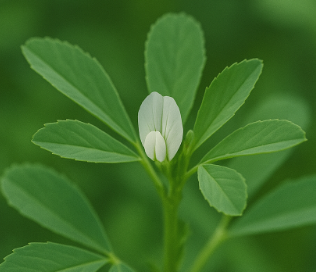 | 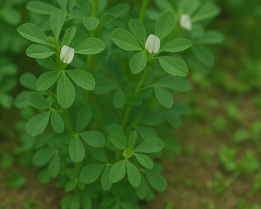 |
Botanical classification
Common name: fenugreek
Clade: Angiosperms
Order: Fabales
Family: Fabaceae
Genus: Trigonella
Species: Trigonella foenum-graecum L.
Cultivation and growth conditions
Climate
Fenugreek is typical of temperate to warm–arid regions, especially in Mediterranean, Middle Eastern and western Asian areas. It prefers mild springs, warm summers and a growing season with minimal late frost. The species tolerates dry, sunny conditions but is sensitive to excessive humidity and prolonged rainfall, which can favour root and collar rot.
Exposure
It requires full sun for optimal development, with robust stems and good flowering and pod formation. Under excessive shade, plants tend to elongate, while the number of flowers and seed yield decreases.
Soil
Fenugreek adapts to various soils but grows best in light, well-drained substrates, including slightly sandy soils with a reasonable level of organic matter. It tolerates poor and moderately alkaline soils. Heavy, compact soils or those prone to waterlogging are unfavourable, as they increase the risk of root diseases.
Irrigation
The crop needs regular but moderate watering, especially during germination and early growth. Once established, it can withstand short periods of drought. It is important to avoid excessive water supply, which reduces soil aeration and negatively affects the root system.
Temperature
Optimal temperatures for germination and vegetative development range between 10 and 28 °C. Sowing is usually carried out in spring, when the risk of frost is low. Prolonged, very high temperatures, combined with low humidity, can slow growth and reduce overall vigour.
Fertilization
Being a legume, fenugreek forms root nodules in symbiosis with nitrogen-fixing bacteria. As a result, it generally does not require heavy nitrogen fertilization. A basic input of well-matured organic amendments is usually sufficient to maintain soil fertility. Excess nutrients are unnecessary and may promote an unbalanced vegetative growth.
Crop care
Main operations include weed control in the early stages and maintaining a loose, well-drained soil structure. Light hoeing improves aeration and root development. In humid conditions, ensuring adequate air circulation between plants helps limit fungal diseases.
Harvesting
Seeds are harvested when the pods are fully mature and turn yellow. Plants are cut or uprooted and left to dry, allowing completion of seed ripening. After drying, pods are threshed and seeds are cleaned and stored in a dry, ventilated environment.
Propagation
Propagation is by seed. Sowing is usually done in spring on well-prepared, fine-textured soil. Seeds are placed at regular spacing to ensure uniform plant density and good air flow between rows. Germination is generally good under warm, slightly moist conditions. Once established, the crop is rustic and relatively low maintenance.
Indicative nutritional values per 100 g
(dried seeds, approximate ranges)
Energy: about 320–340 kcal
Water: ~ 7–9 g
Total carbohydrates: ~ 55–60 g (mostly starch and fibre)
Dietary fibre: significant fraction (~ 20–25 g)
Protein: ~ 22–26 g
Total fat: ~ 5–7 g
First occurrence SFA (Saturated Fatty Acids): present as a minor fraction of total lipids; excessive intake of SFA in the overall diet is associated with an increase in LDL cholesterol
First occurrence MUFA (MonoUnsaturated Fatty Acids): intermediate proportion; when replacing SFA in the diet, MUFA are generally considered more favourable for blood lipid profile
First occurrence PUFA (PolyUnsaturated Fatty Acids): relevant share of the lipid fraction; an adequate intake of PUFA, within a balanced n-6/n-3 ratio, is often associated with more favourable cardiovascular risk markers
Minerals: iron, calcium, phosphorus, magnesium, potassium, zinc (and other trace elements)
Secondary components: saponins, alkaloids (trigonelline), mucilage/galactomannans, flavonoids, phytosterols
Values may vary with cultivar, agronomic conditions, soil type, maturity at harvest and post-harvest processing.
Key constituents
Plant proteins with a diversified amino acid pattern
Starch and non-starch carbohydrates, including soluble and insoluble fibre
Mucilage / galactomannans (viscosity and water-binding behaviour)
Lipid fraction (mixture of saturated, monounsaturated and polyunsaturated fatty acids)
Steroidal saponins
Alkaloids, mainly trigonelline
Flavonoids and other phenolic compounds
Minerals, especially iron, calcium, phosphorus, magnesium, potassium
Phytosterols and minor secondary metabolites
Production process (seeds)
Cultivation and growth
annual crop in well-drained soils under temperate–warm conditions
sowing in suitable season depending on local climate
nitrogen-fixing legume, contributing to soil fertility
Harvesting
collection of fully mature pods
field or artificial drying to reduce moisture before threshing
Seed separation
threshing to release seeds from pods
cleaning by sieving and air flow to remove plant debris and foreign material
Drying
controlled drying of seeds to safe moisture content
protection from excessive heat and direct light to limit degradation of lipids and phenolic compounds
Cleaning and grading
removal of damaged seeds, stones, dust and foreign bodies
classification according to seed size and visual quality
Milling or fractionation (if applicable)
production of fenugreek flour, coarse or fine powders
possible separation of fibre-rich and protein-rich fractions for specific uses
Packaging
use of moisture- and light-protective packaging
labelling with product identity, batch number, date and recommended use
Physical properties
hard, angular seeds, yellow–brown in colour
high stability in dry state when properly stored
internal structure with starch granules, storage proteins and oil bodies
capacity to absorb water and swell, due in part to mucilage and galactomannan content
Sensory and technological properties
characteristic herbal–spicy aroma
bitter and somewhat sharp taste, more evident at higher inclusion levels
ability to increase viscosity and water-binding in liquid and semisolid systems, due to mucilage and soluble fibre
suitable for use as powdered ingredient in flour blends, cereal-based products and other composite formulations
possible contribution to yellowish colour and to distinctive flavour in finished products
Food applications
Fenugreek seeds can be used in the food and herbal domain as:
component of spice mixtures and condiments (whole seeds or ground)
powdered ingredient in composite flours, cereal-legume blends, nutritional mixes, and some bakery applications
herbal and functional ingredient in tea blends and dietary products, in controlled doses
raw material for standardized powders or extracts used in functional foods and supplements
The plant is not typically consumed as a fresh vegetable; the main technological use concerns the dried seeds and derivatives.
Nutrition and health
From a nutritional perspective, fenugreek seeds provide:
a plant protein fraction that contributes to total protein intake
dietary fibre, including viscous components (mucilage, galactomannans) which affect satiety, stool bulk and textural properties of foods
minerals such as iron, calcium, phosphorus, magnesium and potassium, relevant for cellular and enzymatic functions
saponins, trigonelline, flavonoids and other phenolic compounds, which have been studied for potential effects on glucose and lipid metabolism, oxidative balance and other physiological endpoints in experimental and clinical models
The fat fraction is characterized by a higher proportion of unsaturated fatty acids (monounsaturated and polyunsaturated) than saturated ones. When fenugreek is integrated into a balanced diet and used at appropriate doses, this contributes to a more favourable qualitative fat profile compared with ingredients richer in saturated fats.
Use in human nutrition spans from small culinary amounts (spice, seasoning) to controlled intakes in functional foods and supplements. Any high-dose or long-term use should be based on safety evaluations and professional guidance.
Portion note
There is no single standard portion for fenugreek seeds, because usage patterns vary by product type and formulation. Some indicative examples:
culinary use as spice: typically small quantities (fractions of a gram to a few grams) per dish
herbal or functional preparations: often around 1–2 g of seed material per serving, but actual amounts should follow regulatory frameworks and professional recommendations
Allergens and intolerances
fenugreek is not among the major regulated food allergens, but as a legume, it may cause reactions in sensitized individuals, including those with known legume allergies
some people may exhibit individual sensitivity to saponins, alkaloids or phenolic compounds
excessive intake, especially in the form of concentrated supplements, can cause gastrointestinal discomfort or interact with certain conditions; dose and duration should therefore be monitored
Storage and shelf-life
store whole seeds or powders in a cool, dry, dark place
use airtight containers to prevent moisture uptake, oxidation and contamination
under suitable storage conditions, whole dried seeds typically have a shelf-life of 18–24 months; ground flours or powders can show faster quality loss due to lipid oxidation
Safety and regulatory aspects
fenugreek seeds are recognized as edible and are widely used as a spice and ingredient in foods
when used in processed foods, herbal products or supplements, they must comply with standards for:
contaminants (mycotoxins, heavy metals, pesticide residues)
microbiological quality
labelling (including nutrition information, allergens, country of origin where required)
health or nutrition claims associated with fenugreek (e.g. on glucose or lipid metabolism) must be supported by sufficient scientific evidence and authorised within the relevant regulatory system
supplement uses should be aligned with safety assessments, including any warnings or restrictions for specific population groups
Labelling
For products containing fenugreek seeds or derived ingredients, labels should indicate:
product name and botanical identity: “Fenugreek – Trigonella foenum-graecum L., seeds” (or the equivalent approved wording)
plant part used (seeds, seed flour, seed extract)
country or area of origin, where required
batch number and date (minimum durability or expiry)
instructions for use (especially for herbal and supplement products)
warnings or precautions, if applicable (e.g. recommended maximum daily dose for supplements)
any nutritional or compositional claims (e.g. “source of fibre”, “high protein”) in accordance with legislation
Troubleshooting
In food and herbal formulations
excessive bitterness or sharp flavour
reduce the inclusion level of fenugreek
combine with milder ingredients
adjust roasting, grinding or infusion conditions
excessive viscosity or gel formation in liquids
lower the dosage of seed or mucilaginous fractions
reformulate the water/solid ratio
consider process steps (e.g. hydration time, temperature)
cloudiness or sediment in beverages
reduce particle size variability
use finer filtration or stabilization (e.g. homogenisation)
In storage
rancid or off-flavour development
may indicate lipid oxidation or humidity problems
check packaging integrity, reduce storage time or temperature
caking, clumping or mould growth
signal of moisture uptake
requires better humidity control and packaging
Main INCI functions (cosmetics)
In cosmetic formulations, Trigonella foenum-graecum seed extract can be used as:
skin conditioning ingredient, contributing to skin softness and comfort
botanical component with film-forming or mild thickening effect, related to mucilage and polysaccharides
plant-identity extract in cosmetic products with herbal or natural positioning
The exact contribution depends on extraction method, concentration and overall formulation.
Conclusion
Trigonella foenum-graecum L. is an annual legume whose seeds provide a notable combination of proteins, complex carbohydrates, dietary fibre, lipids, minerals and well-defined phytochemical groups (steroidal saponins, trigonelline, mucilage/galactomannans, flavonoids, phytosterols). As an ingredient, fenugreek is mainly used in dried seed form and its derivatives, in culinary, technological and nutritional contexts.
From a technical and nutritional standpoint, fenugreek seeds can support the development of functional foods, herbal preparations and supplements, provided that dosage, processing and safety requirements are respected. Appropriate management of cultivation, harvesting, drying, cleaning, milling and storage is essential to preserve the seeds’ functional and compositional characteristics and to ensure their suitability as a controlled ingredient in modern formulations.
Mini-glossary
Steroidal saponins – plant glycosides with a steroid-like aglycone; surface-active compounds that influence texture and are studied for possible metabolic effects.
Trigonelline – a nitrogen-containing alkaloid naturally present in fenugreek seeds and some other plants; investigated for potential roles in metabolism and oxidative balance.
Skin conditioning – cosmetic function describing ingredients that improve skin softness, comfort and surface feel.
SFA – Saturated Fatty Acids; dietary fats that, when consumed in excess, are generally associated with increased LDL cholesterol and less favourable lipid profiles.
MUFA – MonoUnsaturated Fatty Acids; fats that, when they replace SFA in the diet, are usually considered neutral or beneficial for cardiovascular risk.
PUFA – PolyUnsaturated Fatty Acids; fats including n-6 and n-3 fatty acids, often associated with more favourable lipid profiles when appropriately balanced in the diet.
Studies
Fenugreek seeds contain phytonutrients as mucilage polysaccharides (galactomannan) and defence components as steroid saponins (with aglycones: diosgenin, yamogenin and tigogenin) (1).
In traditional medicine, the seed is used externally to treat furunculosis, eczema, ulcers and local skin inflammations administered locally or added to a hot bath (2).
Protein hydrolysates extracted from fenugreek could be used as nutraceutical molecules in colorectal cancer treatment (3).
Use in children and adolescents under the age of 18 is not recommended due to incomplete safety data (4).

