



Mallow (Malva sylvestris L., Common mallow)
Description
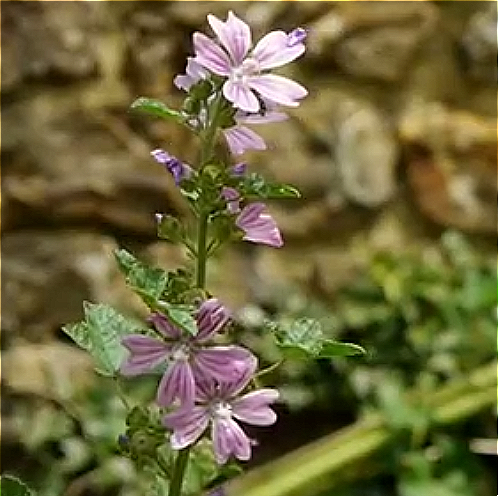
Mallow, Malva sylvestris L. (common mallow or wild mallow), is a herbaceous biennial to perennial plant of the family Malvaceae, widespread throughout Europe, Western Asia and North Africa, and now naturalised in many other temperate regions. It grows spontaneously in meadows, along paths, in field margins, old walls and rural areas, forming clumps usually 30–80 cm tall, with erect or slightly prostrate, branched stems.
The leaves are alternate, orbicular to heart-shaped, with a lobed margin and slightly rough surface; long petioles give the plant a leafy, bushy appearance. The flowers are highly distinctive, with five petals ranging from pink-lilac to deep violet, marked by darker veins that emphasise their ornamental value. Flowering is prolonged, from spring to autumn, making common mallow easy to recognise in the field.
Traditionally, Malva sylvestris has been both a food plant and a medicinal herb: tender leaves and flowers were used in many rural cuisines as cooked greens in soups and fillings, while in herbal practice the aerial parts rich in mucilage are known for their emollient and soothing action on mucous membranes. Today, common mallow is widely used in herbal teas, extracts, food supplements and as a cosmetic ingredient in gentle formulations for sensitive or irritated skin.
Botanical classification
Common name: common mallow
Botanical name: Malva sylvestris L.
Botanical family: Malvaceae
Native range: Europe, North Africa and Western Asia
Habit: biennial or short-lived perennial herb
Height: 30–120 cm
Lifespan: biennial or short-lived perennial
Cultivation and growth conditions
Climate
Prefers temperate climates.
Tolerates cold winters and light frosts.
Can also grow in hot summers if the soil retains moderate moisture.
Exposure
Develops best in full sun.
Tolerates partial shade, but with reduced vigor and flowering.
Soil
Adapts to many soil types.
Prefers soils that are:
fertile,
moderately moist,
well drained,
rich in organic matter.
Preferred pH: 6.0–7.5.
Does not like very acidic, very compact or heavy clay soils.
Irrigation
Requires moderate watering:
water regularly in the early stages and during dry summers;
keep the soil slightly moist;
avoid waterlogging, which encourages root rot.
Temperature
Ideal range: 15–28 °C.
Tolerates short winter frosts well.
In very hot climates, mulching is helpful to preserve soil moisture.
Fertilization
Appreciates soils rich in organic matter.
In poor soils:
apply well-matured compost or a balanced slow-release fertilizer 1–2 times per year.
Avoid excessive fertilization, which promotes leaf growth at the expense of flowers.
Crop care
Remove weeds, especially while plants are young.
Deadhead spent flowers to stimulate new blooms.
In windy sites, taller plants may benefit from light staking.
Monitor for rust and aphids, which can occasionally attack the foliage.
Harvest
Flowering occurs from late spring to autumn.
Harvest:
flowers (in the morning, fresh and just opened),
young leaves,
to be used fresh or dried.
Propagation
Mainly by seed:
sow in spring or autumn;
seeds germinate easily in moderately moist soil.
Self-seeding is common in suitable conditions.
Environmental and Safety Considerations
Malva sylvestris is generally safe and non-toxic, but as with any plant, it should be used with caution, particularly in medicinal applications, to avoid potential allergic reactions or interactions with other treatments. It is also considered a beneficial plant for attracting pollinators and enhancing biodiversity in gardens.
Indicative nutritional values per 100 g (fresh leaves)
Energy: 30–45 kcal
Water: 80–85 g
Protein: 4–5 g
Total carbohydrates: 4–7 g
Total fibre: 3–5 g
Total fat: about 0.5–1 g
SFA (saturated fatty acids, whose excess from all dietary sources is associated with a less favourable lipid profile): very low amount
MUFA (monounsaturated fatty acids): present only in small traces
PUFA (polyunsaturated fatty acids, including n-6 and n-3 families, relevant for inflammation and cardiovascular health): small trace amounts
Key minerals: calcium, magnesium, potassium, iron (levels vary)
Vitamins: vitamin C, some B-group vitamins and carotenoids in modest amounts
Dried leaves and flowers used for teas are more nutrient-dense per 100 g because of reduced water content, but the actual serving size is small, so their contribution is primarily functional rather than caloric.
Key constituents
Mucilage (high-molecular-weight polysaccharides responsible for the emollient effect)
Complex polysaccharides (heteropolysaccharides with arabinose, galactose, rhamnose and other sugars)
Flavonoids (including quercetin and kaempferol derivatives)
Anthocyanins (notably malvin and related malvidin/delphinidin derivatives, which give the flowers their violet colour)
Tannins and other polyphenols
Organic acids (e.g. malic and citric acid)
Vitamins (especially vitamin C) and mineral salts
Traces of essential oil with minor terpenes
The combination of mucilage, polyphenols and antioxidant compounds explains the traditional and modern uses of mallow in herbal and cosmetic applications.
Production process
For food and herbal use (leaves and flowers)
Harvesting: young leaves and flowers are harvested at or near full flowering, when mucilage and phenolic content are highest; only healthy plants from uncontaminated sites are selected.
Cleaning: removal of soil, insects and foreign plant material; a brief, gentle rinse may be applied, followed by draining.
Drying: low-temperature drying in a well-ventilated, shaded environment or in controlled dryers, to preserve colour, mucilage and anthocyanins.
Cutting and grading: the dried material is cut and sieved for loose herbal teas, tea bags or herbal mixtures.
Storage: dried material is stored in well-closed containers, protected from moisture and light, until final packaging.
For extracts and cosmetic raw materials
Extraction of dried aerial parts with water, glycerine, alcohol or mixtures (e.g. hydroglycolic or glyceric extracts).
Subsequent filtration, concentration and sometimes standardisation (e.g. in total polyphenols or mucilage content).
Stabilisation with suitable antioxidants and preservatives for cosmetic use.
Physical properties
Dry herb appearance: fragments of green-olive leaves and purple or blue-lilac corollas.
Bulk density: low, typical of light herbal drugs.
Solubility:
Mucilage disperses well in water, swelling and forming viscous solutions or suspensions.
Many phenolic components are soluble in water, especially at warm temperatures.
Stability: sensitive to light and humidity; anthocyanins degrade under strong light, unfavourable pH and high temperatures, leading to colour loss and reduced activity.
Sensory and technological properties
Flavour: mild, slightly herbaceous and mucilaginous, with a light astringency from tannins.
Aroma: subtle, grassy.
In infusion, the mucilage gives a soft, slightly viscous mouthfeel, especially in stronger decoctions.
Technologically, the ability of the plant material to swell in water makes mallow useful as an emollient ingredient in teas and as a soothing component in liquid and semi-solid preparations (herbal syrups, gargles, mouthwashes, gels).
Food applications
Cooked greens: young leaves traditionally used as boiled vegetables in soups, stews and fillings, often in mixtures with other wild herbs.
Herbal teas and infusions: extensive use of leaves and flowers in emollient teas and blends for throat and mucosal comfort.
Texture enhancement: in soups and vegetable creams, mucilage contributes to a smoother, velvety texture.
In some traditions, mallow flowers are used as edible decoration and to provide subtle colour and a delicate herbal note to salads and cold dishes.
In modern diets, mallow is mostly a complementary food/herb, not a staple, used in moderate amounts.
Nutrition and health
In herbal and traditional medicine, mallow is valued primarily for its mucilage-rich aerial parts, which exert emollient and soothing effects on the mouth, throat and gastrointestinal mucosa. Mucilage forms a protective film that can reduce sensations of irritation and dryness, while polyphenols (flavonoids, anthocyanins, mild tannins) contribute to an antioxidant profile.
From a nutritional perspective, fresh leaves and flowers are low in calories but can contribute small amounts of fibre, minerals and micronutrients in a diversified diet. The soluble fibre and mucilage may support bowel regularity and help modulate stool consistency.
Use as a medicinal plant is embedded in European phytotherapy, in preparations for mild irritation of the mouth and throat and minor gastrointestinal discomfort. Safety margins are generally wide at traditional doses, but mallow should not be considered a replacement for proper medical care where this is needed.
Portion note
For soothing herbal teas with mallow:
About 1.5–2 g of dried herb (leaves and flowers) per 150–200 ml of water,
Typically 1–3 cups per day, depending on the composition of the herbal blend and overall diet.
For culinary use as cooked greens, serving sizes are similar to other leafy vegetables (around 70–100 g fresh weight per serving), within the context of an overall balanced diet.
Allergens and intolerances
Malva sylvestris L. is not among the main regulated food allergens.
Rarely, hypersensitivity reactions may occur in people allergic to other Malvaceae or botanically related plants.
In individuals with very sensitive digestion, high intakes of fibre and mucilage may cause temporary bloating or a feeling of fullness.
Overall, moderate use in teas and as a leafy vegetable is considered well tolerated in most healthy adults.
Storage and shelf-life
Dried leaves and flowers
Store in airtight containers, protected from light, humidity and heat.
Typical shelf-life: about 12–24 months, with gradual loss of colour (fading of flowers) and aroma.
The appearance of musty odours or unusual colour changes indicates deterioration and the product should not be used.
Liquid extracts (hydroglycolic, hydroalcoholic)
Store according to manufacturer’s instructions, generally away from light and at controlled temperature.
Adequate preservative systems are used to ensure microbiological stability until expiry.
Safety and regulatory
Leaves and flowers of Malva sylvestris are recognised as traditional food plants and as herbal medicinal substances in various monographs.
Traditional uses focus on the relief of mild respiratory and gastrointestinal complaints, especially irritation of the mouth and throat, dry cough and minor gastrointestinal discomfort.
At customary doses, aqueous extracts have shown low acute and subchronic toxicity in experimental models, and a good safety profile in traditional use.
Data for pregnancy and breastfeeding remain limited; many guidelines recommend staying within dietary use and avoiding prolonged or high-dose concentrated preparations without medical advice in these conditions.
As herbal teas, supplements or medicinal products, mallow preparations must comply with regulatory limits for contaminants, pesticide residues, heavy metals and microbiological quality, and must be appropriately labelled.
Labelling
For a food/herbal product based on common mallow:
Ingredient or drug name: e.g. “Mallow (Malva sylvestris L.), leaves and flowers”.
Specification of plant part used (leaves, flowers, aerial parts).
Instructions for preparation (e.g. “1–2 teaspoons in infusion for 5–10 minutes in 200 ml of water”).
General warnings for supplements (“do not exceed the recommended daily dose”, “not a substitute for a varied diet and a healthy lifestyle”, etc.).
Storage instructions (keep away from light and moisture).
For cosmetic products, the label will show the relevant INCI names, for example Malva Sylvestris Leaf Extract, Malva Sylvestris Flower Extract or Malva Sylvestris Flower/Leaf Extract.
Troubleshooting
Loss of flower colour
Cause: excessive exposure to light or heat, or old stock.
Action: improve storage conditions; use fresher batches for products where appearance is important.
Musty or off odours in herbal mixtures
Cause: high humidity, poorly sealed containers.
Action: discard compromised product; review drying and packaging procedures.
Infusion too viscous or “gel-like”
Cause: high herb dose or prolonged decoction/infusion leading to strong mucilage extraction.
Action: reduce the amount of mallow or the extraction time; blend with other herbs to balance mouthfeel.
Limited stability in aqueous cosmetic formulations
Cause: polysaccharide-rich fractions may be sensitive to microbial growth or pH conditions.
Action: optimise preservation system, adjust pH, and ensure compatibility with other actives; consider using standardised extracts with defined composition.
Sustainability and supply chain
Common mallow is a wild and cultivable species with low agronomic demands, well suited to low-input systems:
It can be cultivated with limited fertiliser and water, reducing environmental impact.
Wild harvesting must be responsible, avoiding over-collection in sensitive habitats or depletion of local populations.
A sustainable supply chain includes:
Full traceability from collection (wild or cultivated) to finished product.
Monitoring of soil quality and absence of contaminants in cultivation areas.
Proper management of processing residues, with composting of plant waste where possible.
Control of liquid effluents from extraction and cleaning, with attention to BOD/COD values.
Integrated into crop rotations and organic or integrated farming systems, mallow supports agrobiodiversity and enhances the resilience of agroecosystems.
Main INCI functions (cosmetics)
In cosmetic ingredient lists, Malva sylvestris derivatives typically appear as:
Malva Sylvestris Leaf Extract
Malva Sylvestris Flower Extract
Malva Sylvestris Flower/Leaf Extract
Occasionally, floral or leaf waters (e.g. Malva Sylvestris Leaf Water)
The main cosmetic functions are:
Skin conditioning: helping keep the skin in good condition, improving softness and comfort.
Soothing/emollient: thanks to mucilage, contributing to relief for sensitive or slightly irritated skin.
Mild astringent: due to light tannins, which can give a sensation of tighter pores and a more refined skin appearance.
Antioxidant support: polyphenols help support the antioxidant profile of the formulation.
Common mallow is thus used in face and body creams, soothing lotions, intimate hygiene products, after-sun care, products for delicate skin, and some hair and scalp care formulations.
Conclusion
Mallow (Malva sylvestris L., common mallow) is a long-established food and medicinal plant, appreciated for its high mucilage content, polyphenolic profile and excellent tolerability. Leaves and flowers are used in emollient teas, traditional dishes and modern herbal products, while standardised extracts are increasingly employed in cosmetics targeting sensitive and reactive skin.
Its value arises from the combination of gentle action on mucous membranes and skin, an interesting nutritional profile for a low-calorie herb, and easy cultivation in sustainable farming systems. With proper management of the supply chain—from harvesting to extraction—mallow-based products can be safe, high-quality and supportive of plant biodiversity and European herbal traditions.
Studies
Due to its wide use and medicinal importance, many studies have been carried out; however, the information in the literature is many and very scattered, making it difficult to use (1).
In Mallow there are powerful antioxidants (phenols, flavonoids, carotenoids and tocopherols), unsaturated fatty acids (e.g. alpha-linolenic acid) (2), and 143 volatile compounds have been catalogued including Hexadecanoic acid, Linalool, Limonene, Menthol, Eugenol, Tocopherol (3), Scopoletin, Chloroform, Malvidin.
The aim of this study was to study the in vitro anti-inflammatory activity of Malva sylvestris extract and fractions in a co-culture model of cells infected with Aggregatibacter actinomycetemcomitans. The chloroform fraction was the most effective in reducing bacterial colonization. Mallow sylvestris and its chloroform fraction minimized Aggregatibacter actinomycetemcomitans infection and inflammation processes in oral human cells (4).
The leaves have topical anti-inflammatory activity, the compound 3-glucoside malvidin seems to be primarily responsible for this effect, with the participation of other anti-inflammatory compounds in the extract, such as Scopolamin and Malvidin and therefore mallow can be used as a future treatment for skin disorders.
This study confirms the cardioprotective effects of MS in reducing oxidative stress and inflammatory response in this study confirms the cardioprotective effects of Malva sylvestris L. in reducing oxidative stress and inflammatory response in ischemia/reperfusion rats.
Cosmetics
Mallow extract is derived from flowers and leaves and contains flavonoids, tannins and mucilage which have a moisturising and emollient effect and a soothing effect on dry skin.
Mini-glossary
Mucilage: hydrophilic polysaccharides that form viscous solutions in water; they create a protective, emollient layer on mucous membranes and skin.
Anthocyanins: water-soluble polyphenolic pigments responsible for red to violet colours; in common mallow, they include malvin and other malvidin/delphinidin derivatives.
SFA (saturated fatty acids): fatty acids without double bonds; excessive intake from all sources is associated with less favourable blood lipid profiles.
MUFA (monounsaturated fatty acids): fatty acids with one double bond, generally beneficial when replacing SFA in the diet.
PUFA (polyunsaturated fatty acids): fatty acids with two or more double bonds, including n-6 and n-3 families, important for inflammation and cardiovascular health.
GMP/HACCP (good manufacturing practice / hazard analysis and critical control points): systems used to ensure quality, hygiene and safety in the production of foods, supplements and raw materials.
BOD/COD (biochemical oxygen demand / chemical oxygen demand): indicators of the organic load of wastewater, used to assess the environmental impact of processing operations.

