



Lady's mantle, Alchemilla (Alchemilla xanthochlora Rothm)
The term alchemilla refers to Alchemilla xanthochlora Rothm, a perennial herbaceous species found in temperate climates of Central and Southern Europe, growing wild in meadows, woodland edges, upland pastures and mountainous areas with cool, moderately humid and well-drained soils. The plant has a low, tufted growth habit, with herbaceous stems and palmate-lobed leaves with a characteristic fan shape, covered with fine pubescence that favours the condensation of tiny water droplets under humid conditions. The inflorescences consist of small yellow–greenish flowers with no showy petals.
From a morphological and cultivation standpoint, alchemilla is valued mainly for its aerial parts (leaves and flowering tops), harvested during the vegetative season and dried to obtain raw material for food and herbal use. The properties of the drug are influenced by harvest time, exposure, altitude and drying conditions, which affect the content of its main constituents and the final quality of the product.
The composition of Alchemilla xanthochlora includes a significant proportion of tannins (mainly of the ellagic type), flavonoids, phenolic acids, traces of essential oil, and minor substances such as mucilages and mineral salts. The levels of tannins and phenolic compounds may vary according to pedoclimatic conditions, vegetative stage and post-harvest processing, influencing the technological characteristics and suitability of the raw material for specific preparations.
From an application perspective, alchemilla is used mainly in the food and herbal sector in the form of herbal teas, infusions and extracts intended for aromatic and herbal blends. The dried aerial parts can be used alone or in formulations with other plant materials. The quality of the product depends on correct botanical identification, drying conditions, storage and control of compositional parameters (tannin content, residual moisture, purity), in order to ensure consistent characteristics and suitability for use in different applications.
 | 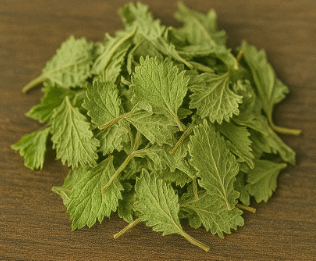 |
Botanical classification (APG IV)
Botanical name: Alchemilla xanthochlora Rothm.
Common name: lady’s mantle, alchemilla
Family: Rosaceae
Order: Rosales
Modern clades (phylogenetic):
Angiosperms
Eudicots
Core eudicots
Rosids
Domain: Eukaryota
Kingdom: Plantae
Cultivation and growth conditions
Climate
Alchemilla xanthochlora prefers cool temperate climates, with mild to moderately warm summers and good air humidity. It tolerates cold winters and even prolonged snow cover, thanks to its hardiness and its ability to regenerate in spring from the crown. It is not damaged by brief frosts and withstands moderate temperature fluctuations.
Exposure
The plant grows well in bright partial shade, but can also adapt to full sun in cooler regions. In warmer areas, a location with some shade during the hottest hours of the day is preferable to avoid water stress and excessive leaf scorch.
Soil
It is fairly adaptable, but for optimal growth it prefers soils that are:
Well drained and consistently fresh;
Of loam or loam-silty texture;
With a moderate organic matter content;
With a slightly acidic to neutral pH.
Overly dry, poor soils slow growth; persistent waterlogging may promote crown and root rot.
Irrigation
Regular watering is important during establishment and in dry periods, in order to keep the soil moist but not saturated. Mature plants can tolerate short dry spells, but adequate soil moisture favours continuous leaf production and dense foliage clumps.
Temperature
The ideal temperature range for growth is roughly 10–22 °C. Very high temperatures reduce vigour and accelerate leaf wilting if soil moisture is insufficient. The species withstands negative temperatures typical of temperate hill and mountain areas.
Fertilization
Nutrient requirements are modest, but the plant responds well to:
Organic amendments (compost, humus) to improve soil structure and baseline fertility;
Moderate nitrogen to support leaf production without making tissues too soft;
Phosphorus and potassium to sustain general physiology and tissue robustness.
Excessive fertilization, especially with nitrogen, can produce overly tender foliage that is less resistant to stress.
Crop care
Removal of dry or damaged leaves to keep the clump clean and to stimulate new shoots.
Division of clumps every few years to maintain vigour and density.
Removal of inflorescences (if not needed) can be used to encourage greater vegetative growth and leaf production.
The species is generally hardy and only rarely affected by pests; prolonged waterlogging and excessive humidity can favour fungal diseases.
Harvest
Leaves are harvested during the vegetative period, once the leaf blade is fully expanded, preferably on dry days. In technical–herbal contexts, harvest is focused on healthy, well-formed leaves, which are then dried in shaded, well-ventilated places to preserve their characteristics.
Propagation
Propagation is mainly by:
Division of clumps, which is the simplest method and preserves the traits of the mother plant;
Seed, used less frequently because of genetic variability and relatively slow, uneven germination.
Division is preferably carried out in spring or late summer, using vigorous, well-rooted plants.
Indicative nutritional values per 100 g (dried aerial parts)
Values refer to dried herb; actual intake in a cup of tea is only a few grams of plant material.
Energy: ~250–290 kcal
Protein: ~10–13 g
Total carbohydrates: ~45–50 g
Dietary fibre: ~20–25 g
Total fat: ~3–4 g
SFA (saturated fatty acids): minor fraction
MUFA (monounsaturated fatty acids)
PUFA (polyunsaturated fatty acids)
Minerals: calcium, magnesium, potassium, iron (in modest amounts)
Vitamins: small amounts of vitamin C and some B-group vitamins
Sodium: low
Key constituents
Polyphenols
Tannins (notably gallotannins and ellagitannins)
Flavonoids (e.g. quercetin, luteolin and their glycosides, proanthocyanidins)
Phenolic acids and related compounds
Other phytochemicals
Small amounts of coumarins, triterpenes and other secondary metabolites
Trace volatile components (terpenes) contributing to the herbal aroma
Macronutrients and matrix components
Structural carbohydrates and dietary fibre in the leaf and stem tissues
Vegetable proteins and a modest lipid fraction (with SFA, MUFA, PUFA)
Micronutrients
Minerals (calcium, magnesium, potassium, iron)
Low levels of vitamin C and B vitamins, partly sensitive to drying and infusion conditions
Production process
Cultivation/collection
Plants are grown or collected in clean, non-contaminated areas, usually during the flowering season when the content of active constituents is adequate.
Harvesting
Cutting of aerial parts (leaves and flowering tops) in dry weather, avoiding damaged or diseased material.
Drying
Gentle air-drying or controlled low-temperature drying, protected from direct light, to preserve phenolic compounds and colour.
Cutting and grading
Dried herb is cut or milled to a suitable particle size for loose tea or tea bags, with removal of foreign matter.
Extract preparation (optional)
Production of aqueous or hydroalcoholic extracts used in herbal preparations, often standardised for tannins or total phenolics, followed by filtration and concentration/drying steps.
Physical properties
Dried aerial parts are light, fragile fragments of leaves and stems, greenish to olive in colour. The plant material is rich in insoluble fibre, giving a relatively low bulk density. In water, the solid matrix is only partially hydrated; the main constituents extracted into the infusion are water-soluble polyphenols and some mineral salts. The odour is mildly herbal and the plant material is stable when kept dry and protected from light and humidity.
Sensory and technological properties
Aroma: mild herbal, slightly green and grassy.
Flavour: distinctly astringent, with mild bitterness, due to tannins; the intensity depends on dose and infusion time.
Technological behaviour:
Good extraction of tannins and flavonoids in hot water infusions.
Suitable for blending with other herbs to modulate astringency and flavour.
Dried herb is easy to portion for tea bags and loose herbal mixtures, with good flowability if properly dried and cut.
Food applications
Herbal infusions (teas) from dried aerial parts, used alone or in blends.
Ingredient in herbal mixtures marketed as “digestive”, “women’s herbal tea” or similar traditional formulations.
Occasionally used in liquid extracts or syrups that may be added in small quantities to beverages or functional preparations.
Use as a conventional food ingredient (e.g. in solid foods) is marginal; its main role is within the herbal/infusion category.
Nutrition & health
At typical use levels (1–2 g herb per cup) the caloric impact is negligible.
The presence of tannins and flavonoids supports an astringent profile and potential antioxidant contribution.
Traditional use of Alchemilla species includes support for mild gastrointestinal discomfort, astringent action and local applications; these uses are based on long-standing herbal practice and are not a substitute for medical treatment.
Overall, dried herb and aqueous infusions are considered safe for general adult use at conventional doses, unless specific individual contraindications exist.
Portion note
A typical herbal-tea preparation uses about 1–2 g of dried aerial parts (approximately one teaspoon of cut herb or one tea bag) per 200–250 ml of hot water, infused for 5–10 minutes. Multiple cups per day may be recommended in herbal practice, but total intake should remain within reasonable limits.
Allergens & intolerances
Alchemilla is not among the main regulated food allergens.
As with other herbal products, individual hypersensitivity or intolerance reactions are possible but appear to be rare.
Commercial mixtures may contain other herbs, carriers or flavourings that introduce regulated allergens (e.g. citrus, fennel, anise, etc.); label verification is therefore important.
Storage & shelf-life
Dried herb should be stored in well-closed containers, protected from light, heat and humidity.
Prolonged exposure to air, light and moisture can lead to loss of aroma, discolouration and gradual degradation of sensitive constituents.
Under proper conditions, a typical recommended shelf-life is in the range of 2–3 years from drying/packing, with regular stock rotation.
Safety & regulatory
As a herbal ingredient used for infusions, Alchemilla must comply with general food safety and hygiene regulations, including good agricultural and collection practices and HACCP-based quality control in processing.
Controls typically include checks for identity, purity, pesticide residues, heavy metals, microbiological parameters and foreign matter.
Where Alchemilla extracts are used in food supplements or similar products, additional regulations apply (e.g. on claim wording, maximum daily doses and labelling requirements, depending on jurisdiction).
Labelling
On a dried-herb or herbal-tea product containing Alchemilla, the label should indicate:
Ingredient name (e.g. “Alchemilla herb”, “Alchemilla xanthochlora aerial parts”).
Full list of ingredients, in descending order by weight, for mixtures.
Net content, batch number and best-before date.
Storage conditions (e.g. “store in a cool, dry place, away from light”).
Preparative instructions (quantity of herb and infusion time).
Highlighting of any allergens originating from other ingredients in the blend.
For food supplements, additional mandatory information applies (recommended daily dose, warnings, specific wording on intended use, etc.).
Troubleshooting
Weak-tasting infusion
Possible causes: herb that is too old, suboptimal drying or too short infusion time.
Actions: use fresher material, check storage conditions, slightly increase dose or infusion time.
Excessive astringency or bitterness
Possible causes: high herb dose or long infusion time.
Actions: reduce the quantity of herb, shorten infusion time, blend with milder herbs.
Loss of colour or aroma in stored herb
Possible causes: exposure to light, humidity or high temperature.
Actions: improve packaging (opaque, airtight), store in cool, dry conditions, rotate stock.
Sustainability & supply chain
Alchemilla grows spontaneously in many European grassland and mountain habitats; sustainable harvesting practices are important to avoid local over-collection.
Cultivation and controlled wild collection under good agricultural and collection practices (GACP) help ensure consistent quality and limit environmental impact.
Efficient drying, careful handling and minimisation of waste contribute to a more sustainable herbal supply chain.
Traceability from field to finished product supports quality assurance and responsible sourcing claims.
Main INCI functions (cosmetics)
In cosmetics, Alchemilla-derived ingredients may appear as:
Alchemilla Vulgaris Extract / Alchemilla xanthochlora Extract
used as a botanical extract with potential antioxidant and conditioning properties in skin-care formulations (e.g. serums, creams, toners).
Typical functions in formulations include:
support to antioxidant systems of the product,
contribution to soothing/conditioning effects for skin,
marketing positioning as a plant-based active from traditional herbal use.
Use levels and purity must comply with cosmetic safety evaluations and relevant regulations.
Conclusion
Alchemilla (Alchemilla xanthochlora) is a perennial herb used mainly as a herbal infusion ingredient, characterised by a high content of tannins, flavonoids and other phenolic compounds within a fibrous plant matrix. At typical infusion doses it has a negligible nutritional impact but provides a recognisable astringent herbal profile and potential antioxidant contribution.
When produced and stored under appropriate conditions and used at conventional herbal doses, Alchemilla herb is considered safe for general adult use and can be integrated into a wide range of herbal teas, extracts and cosmetic products, provided regulatory and quality requirements are met.
Mini-glossary
SFA – saturated fatty acids; fats with no double bonds. In excess, when replacing other fats, they may be less favourable for blood lipid profiles.
MUFA – monounsaturated fatty acids; fats with one double bond, generally considered more favourable than high SFA levels when part of a balanced diet.
PUFA – polyunsaturated fatty acids; fats with two or more double bonds, including omega-3 and omega-6 families involved in many physiological processes.
HACCP – Hazard Analysis and Critical Control Points; a structured system for identifying and controlling hazards in food production and processing.
Studies
Alchemilla has good antioxidant properties due to the flavonoids of its extract.
The volatile fraction from the aerial part of Alchemilla xanthochlora Rothm. (Rosaceae) was obtained by hydrodistillation, and the chemical composition of the obtained oil was determined by GC/FID and GC/MS. Several compounds were found, belonging to the classes of aldehydes, alcohols, terpenes, esters, acids and hydrocarbons. The major constituents were cis-3-hexenol (11.20+/-0.02%), linalool (10.36+/-0.75%), oct-1-en-3-ol (8.98+/-1.43%), and nonanal (7.83+/-0.93%), followed by myrtenol (4.65+/-0.40%), hexadecanoic acid (4.59+/-0.79%), cis-3-hexenyl acetate (3.92+/-0.15%) and alpha-terpineol (3.10+/-0.26%)(1).
It also has good amounts of Quercetin (2).
Some species of Alchemilla: Alchemilla vulgaris, Velebitica alchemilla, Alchemilla acutiloba Opiz, Alchemilla mollis

