



Lemon balm (Melissa officinalis L.)
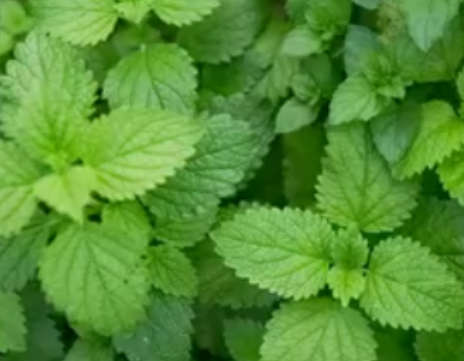
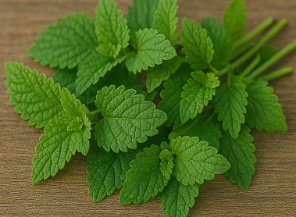
The term lemon balm refers to Melissa officinalis L., a perennial herbaceous species belonging to the Lamiaceae family, native to Southern Europe and the Eastern Mediterranean. It is traditionally cultivated and used in temperate climates, where it finds favourable conditions in well-drained soils with good organic matter content, located in areas with moderate sun exposure. The plant has a bushy growth habit, erect or slightly arched stems, opposite oval leaves with a wrinkled surface, and a characteristic lemon-like aroma due to its volatile fraction. The inflorescences, borne in the leaf axils, consist of small labiate flowers, generally whitish–yellowish or slightly pinkish.
From a botanical and morphological standpoint, lemon balm is valued mainly for its leaves, which are the primary harvested organ. Its vegetative characteristics (rapid growth, regrowth after cutting, good environmental adaptability) facilitate cultivation both in open fields and in specialised crops for the production of dried leaves or extracts. The aromatic content, mainly related to the volatile fraction, is influenced by agronomic factors such as harvest time, light intensity, vegetative stage, and drying techniques.
The composition of lemon balm includes components responsible for its aroma and secondary metabolites of interest. The volatile fraction of the essential oil is typically rich in citral (a mixture of neral and geranial), together with citronellal, linalool, and other monoterpenes. The leaves also contain phenolic acids, flavonoids, traces of tannins, as well as minor constituents such as mucilages and a modest amount of mineral salts. The levels of volatile aromatic substances and phenolic compounds can vary depending on the cultivar, pedoclimatic conditions, and post-harvest processing.
From an application standpoint, lemon balm is used in the food sector (herbal teas, infusions, and flavourings) and for the production of raw materials for herbal preparations and, to a lesser extent, cosmetic products (aromatic extracts, personal care formulations). The quality of the raw material depends on origin, varietal selection, drying methods, storage, and essential oil content. In all end uses, proper handling of the leaves and derived products is essential to maintain the aromatic profile and technological characteristics that distinguish lemon balm.
 |  |
Botanical classification
Botanical name: Melissa officinalis L.
Common name: lemon balm (melissa)
Botanical family: Lamiaceae
Order: Lamiales
Class: Magnoliopsida
Kingdom: Plantae
Lemon balm (Melissa officinalis L.) is a perennial aromatic herb cultivated for its leaves, which contain volatile constituents. It is used in herbal teas, extracts, herbal preparations, food products, and cosmetics. It is characterized by a fresh aroma with citrus-like notes and by good adaptability to different soil and climate conditions.
Cultivation and growth conditions
Climate
Lemon balm prefers temperate climates, with winters that are not too harsh and summers that are warm but not excessively dry. It withstands moderate cold, but intense and prolonged frosts can damage the root system and basal buds. It prefers balanced humidity conditions and benefits from moderate daily temperature variation.
Exposure
It prefers sunny or light partial shade exposures. Prolonged shading reduces vegetative growth and the concentration of aromatic compounds in the leaves. Well-ventilated sites, not overly exposed to strong winds, promote uniform and healthy growth.
Soil
Lemon balm adapts to many soil types provided they are well drained. It prefers loam or loam-sandy soils with a fair organic matter content and a slightly acidic to neutral pH (approximately 6.0–7.0). It is sensitive to waterlogging, which promotes root rot and reduces vegetative activity. Good soil porosity allows better root system development.
Irrigation
The crop requires a constant water supply, especially in the warmer months and during spring regrowth. Regular but not excessive irrigation supports leaf production and aromatic quality. Water excesses should be avoided at all stages to prevent stress, yellowing, and root diseases.
Temperature
The optimal temperature range is approximately 15–28 °C. Temperatures below 0 °C can be harmful if prolonged. Excessively high temperatures combined with drought cause reduced vegetative growth and loss of volatile oils.
Fertilization
Fertilization is based on soil analysis and crop requirements:
Nitrogen (N): Stimulates leaf growth and spring regrowth; it should be managed carefully to avoid excessive vegetative dilution of aromatic substances.
Phosphorus (P): Favors root development and plant robustness.
Potassium (K): Supports general physiology, metabolism, and leaf quality.
The use of organic matter and soil amendments improves fertility, structure, and water-holding capacity.
Crop care
Cutting and periodic harvesting: Encourage the emission of new shoots and maintain high aromatic quality of the leaves.
Weed control: Necessary especially in the first months, when lemon balm has limited competitive ability.
Plant protection: Monitoring for fungal diseases and insect pests, with targeted interventions according to good agronomic practices.
Harvest
Leaves are harvested preferably shortly before flowering, when aroma is most intense and essential oil concentration is highest. Several cuts are made during the year, always leaving enough vegetative mass to allow regrowth. Harvested material should be dry and processed or dried rapidly to preserve quality and aromatic activity.
Propagation
Propagation can occur by:
Herbaceous or semi-woody cuttings: Widely used to maintain varietal characteristics.
Division of clumps: Simple and suitable for small areas.
Seed: Possible, but may result in variability of traits; requires mild temperatures for uniform germination.
Young plants are transplanted preferably in spring, once the risk of frost has passed.
Caloric value (leaves)
Fresh: approximately 30–45 kcal/100 g.
Dried: approximately 240–300 kcal/100 g (indicative of fiber-rich dried herbs; contribution at flavoring doses is negligible).
Key constituents
Total essential oil typically 0.05–0.3% of dry mass, with citronellal, citral (neral + geranial), geraniol, linalool, and β-caryophyllene; traces of methyl citronellate.
Phenolic fraction rich in rosmarinic acid (predominant) and other caffeic-acid derivatives; flavonoids (glycosides of luteolin, quercetin, apigenin); triterpenes such as ursolic and oleanolic acids.
Leaf matrix components include fiber, chlorophylls, and minerals (K, Ca, Mg).
For extracts the common carriers are water, ethanol (EtOH), and glycerol.
Average composition (indicative, dried leaves, per 100 g)
Moisture: ~8–12 g.
Carbohydrates (mostly fiber): ~50–65 g.
Protein: ~10–15 g.
Fat: ~3–6 g.
Ash: ~7–10 g.
Typical aw (dry ingredient): low.
Production process
Cultivation and harvest: Multi-year stands are harvested just before full flowering, when the volatile profile is richest; multiple cuts per year are possible in mild climates.
Drying and cleaning: Gentle drying below ~40 °C, protected from light and excess humidity to preserve volatiles and phenolics; destemming, sifting, and removal of foreign matter.
Dried-herb standardization: Homogenization to cut size or milling; optional bioburden reduction; barrier packaging.
Essential oil: Steam distillation of fresh or dried leaves, phase separation and polishing; aromatic profile standardized and verified by GC–MS.
Extracts: Water/EtOH (or glycerol) extraction at a defined drug/solvent ratio; filtration, mild concentration, and marker titration (e.g., rosmarinic acid) by HPLC.
Sensory and technological properties
Aroma: Bright lemon-like head notes with green–herbal body and light sweetness; the essential oil is intense yet thermolabile.
Functionality: In teas and extracts it delivers citrus freshness and “green” lift; in pastry and frozen desserts it provides clean aromatic top notes; in beverages it can help mask bitterness.
Stability: Whole leaves retain aroma better than powders; light, heat, and oxygen degrade both essential-oil terpenes and phenolics.
Solubility: The phenolic fraction is water-soluble, while volatiles require appropriate carriers or hydroalcoholic systems.
Food applications
Herbal teas and infusions, flavored syrups and soft drinks, traditional liqueurs and elixirs, sorbets and ice creams, ganaches and creams, salads and yogurt-based sauces, light marinades for fish and vegetables, and flavored sugars or salts. Essential oil is used in micro-doses within compounded flavors.
Nutrition and health
Use levels are small and the energy impact is minimal. Lemon balm is traditionally associated with calming and digestive perceptions in folk use, which should not be construed as health claims in foods. The presence of EtOH in hydroalcoholic extracts must be considered for labeling when relevant.
Quality and specification themes
Verified botanical identity, controlled moisture, and freedom from visible residues.
Essential-oil content and terpene composition within range; rosmarinic-acid content verified; consistent GC–MS/HPLC fingerprints.
For the oil: clear color and absence of oxidized notes; for the herb: retained green color and clean aroma.
Traceability and controls under GMP/HACCP with defined CCPs across harvest, drying, and packing.
Storage and shelf life
Store cool, dry, and dark in well-closed, low-permeability containers; control ambient RH.
Prefer whole leaf for long storage and mill close to use; for the oil use dark glass, minimal headspace, and cool conditions.
Apply FIFO rotation.
Allergens and safety
Lamiaceae herbs rarely cause cross-reactivity, though individual sensitivities are possible. Airborne dust may irritate airways during handling. Essential-oil dosing must follow good industry practice to avoid over-flavoring in foods.
Cosmetic (INCI) functions
Typical listings: Melissa Officinalis Leaf Extract, Melissa Officinalis Oil, Melissa Officinalis Flower/Leaf/Stem Water. Reported roles include fragrance, masking, skin conditioning, soothing perception, and supportive antioxidant action in natural leave-on and rinse-off formats.
Troubleshooting
Aroma loss: Over-hot drying or light exposure → lower temperature, protect from light/air, and prefer whole leaves.
Hay-like/oxidized notes: Long storage or poor barrier → improve packaging barrier, add desiccant sachets, and shorten shelf life.
Instability in beverages: Phenolic precipitation or volatile loss → standardize extract, use mild chelators, and add at cooler stages.
Uneven distribution in doughs: Poor dispersion → premix with sugars/salts or dose liquid extract.
Sustainability and supply chain
Low-input cultivation with soil conservation and pollinator-friendly practices improves the footprint. Valorization of green residues as soil amendments or biomass is recommended. Managing processing effluents against BOD/COD targets, using recyclable packaging, and efficient sanitation contribute to environmental performance.
Conclusion
Lemon balm offers a distinctive citrus–herbal profile with strong effectiveness at low dose in teas, beverages, and sweets. Application quality depends on harvest maturity, gentle drying, protection from light and oxygen, and the proper standardization of extracts; with these controls, products remain sensorially consistent and stable.
Mini-glossary
aw — Water activity; fraction of “free” water in a product. Low aw in dried herbs supports stability.
RH — Relative humidity; high RH accelerates aroma loss and caking.
EtOH — Ethanol; common hydroalcoholic carrier for extracts and flavors.
GC–MS — Gas chromatography–mass spectrometry; used to fingerprint essential-oil composition and ensure quality.
HPLC — High-performance liquid chromatography; used to titrate markers such as rosmarinic acid in extracts.
GMP — Good Manufacturing Practice; hygiene and process controls ensuring consistency and traceability.
HACCP — Hazard Analysis and Critical Control Points; preventive food-safety system with defined CCPs.
CCP — Critical control point; a step where control prevents, eliminates, or reduces a hazard to acceptable levels.
FIFO — First in, first out; inventory rotation principle—use the oldest lots first.
INCI — International Nomenclature of Cosmetic Ingredients; standardized cosmetic ingredient naming and functions.
BOD/COD — Biochemical/Chemical oxygen demand; indicators of organic load in effluents and environmental impact.
Studies
It is among the oldest and most common medicinal plants and from its stem is obtained an essential oil with sedative properties, anti-spasmodic, carminative, antibacterial, anti-viral, anti-inflammatory, antioxidants, as well as neuroprotective effects (1).
Inside we find components very interesting for human health. The results of this study indicate that Melissa officinalis could be considered an effective agent in the prevention of various neurological diseases associated with oxidative stress : quercetin has the highest antioxidant activity followed by gallic acid and rutin. It also has hydroxycinnamic acid, m-cumaric acid, caffeic acid (2), alpha tocoferol, flavonoids (3).
This study positively assesses the protective effects of Melissa Officinalis extract and its main phenolic compound, rosemary acid, against UVB-induced damage in human keratinocytes (4).
Age-related macular degeneration is one of the most common causes of irreversible visual loss among older people in developed countries. Melissa Officinalis' extract protects the epithelial cells of the human retinal pigment against oxidative-induced apoptosis (5).
This study considers that extracts of Lavandula angustifolia and Melissa officinalis have shown additive effects and suggests that a preparation containing both extracts may be useful for insomnia (6).
Cosmetics
Skin conditioning agent - Miscellaneous. This ingredient has the task of modifying the condition of the skin when it is damaged or dry by reducing its flakiness and restoring its elasticity.

