



Potassium nitrite is a chemical compound that is produced industrially from a mixture of water, ammonium nitrate (NH4NO3) and potassium chloride (ClK).
Potassium nitrite is an inorganic compound with the chemical formula KNO₂. It is commonly used as a preservative and antimicrobial agent in certain food products, especially in processed meats, to prevent bacterial growth and maintain the red color of the meat. However, its use is regulated due to health concerns, particularly regarding the formation of potentially carcinogenic nitrosamines.
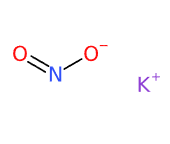
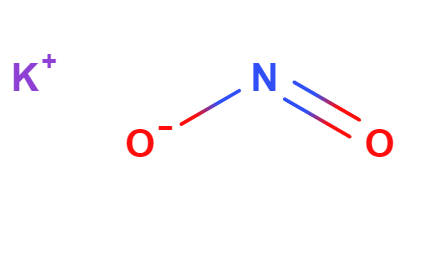
The name describes the structure of the molecule:
- Potassium is a chemical element with the symbol K. It is an alkali metal used in various compounds for its pH-regulating properties and as an electrolyte.
- Nitrite is an anion with the formula NO₂⁻. It is known for its antimicrobial properties and its ability to maintain the red color in processed meats.
Description of Raw Materials and Their Functions
Nitrite. A salt or ester of nitrous acid, used as the base for the formation of potassium nitrite. It is an important source of nitrogen in many applications.
Potassium. An alkaline chemical element used to neutralize nitrous acid and form the potassium salt. It enhances the solubility and chemical properties of the compound.
Industrial Chemical Synthesis of Potassium Nitrite
- Preparation. The synthesis begins with the reaction of nitrous acid with a potassium base, such as potassium hydroxide.
- Neutralization. During this reaction, nitrous acid is neutralized by potassium, forming potassium nitrite.
- Reaction Control. The reaction is monitored to ensure that the ratio of nitrous acid to potassium is correct and that the desired salt is formed.
- Purification. After the reaction, the product is purified to remove impurities and by-products.
- Quality Control and Packaging. Potassium nitrite undergoes quality checks.
It takes the form of a white or slightly yellow crystalline powder that is highly soluble in water.

It is a preservative labelled as E249 on the European Food Additives List.
In food it is mainly used in meat preservation.

Nitrates and nitrites are also used as preservatives, antimicrobial agents and colour fixers in processed foods such as cured meats, poultry, fish, cheeses etc. Sodium or potassium salts of nitrate and nitrite are added to meat and other food products to prevent the growth of the dangerous Clostridium botulinum bacteria that produce deadly neurotoxins causing food poisoning. Despite the beneficial applications of these salts, their excessive consumption in food causes a great threat to human health (1).
Warnings on nitrites and nitrates from the Italian Association for Cancer Research (AIRC) :
Prolonged dietary intake of large amounts of nitrites is associated with an increased risk of developing stomach cancer and oesophageal cancer. Foods containing potassium nitrite (E249), sodium nitrite (E250) and potassium nitrate (E252), found mainly in tinned meat, sausages and processed meats, should therefore be avoided or greatly reduced. Finally, certain antioxidants such as vitamin C (E300) and its derivatives, such as sodium ascorbate (E301) and potassium ascorbate (E303) inhibit the formation of nitrosamines from nitrates and nitrites and are therefore often used in combination in the food industry (2).
Cosmetics
It is a restricted ingredient as a II/248 Relevant Item in the Annexes of the European Cosmetics Regulation 1223/2009
Application Date: 11/07/2013 (the date fixed by the Directive as from which Member States shall ensure that cosmetic products which fail to comply with the modifications are not placed on the market)
Withdrawal Date: - (the date fixed by the Directive as from which Member States shall ensure that cosmetic products which fail to comply with the modification are not sold or disposed of to the final consumer).
The most relevant studies on this ingredient have been selected with a summary of their contents:
Potassium nitrite in food. Studies

Typical optimal commercial product characteristics Potassium nitrite
| Appearance | White or slightly yellow crystalline powder |
| Potassium nitrite | 98% |
| Melting Point | 350 °C |
| Density | 1,92 g/cm3 |
| PSA | 52.49000 |
| LogP | 0.25060 |
| Chloride | ≤0.02% |
| Fe | ≤0.005% |
| Heavy metals | ≤0.005% |
| Water | ≤2.0 % |
| Safety | 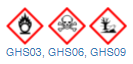 |
 |  |
 |  |
- Molecular Formula KNO2
- Molecular Weight 85.104 g/mol
- Exact Mass 84.95660
- CAS 7758-09-0
- UNII 794654G42L
- EC Number 231-832-4
- DSSTox Substance ID
- IUPAC potassium;nitrite
- InChI=1S/K.HNO2/c;2-1-3/h;(H,2,3)/q+1;/p-1
- InChl Key BXNHTSHTPBPRFX-UHFFFAOYSA-M
- SMILES N(=O)[O-].[K+]
- MDL number MFCD00011408
- PubChem Substance ID 329749790
- ICSC 1069
- RTECS TT3750000
- NACRES NA.21
Synonymis
- Nitrous acid, potassium salt (1:1)

