



Safflower (Carthamus tinctorius L.)
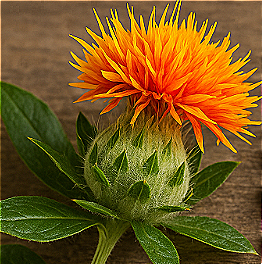
The term safflower refers to Carthamus tinctorius L., an annual herbaceous species grown in arid and semi–arid climates, especially in regions of Asia, the Middle East, North Africa, and in some areas of Europe and the Americas. The plant adapts well to well-drained soils, including relatively poor ones, and tolerates low water availability, making it suitable for low–input cropping systems. It has a branched, erect stem, often toothed or slightly spiny leaves, and characteristic capitulum-type inflorescences (flower heads) with yellow–orange or reddish flowers.
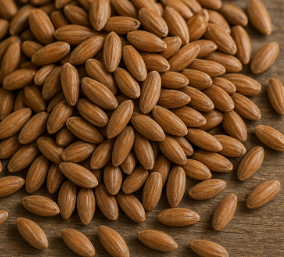
From a morphological and agronomic standpoint, safflower is cultivated mainly for its seeds, which are the raw material for the production of safflower oil. Once mature, the flower heads contain the caryopses (seeds), which are harvested, dried and sent to subsequent processing stages. The plant has a relatively flexible cropping cycle and can be included in rotations with other field crops. Seed yield and oil quality are influenced by variety, climatic conditions, sowing density, irrigation techniques (where used) and harvesting methods.
The composition of safflower concerns primarily the seeds, which contain a high proportion of oil (lipids), with a fatty acid profile that varies according to varietal type. There are cultivars with predominantly linoleic acid (high–polyunsaturated oil) and cultivars with predominantly oleic acid (high–monounsaturated oil). In addition to the lipid fraction, the seeds provide proteins, fibre, minerals, and minor components including tocopherols and other natural antioxidants. Composition is influenced by pedoclimatic conditions, maturity at harvest, and extraction and refining parameters.
From a technological and utilisation perspective, safflower is used in the food sector mainly for the production of seed oil intended for direct consumption or as an ingredient in processed foods. Some parts of the plant, particularly the flower heads and dried petals, have historically been used as a source of natural colourants and as a component in certain traditional preparations. The quality of the raw material and of the finished oil depends on varietal selection, crop management, storage conditions of the seeds, and control of extraction and refining processes, with particular attention to oxidative stability and preservation of minor constituents of technological and nutritional interest.
 |  |
Botanical classification (APG IV)
Botanical name: Carthamus tinctorius L.
Common name: safflower, dyer’s safflower, “false saffron”
Family: Asteraceae
Order: Asterales
Modern clades (phylogenetic):
Angiosperms
Eudicots
Asterids
Domain: Eukaryota
Kingdom: Plantae
Cultivation and growth conditions
Climate
Safflower is an annual species adapted to semi-arid and continental climates, with cool winters and hot, dry summers.
It tolerates drought very well thanks to its deep taproot, but is sensitive to excess rainfall during flowering and ripening. Optimal daytime temperatures in key stages (germination, flowering, seed filling) are roughly 20–30 °C, with high light intensity.
Exposure
Safflower requires full sun to ensure strong vegetative growth, abundant flower heads, and high seed and oil yield. Persistent shade or low light levels reduce flowering, the number of seeds per head, and overall yield.
Soil
For high yields, safflower prefers soils that are:
Deep, to allow full development of the taproot;
Well drained, to avoid waterlogging that compromises roots and ripening;
Of medium texture (loam to loam-sandy or loam-silty) with good porosity;
With a pH around 6.0–7.5;
With an adequate level of organic matter, especially in non-irrigated systems.
Very shallow, stony, or compact soils limit taproot development and reduce drought tolerance and yield.
Irrigation
Safflower is typically grown as a rainfed crop. However, in intensive systems or particularly dry seasons, supplemental irrigation can significantly increase yields, especially:
At emergence,
At the bud formation (early flowering) stage,
And at early seed set.
Irrigation should be moderate and deep, rather than frequent and superficial. Excess water during flowering increases the risk of fungal diseases and lodging.
Temperature
Germination and early growth: favoured by mild temperatures, ideally 15–20 °C.
Flowering and seed filling: daytime temperatures of 20–30 °C support good yield and quality.
Very hot conditions combined with lack of water during ripening can reduce both yield and oil quality, while frost during flowering is highly damaging.
Fertilization
Nutrient demand is moderate, comparable to other oilseed crops:
Nitrogen (N): moderate rates are sufficient to support vegetative growth; excessive N promotes lush foliage and lodging with limited yield response.
Phosphorus (P): supports root development, flowering, and seed set.
Potassium (K): improves seed quality, lodging resistance, and tolerance to abiotic stress.
Organic matter: compost or well-rotted manure improves soil structure, water infiltration, and water-holding capacity, enhancing drought resilience.
Fertilization should always be adjusted according to soil analysis and yield targets.
Crop care
Seedbed preparation: A well-prepared, fine, and level seedbed is important for uniform sowing depth and good seed–soil contact, favouring even emergence.
Sowing time: Depending on climate, safflower can be sown in autumn (Mediterranean areas, to exploit winter rainfall) or in late winter–early spring in colder regions.
Weed management: Safflower competes reasonably well once established, but is sensitive to weed competition in early growth stages; shallow cultivation or integrated weed management is recommended.
Plant health: In dry climates the crop is generally not very susceptible to diseases. In humid conditions or with frequent rain around flowering there is increased risk of basal rots and head moulds; good rotation, aeration, and avoidance of waterlogging are essential preventive measures.
Harvest
Grain harvest is carried out when:
Plants are completely dry, almost down to the base;
Seed moisture is around or below 10%;
Heads are dry and the achenes fully hardened.
Harvest is typically done with a combine harvester, adjusted to minimise head breakage and seed loss in the field. In Mediterranean regions, harvest usually occurs between July and August, several weeks after winter cereals.
Propagation
Safflower is propagated exclusively by seed:
Farm-saved or certified seed with good purity and germination is used.
Sowing is usually done in rows 30–45 cm apart; target plant density is typically 40–60 plants/m², depending on soil fertility and variety.
Vegetative propagation is not practiced, as safflower is an annual grain/oilseed crop.
Rotation with winter cereals and legumes improves soil structure, reduces weed and disease pressure, and enhances overall system sustainability.
Indicative nutritional values per 100 g (safflower seeds)
Energy: ~550–600 kcal
Protein: ~14–16 g
Total carbohydrates: ~8–10 g
Dietary fibre: ~6–8 g
Total fat: ~40–42 g
SFA (saturated fatty acids): minor fraction
MUFA (monounsaturated fatty acids)
PUFA (polyunsaturated fatty acids, predominant in high-linoleic varieties)
Minerals: calcium, iron, magnesium, phosphorus, potassium
Vitamins: vitamin E (tocopherols), small amounts of B-group vitamins
Sodium: very low
(Safflower oil itself is almost entirely fat, with ~880–900 kcal/100 g.)
Key constituents
Lipid fraction
PUFA, especially linoleic acid in traditional high-linoleic safflower
MUFA, mainly oleic acid in high-oleic varieties
reduced proportion of SFA
Minor oil components
tocopherols (vitamin E) with antioxidant function
phytosterols and other unsaponifiable substances
Seed matrix
vegetable proteins
dietary fibre
structural carbohydrates
minerals (Ca, Mg, Fe, P, K)
Production process
Cultivation
grown in open field, often in dry environments due to good drought tolerance
Harvesting and threshing
harvesting of mature plants
threshing to separate seeds from the capitula
Cleaning and drying
removal of plant residues, dust and foreign matter
possible drying to reach a safe moisture level for storage
Oil extraction
mechanical pressing (often cold-press) for oils intended for direct consumption
possible solvent extraction and refining for large-scale food and industrial uses
Filtration and standardisation
filtration to obtain clear oil
quality control on acidity, fatty-acid profile, oxidation indices and purity
Packaging
filling in suitable containers to protect against light, heat and oxygen
Physical properties
Safflower seeds are small, pale or whitish-yellow, with a high oil content in the internal kernel.
Safflower oil is clear, light yellow, fluid at room temperature and characterised by low viscosity.
It is liquid at normal ambient temperatures; the smoke point depends on refining level and fatty-acid composition (higher for refined, high-oleic oils).
Sensory and technological properties
Aroma: mild, generally neutral or slightly “seed/nut-like”.
Flavour: delicate, does not mask the taste of other ingredients.
Technological behaviour:
good oxidative stability in high-oleic variants; higher oxidation sensitivity in high-linoleic types (rich in PUFA)
excellent fluidity and spreadability
suitable as a salad and cold-dish oil
usable in oil blends to adjust lipid profile
in some cases suitable for cooking and frying (especially refined high-oleic oil, within recommended temperature limits)
good incorporation in emulsions (dressings, margarine, cosmetic creams)
Food applications
Table oil used as a cold dressing for salads, vegetables and cold dishes
Ingredient in margarines, emulsified dressings and baked goods
Component of food supplements and nutritional products
Part of blends of vegetable oils designed to tailor fatty-acid composition
Use in “better-for-you” products to help replace a portion of saturated fats with unsaturated fats
Nutrition & health
Safflower oil is a concentrated source of energy and unsaturated fats.
The presence of PUFA (especially linoleic acid) and MUFA, when they replace part of the SFA in the diet, contributes to a more favourable lipid profile than diets dominated by saturated fats.
The oil also contains vitamin E and phytosterols, which add to its overall nutritional profile.
As with all oils, consumption should be moderate, integrated into a balanced diet and assessed in the context of total fat intake from all sources.
Portion note
For culinary use, a typical serving of safflower oil as a dressing is about 5–10 g per person (approximately 1–2 teaspoons), depending on individual energy requirements and the overall dietary context.
Allergens & intolerances
Safflower is not among the major mandatory allergens in food labelling.
However, rare cases of individual hypersensitivity cannot be excluded.
In composite products (margarines, industrial dressings, supplements), the most relevant allergens usually derive from other ingredients (e.g. milk, soy, gluten, eggs), not from safflower itself, and must therefore be highlighted on the label.
Storage & shelf-life
Seeds
store in a cool, dry place
protect from moisture and pests (insects, rodents)
excessive humidity can promote microbial growth and lipid rancidity
Oil
store in well-closed, preferably dark containers
keep away from light, heat and air
once opened, it is advisable to use within a few months to limit oxidation (rancid odour and off-flavour)
high temperatures accelerate oxidation of PUFA, especially in high-linoleic oils
Safety & regulatory
Safflower oil is a regulated food ingredient under general rules for edible vegetable oils and fats.
The supply chain must adhere to good agricultural and manufacturing practices, with self-control systems based on HACCP principles.
Controls typically cover:
purity and authenticity of the oil
chemical and physical parameters (acidity, peroxide value, anisidine value, etc.)
contaminants (pesticide residues, heavy metals, environmental contaminants)
compliance with regulations on labelling, composition and use of vegetable oils intended for human consumption
Labelling
For safflower oil sold for food use, the label should indicate:
product name (e.g. “safflower seed oil”)
list of ingredients (if part of an oil blend or composite food)
net quantity, batch code, best-before date
storage conditions (e.g. “store in a cool, dry place, away from light”)
origin, where required or claimed
nutrition declaration per 100 g (and per portion, where applicable)
clear highlighting of any allergens originating from other ingredients in composite products
Troubleshooting
Rancid oil or abnormal odour
Causes: prolonged exposure to light, heat or oxygen; excessive storage time.
Corrective actions: improve packaging (dark bottles, airtight closure), reduce storage temperature, shorten time between opening and consumption.
Cloudiness or sediment
Causes: temperature fluctuations, presence of minor fractions not fully removed by filtration.
Actions: verify filtration and refining; slight sediment can be physiologically normal but overall stability should be checked.
Low extraction yield
Causes: immature seeds, high moisture content or non-optimised pressing conditions.
Actions: optimise harvest timing, seed drying and press settings.
Sustainability & supply chain
Safflower is well adapted to dry climates, showing good water-use efficiency compared with some other oil crops.
Its inclusion in crop rotations can support soil management and agricultural diversification.
A traceable supply chain with good agricultural practices, controlled pesticide use and attention to seed quality supports both environmental sustainability and product quality.
Optimised extraction and refining processes, with reduction of waste and recovery of by-products (e.g. defatted meal as a protein source), further improve the sustainability profile.
Main INCI functions (cosmetics)
In cosmetic products, safflower-derived ingredients are usually listed as:
Carthamus Tinctorius (Safflower) Seed Oil
Typical functions:
emollient oil for creams, lotions and body products
conditioning component for skin and hair
lipid phase in emulsions (face and body creams, hand creams, massage oils)
The high PUFA content makes safflower oil attractive for “nutritive” and “repairing” formulations; appropriate use of antioxidants and packaging is important to limit oxidation in finished products.
Conclusion
Safflower (Carthamus tinctorius L.) is an oilseed crop of considerable importance for the production of a highly unsaturated vegetable oil, rich in PUFA (high-linoleic types) or MUFA (high-oleic types), depending on the variety. The seeds represent a valuable nutritional and technological resource, while the oil is used as a culinary fat, an industrial ingredient, and a component of supplements and cosmetic formulations.
Proper management of cultivation, extraction processes and storage conditions allows preservation of the fatty-acid profile, oxidative stability and overall quality, ensuring safety, nutritional value and functional performance in the intended applications.
Mini-glossary
SFA – saturated fatty acids: fats with no double bonds; excessive replacement of other fats by SFA can be less favourable for blood-lipid profiles.
MUFA – monounsaturated fatty acids: fats with one double bond; generally preferable when they replace part of the SFA in the diet.
PUFA – polyunsaturated fatty acids: fats with two or more double bonds, including omega-6 and omega-3, which are involved in many physiological processes.
HACCP – Hazard Analysis and Critical Control Points: structured system for identifying and controlling hazards in food production and processing.
Studies
According to the theory of traditional Chinese medicine, it mainly promotes blood circulation and removes blood stasis (1).
In body, hand creams and more.
Substances present (2):
- Oleic acid from 55.12% to 83.26%
- Steal acid from 2.93% to 25.09%
- Linoleic acid from 14.09% to 19.06%

