



Wild rice, Northern wild rice (Zizania palustris)
Description
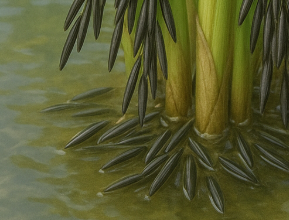
Wild rice (Zizania palustris), commonly referred to simply as wild rice, is an aquatic grass belonging to the Poaceae family. It is native to the lakes, slow-moving rivers and marshlands of North America, where it grows in shallow freshwater along shorelines and in calm backwaters. It prefers still or gently flowing water, usually up to about a metre deep, with soft, nutrient-rich muddy or silty bottoms in which its roots can anchor firmly.
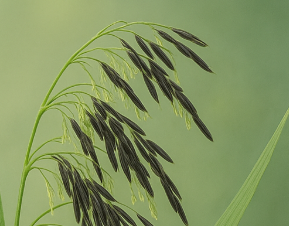
The plant has a tall, slender habit: upright, hollow stems often reach or exceed one metre in height, bearing long, narrow, arching leaves of bright green. At the top of the stem develops a feathery, somewhat drooping panicle, containing numerous elongated grains (caryopses) that are harvested as wild rice. As the seeds mature, they turn from green to dark brown or almost black, with a distinctive, rustic aroma recalling wet straw, damp wood and deep grassy notes.
Culturally, Zizania palustris is closely linked to the food traditions of Indigenous peoples of North America, who historically harvested it by canoe, bending the mature panicles over the boat and gently tapping the grains loose. In gastronomy, wild rice has become a symbol of unspoiled nature, traditional hand-harvesting practices and lakeside landscapes. When cooked, the grains open slightly and curl, revealing a firm yet tender interior and releasing an intense, layered aroma with toasted, nutty and earthy nuances.
 |  |
Botanical classification
Common name: Wild rice, northern wild rice
Clade: Angiospermae
Order: Poales
Family: Poaceae
Genus: Zizania
Species: Zizania palustris L.
Climate
Zizania palustris is typical of cool, temperate wetland environments, associated with lakes, slow–flowing rivers, marshes and coastal zones with fresh or slightly brackish water. It prefers mild, humid summers and cold winters. During the vegetative phase it needs moderate temperatures and a constant water level, while the seeds withstand winter frosts well during dormancy.
Exposure
The ideal exposure is full sun, which favours vigorous culm growth and the development of well–formed flowering panicles. In overly shaded environments plants remain weaker and produce fewer seeds. Good light, together with a stable water level, is essential for satisfactory yields.
Soil
Wild rice develops in muddy, peaty or silty–clay substrates, typical of marshes, that are submerged or permanently waterlogged. It needs sediments rich in organic matter and nutrients, where the roots can anchor firmly. Drained, dry soils are unsuitable, whereas semi–submerged environments with deep mud allow good development of the rhizome system.
Irrigation
This is a plant strictly linked to standing water: it requires submerged or flooded conditions with stable water levels, especially during growth, flowering and grain filling. Drops in water level, drying or rapid fluctuations can stop growth and severely reduce production. Maintaining a calm water surface without strong currents is therefore crucial.
Temperature
The optimal temperature range for germination and early spring growth is roughly 10–22 °C. The species tolerates cold winters well, since seeds remain in the sediment and overwinter in dormancy. Prolonged high temperatures combined with falling water levels can cause stress and reduce productivity.
Fertilization
In natural habitats, wild rice draws nutrients from organic–rich sediments resulting from plant decomposition. In managed systems, fertility of water and mud can be improved with moderate additions of well–matured organic amendments. Excess nutrients, especially nitrogen, may promote overly lush vegetative growth at the expense of spikelet and seed formation.
Crop care
Crop management focuses mainly on keeping water levels stable, limiting competition from other aquatic species and, if necessary, controlling waterfowl that may feed on immature grains. It is useful to keep the water relatively free from debris and invasive vegetation that could hinder culm growth or reduce water oxygenation.
Harvest
Seeds are harvested when the spikelets are mature and grains detach easily. Traditionally, wild rice was collected from canoes by gently bending and shaking the panicles over containers, using the natural tendency of ripe grains to fall. After harvesting, seeds are dried and often lightly toasted, which helps preserve aroma and improves storage stability.
Propagation
Propagation is by seed, either by allowing mature grains to fall naturally near the mother plants or by distributing them manually in suitable water bodies. Germination occurs in spring when temperatures rise and seeds, having passed through winter dormancy, resume activity. In planned cultivation, seeds can be harvested and sown in controlled basins, ensuring constant water depth and an organic–rich substrate to support young plant development.
Indicative nutritional values per 100 g
(dry wild rice, average)
Energy: ~ 340–360 kcal
Water: ~ 7–10 g
Total carbohydrates: ~ 70–75 g
Dietary fiber: ~ 6–9 g
Protein: ~ 13–15 g
Total fat: ~ 1–2 g
SFA: very low
MUFA: minor fraction
PUFA: predominant within the small fat fraction
Minerals: phosphorus, manganese, magnesium, iron, zinc, copper, potassium
Vitamins: folate, niacin, thiamine, small amounts of vitamin E and other B vitamins
Values vary with growing area, processing and analytical method, but wild rice is consistently seen as a high-carbohydrate, fiber- and protein-containing cereal.
Key constituents
Plant proteins with a good contribution of essential amino acids
Complex carbohydrates (mainly starch)
Dietary fiber (both soluble and insoluble fractions)
Minerals: phosphorus, manganese, magnesium, iron, zinc, potassium
B vitamins (especially niacin and thiamine) and folate
Minor antioxidant phytocompounds (polyphenols, phenolic acids)
Small lipid fraction with a predominance of unsaturated fatty acids
Production process
Growth in aquatic environments
shallow freshwater lakes, bays, slow channels and marshes
soft, muddy substrates rich in organic matter
growth during the warm season, flowering in summer and seed maturation in late summer to autumn
Harvesting
traditional method: from canoes, bending the panicles over the boat and gently tapping so the ripe grains fall in while unripe grains remain on the plant
modern methods: managed stands and mechanised harvesting in shallow waters
Cleaning and selection
removal of chaff, broken plant material, stones and other impurities
grading by grain integrity, colour and length
Drying and conditioning
controlled drying to reduce moisture and stabilise the grain
may be followed by light roasting or parching to enhance aroma, colour and cooking performance
Packaging
whole grains packed in bags or boxes, sometimes mixed with other rices or cereals
Physical properties
long, slender cylindrical grains, much thinner and darker than common rice
colour: dark brown to almost black, often with a glossy surface
very firm and hard when raw
high capacity to hydrate, expand and partially split open during cooking
Sensory and technological properties
flavour: rustic, toasted, slightly smoky, with earthy and nutty notes
aroma: intense and characteristic, often described as woody, forest-like or reminiscent of roasted grain
texture: when cooked, grains remain separate and firm, with a slightly chewy bite; not sticky
technological behaviour:
relatively long cooking time to fully hydrate the grain
does not become creamy or starchy like some rices; ideal for dishes where grain separation and texture are desired
blends well with other cereals for mixed-grain dishes
Food applications
warm or cold grain salads
side dishes served with meat, game, poultry or fish
mixed rice dishes (wild rice blends with white, brown or red rice)
soups, broths and hearty stews
baked or moulded grain dishes (timballos, gratins, stuffings)
base for bowls and plant-rich main courses, often combined with vegetables, legumes and nuts
Nutrition and health
Zizania palustris is valued for a balanced combination of complex carbohydrates, fiber and plant protein, together with a moderate energy density compared with many refined cereals.
Key points:
Plant proteins: contribute to total protein intake, especially in mixed dishes combining wild rice with legumes or other complementary foods.
Dietary fiber: supports intestinal function, satiety and modulation of postprandial glycaemia.
Complex carbohydrates: provide sustained energy release, useful in balanced meals and active lifestyles.
Minerals and B vitamins: support metabolic pathways, enzyme function and general tissue health.
Within a varied diet focused on whole grains and minimally processed foods, wild rice can be a nutritionally interesting alternative to conventional rice, adding both texture and micronutrients.
Portion note
As a main cereal component: about 60–80 g of dry wild rice per person.
As a side dish or part of a mixed grain dish: 40–50 g dry per person is often sufficient.
Allergens and intolerances
wild rice is not a major primary allergen
generally well tolerated by most individuals
due to its fiber content, very large servings may cause discomfort (bloating, gas) in sensitive people
wild rice itself is naturally gluten-free, but cross-contamination with gluten-containing cereals can occur during processing and packaging
Storage and shelf-life
store in a cool, dry place, protected from light and sources of heat
with correct packaging and low moisture, wild rice can remain stable for many months
oxidative rancidity risk is relatively low due to the small fat fraction, but off-flavours can still develop if stored badly or for excessively long periods
always reseal packaging carefully or transfer to an airtight container after opening
Safety and regulatory
wild rice is recognised as a conventional food and is generally authorised without special restrictions
packaged products must comply with regulations on:
labelling, including ingredients and potential allergens from added components
traceability and origin (where required)
limits for contaminants such as mycotoxins, heavy metals and pesticide residues
Labeling
For retail wild rice or wild-rice blends, labels typically include:
product name: e.g. wild rice or wild rice blend
botanical reference (optional, usually on more technical or premium products): Zizania palustris
country or region of origin (where required)
net weight, best-before date
storage instructions
for composite products: full ingredient list and declaration of any allergens from added ingredients
Troubleshooting
In the kitchen
grains remain too hard after cooking →
cooking time too short, insufficient water, or very old grain; extend cooking, ensure adequate water and a gentle simmer
flavour too mild →
try a brief toasting step in a dry pan or in a little oil before adding liquid; cook in stock rather than water and season towards the end
dish feels too dry →
increase hydration (more cooking liquid) or combine wild rice with more moist components such as vegetables, sauces or dressings
In storage
musty or “damp” odour →
likely moisture uptake; product may no longer be safe or of good quality
loss of aroma →
prolonged storage or non-airtight containers; prefer smaller packages and airtight canisters to preserve sensory quality
Main INCI functions (cosmetics)
Ingredients derived from Zizania palustris may occasionally appear in cosmetic formulations as:
skin conditioning agents, contributing to skin softness and comfort
plant-based components in “natural” or cereal-themed cosmetic lines
Such uses are marginal compared with its primary role as a food grain.
Conclusion
Northern wild rice (Zizania palustris) is an ancient aquatic cereal closely tied to wetland landscapes and traditional harvesting methods. Its dark, slender grains combine deep, distinctive aroma, firm texture and balanced nutritional profile, making it particularly appreciated in modern cuisine for dishes that seek character, contrast and rustic elegance.
Rich in complex carbohydrates, fiber, minerals and plant proteins, wild rice offers a way to add variety and nutritional quality to cereal-based meals while contributing a unique flavour signature that clearly distinguishes it from common rice. In contemporary cooking, it stands as a symbol of territory, authenticity and intense, earthy taste.
Studies
Wild rice (Zizania palustris) contains a wide variety of phytochemical components: saponins, anthocyanins, phenolic acids, phytosterols to which we owe some bioactivities including antioxidant, antiobesity, anti-inflammatory properties.
It is an interesting type of rice because it has a high content of gamma oryzanol, a natural mixture of esters of ferulic acid and triterpenic alcohols and sterols, which has been shown to possess antioxidant, anti-inflammatory, anti-tumor and anti-hypocolesterolemic qualities (1).
Zizania palustris has the potential to protect against obesity by preventing a rise in the level of cholesterol caused by fats and therefore can be considered a natural food indicated to prevent obesity and lipotoxicity of the liver (2). A natural anti-obesity treatment.
The strategy to combat cardiovascular disease has as its primary objective a diet free of saturated fats. Atherosclerosis is one of the most common disorders due to high cholesterol levels. Zizania palustris is a food that can be considered anti-hypocolesterolemic (3).

