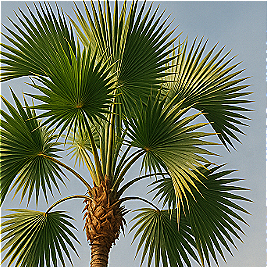
Carnauba wax (Copernicia prunifera)
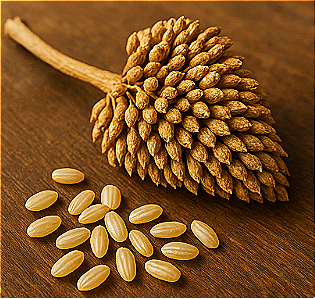
Carnauba wax is a high–melting vegetable wax obtained from the surface of the leaves of Copernicia prunifera, a palm native to certain regions of Brazil (particularly the Northeast). Mature leaves are harvested, dried and subjected to beating or rubbing to detach the thin waxy layer, which is then separated, purified and sometimes decoloured and refined, depending on the intended use. The commercial product is available in flakes, granules or blocks, with a colour ranging from light yellow to yellow–brown.
From a chemical standpoint, carnauba wax consists largely of wax esters of long–chain fatty acids and fatty alcohols, along with free fatty acids, alcohols, high–molecular–weight hydrocarbons and a proportion of unsaponifiable matter. It is characterised by a higher melting point than many other natural waxes, marked hardness, and good mechanical and thermal resistance, which provide effective glossing, film–forming and structuring properties in numerous formulations. These features make it suitable for improving texture, stability and surface appearance in solid and semi–solid systems.
In food technology, carnauba wax is used as a coating and glazing agent for confectionery products, fresh fruit, dragées, chewing gum and other foods, in accordance with the limits and conditions of use established by food regulations. In the cosmetic and pharmaceutical fields, it is employed as a structuring agent in sticks, ointments, anhydrous creams, lipsticks and certain solid dosage forms or tablet coatings, where it helps to modulate hardness, melting point and gloss of the finished product. The quality of carnauba wax is assessed on the basis of parameters such as colour, melting point, acidity, saponification value, purity and absence of contaminants, which are essential to ensure its suitability for the different industrial applications.
 |  |
Industrial Production Process
- Leaf Collection. Leaves from the Copernicia Cerifera palm, native to Brazil, are collected during the dry season. The wax forms on the surface of the leaves as protection against evaporation.
- Wax Extraction. The collected leaves are then sun-dried. Once dry, they are beaten or shaken to remove the wax. This process can be done manually or with machinery.
- Purification. The crude wax collected is purified to remove impurities such as leaf residues and debris. Purification may include melting the wax in hot water and subsequent filtration to separate the wax from impurities.
- Refining. After purification, the wax can be further refined through processes such as treatment with activated carbon or bleaching with peroxide to improve its color and purity.
- Forming. The purified and refined wax is then cooled and solidified. It can be formed into various shapes, such as flakes, granules, or blocks, depending on market needs.
- Quality Control. Throughout the production process, quality control checks are performed to ensure that the Copernicia Cerifera wax meets the required standards in terms of purity, color, and physical properties.
It is a wax widely used in various industries due to its higher melting point and characteristic hardness compared to other waxes.
What it is used for and where
Food
Ingredient listed in the European food additives list as E903 as a coating agent.
In the food industry it is widely used for its chemical composition that contains stable and inert components, as well as a significant amount of esters.
For its characteristics it is suitable for the preparation of biodegradable and hydrophobic edible films.
It is used to give a glossy appearance, to delay the loss of moisture in the fruit (1).
Another application in the food sector is the duration of food storage and the extension of their storage (2).
Medicine
Carnauba wax has proven to be a promising excipient in the preparation of tablets for prolonged drug release (3).
Cosmetics
Film-forming agent. It produces a continuous ultra-thin film with an optimal balance of cohesion, adhesion and stickiness on the skin or hair to counteract or limit damage from external phenomena such as chemicals, UV rays and pollution.
Skin conditioning agent. An ingredient that is the mainstay of topical skin treatment by restoring, increasing or improving skin tolerance to external factors, including melanocyte tolerance. The most important function of the conditioning agent is to prevent skin dehydration, but the subject is rather complex and involves emollients and humectants.
Skin conditioning agent - Emollient. Emollients have the characteristic of enhancing the skin barrier through a source of exogenous lipids that adhere to the skin, improving barrier properties by filling gaps in intercorneocyte clusters to improve hydration while protecting against inflammation. In practice, they have the ability to create a barrier that prevents transepidermal water loss. Emollients are described as degreasing or refreshing additives that improve the lipid content of the upper layers of the skin by preventing degreasing and drying of the skin. The problem with emollients is that many have a strong lipophilic character and are identified as occlusive ingredients; they are oily and fatty materials that remain on the skin surface and reduce transepidermal water loss. In cosmetics, emollients and moisturisers are often considered synonymous with humectants and occlusives.
It is the hardest wax used in cosmetics.
CAS 8015-86-9
EC number 232-399-4
Commercial Applications
Automotive industry. Carnauba wax is used as a key component in many car waxes, where it provides a glossy and protective finish on the vehicle's paint. Its ability to withstand heat and moisture makes it ideal for this application.
Shoe care products. Thanks to its polishing and waterproofing properties, carnauba wax is commonly used in shoe creams and waxes, helping to protect the leather and keep it shiny.
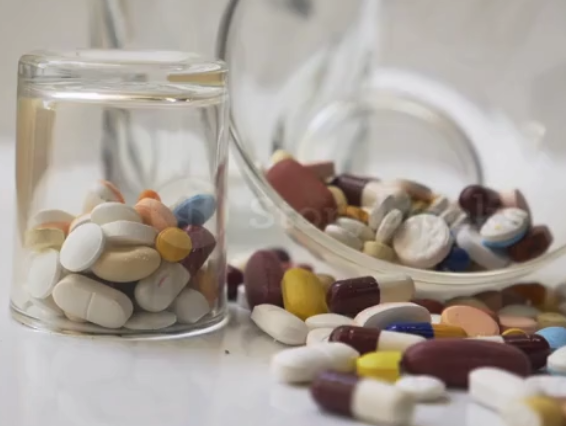
Pharmaceuticals. In the pharmaceutical industry, it is used to coat tablets and pills, improving their appearance and making them easier to swallow.
Candles. Carnauba wax is sometimes mixed with other waxes to produce candles. It adds hardness and glossiness to candles, improving their quality.
Safety
Despite its wide range of applications, carnauba wax is considered safe and non-toxic for both external and internal use. It is biodegradable, renewable, and sustainable, making it a popular choice among environmentally conscious consumers and producers.