



Green pepper
(Piper nigrum L. — unripe fruits, stabilized and preserved)
Description
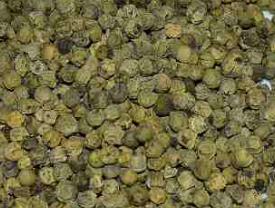
• Green pepper is obtained from the unripe fruits of Piper nigrum, belonging to the Piperaceae family. The berries are harvested before maturity and rapidly stabilized to preserve their fresh color and aroma.
• Unlike black pepper (dried whole fruits) and white pepper (fully ripe dehulled fruits), green pepper retains fresh, herbaceous, fruity notes with mild pungency.
• Commercial forms include dried, freeze-dried, brined, or pickled berries, as well as pepper paste or ground powder.
Indicative nutritional values (per 100 g of dried peppercorns)
• Energy: 250–270 kcal
• Protein: 10–12 g
• Total fat: 3–4 g
• Carbohydrates: 60–65 g
• Dietary fiber: 25–30 g
• Sodium: <10 mg (dried); up to 2–3 g in brined products
• Micronutrients (typical): Calcium 400 mg; Iron 8–9 mg; Magnesium 180 mg; Potassium 1200 mg; Manganese 2–4 mg; Vitamin K 150 µg
Key constituents
• Piperine (4–6%): alkaloid responsible for mild pungency, lower than in black pepper.
• Essential oils (0.7–1.5%): β-caryophyllene, limonene, sabinene, pinene, linalool, providing the fresh and citrus-like aroma.
• Phenolic compounds, starch, resins, flavonoids, and antioxidants.
Production process
• Harvest of green unripe berries → color stabilization and enzymatic inactivation through:
– rapid drying (hot air 50–55 °C or freeze-drying), or
– brining (salt or acid brine) or pickling in vinegar.
• In dried products: final moisture ≤ 12%; in brined/pickled types: pH ≤ 4.5.
• Followed by grading, cleaning, packaging, and optional pasteurization.
Physical properties
• Appearance: spherical grains, olive-green to greenish-brown; more vivid in brine.
• Odor: fresh, spicy, and slightly fruity.
• Flavor: aromatic, mildly hot, vegetal aftertaste.
• Bulk density: 500–600 g/L (dried); soft texture in hydrated forms.
Sensory and technological properties
• Adds freshness and light spiciness to food; suitable for delicate dishes.
• Retains aroma in short cooking, but loses volatile notes with prolonged heat.
• Enhances sauces and emulsions with gentle pungency and aroma.
• Ideal for creamy sauces, white meats, fish, vegetables, and cheeses.
Food applications
• Culinary: used whole or crushed in sauces (e.g., green pepper sauce), grilled meats, beef fillets, poultry, fish, and cheese dishes.
• Food industry: ingredient for ready sauces, condiments, flavored cold cuts, prepared meals, and spiced snacks.
• Beverages: used in small amounts for spiced infusions or aromatic spirits.
Nutrition and health
Green pepper provides digestive, antioxidant, and stimulating properties, mainly due to piperine and essential oils.
• Enhances gastric secretion and aids fat digestion.
• Natural antioxidants help counteract free radicals.
• Excessive consumption may irritate gastric mucosa in sensitive individuals.
Recommended use: ≤ 2 g/day for adults.
Serving note: 0.2–0.5 g per dish in domestic cooking; 0.1–0.3% in processed foods.
Allergens and intolerances
• Green pepper contains no recognized allergens according to Regulation (EU) 1169/2011.
• Rarely associated with allergic or intolerance reactions.
• In sensitive people, may cause mild gastric or respiratory irritation when inhaled or consumed in large amounts.
• Possible cross-contamination with allergenic spices (e.g., mustard, celery, sesame) in multipurpose facilities.
• Gluten-free, lactose-free, and free of other known food allergens.
Quality and specifications (typical values)
• Moisture ≤ 12% (dried products)
• Total ash ≤ 6%
• Acid-insoluble ash ≤ 1.5%
• Piperine 4–6%
• Microbiology: compliant with ISO standards (Salmonella absent/25 g)
• Residues and mycotoxins: within EU limits (aflatoxin B1 ≤ 5 µg/kg).
Storage and shelf-life
• Dried/freeze-dried: store in a cool, dry, dark place; shelf-life 24–36 months.
• Brined or pickled: store sealed; refrigerate after opening; shelf-life 12–18 months (unopened).
• Avoid humidity, light, and oxygen to preserve color and aroma.
Safety and regulatory
• Compliant with EU regulations on spices, contaminants, and additives (Reg. EC 1881/2006).
• Processing under GMP/HACCP systems.
• Steam sterilization or pasteurization ensures microbial safety.
• Natural preservation through salt, acetic acid, or citric acid; no synthetic additives required.
Labeling
• Product name: “green pepper” (Piper nigrum L.).
• Indicate origin (e.g., India, Vietnam, Madagascar, Indonesia).
• State of product (dried, freeze-dried, brined, pickled), net weight, storage instructions, best-before date.
• For industrial use: lot number, pH, moisture, piperine content, microbiological certificates.
Troubleshooting
• Color fading → exposure to light or oxygen → use opaque, airtight packaging.
• Acidic or fermented odor → prolonged storage or insufficient pasteurization → refrigerate and monitor pH.
• Loss of aroma → overdrying or excessive temperature → maintain drying <55 °C.
• Mold growth → excessive humidity → dehydrate and check packaging integrity.
Sustainability and supply chain
• Cultivated in tropical agroforestry systems (India, Madagascar, Vietnam).
• Encourage low-impact methods: solar drying, reduced pesticide use, and selective harvesting.
• Processing: effluent treatment with BOD/COD reduction, recyclable packaging, energy optimization.
• By-products (pericarp, residues) suitable for compost or aromatic extracts.
Main INCI functions (cosmetics)
• Piper Nigrum Fruit Extract / Oil — skin-conditioning, toning, warming; enhances microcirculation.
• Used in slimming, toning, and massage formulations.
Conclusion
Green pepper is a refined, fresh, and mildly pungent spice with aromatic, herbaceous, and citrus notes. Derived from unripe Piper nigrum fruits, it offers culinary versatility, bioactive compounds, and digestive benefits. With proper preservation, it maintains color, aroma, and microbiological safety over time.
Mini-glossary
• SFA/MUFA/PUFA: saturated / monounsaturated / polyunsaturated fatty acids — higher PUFA intake supports cardiovascular health.
• GMP/HACCP: good manufacturing practices / hazard analysis and critical control points — food safety systems.
• BOD/COD: biochemical / chemical oxygen demand — indicators of organic load in effluents.
• aw: water activity — proportion of water available for microbial growth.
• MAP: modified atmosphere packaging — protective gas system extending shelf-life.
Studies
In the composition of Piper Nigrum, monoterpenes represent the major components with the following percentages (1):
- delta-carene 19,72%
- Limonene 18,73%
- alpha-pinene 10,39%
Overall, all components of Green pepper have been shown to contribute to antioxidant, antitumor, antibacterial, antifungal, analgesic, anti-inflammatory activity (2).
Among the various alkaloids present in Green pepper, piperine, which gives pepper its pungent taste, plays an important role as it has the ability to mitigate cancer-related symptoms. This study discusses the cellular mechanisms underlying the chemo-preventive action of this natural alkaloid (3).
Not recommended for people suffering from inflammation:
- gastric ulcer
- gastritis
- haemorrhoids
- hypertension
- gastro-esophageal reflux
- anal fissure

