



Ginger (Zingiber officinale Roscoe)
Ginger is a perennial herbaceous plant native to South Asia, belonging to the Zingiberaceae family, and it is best known for its aromatic rhizome: knobbly, irregular, with a thin beige skin and a fibrous, pale-yellow interior. Growing underground, the rhizome branches into twisted shapes and is characterized by an intense, penetrating fragrance that is at once citrusy, earthy, and slightly pungent. To the touch it feels firm and compact, while when sliced or grated it releases essential oils that highlight its fresh, spicy aroma.
The flavor of ginger is bold, with a lively spiciness combined with bright, lemony notes and a subtle woody background. This unique profile makes it an extremely versatile ingredient: it can be grated fresh, sliced, crushed, dried, or ground into powder. In the kitchen it is used to flavor both sweet and savory dishes, herbal teas, marinades, soups, curries, sauces, and baked goods; in desserts it adds a warm, vibrant spice, while in savory recipes it brings a warming, aromatic depth.
Within the rhizome are aromatic compounds such as gingerols and shogaols, responsible for its pungent sensation and characteristic freshness, along with essential oils, fibers, and small amounts of minerals. Ginger thrives in warm, humid climates, in loose, deep soils and with good light exposure. It is usually harvested when the leaves begin to yellow, indicating that the underground part has completed its development.
With its unmistakable fragrance, bright flavor, and ability to bridge fresh vegetal notes with warm spice, ginger has become a symbol of contemporary gastronomy, while remaining firmly rooted in ancient culinary traditions. Its presence in the kitchen brings a vibrant, refreshing yet warming touch to dishes – a small rhizome that contains surprising sensory richness.
The rhizomes are basically of two types, the white one (more commonly used and with greater health properties) and the red one.
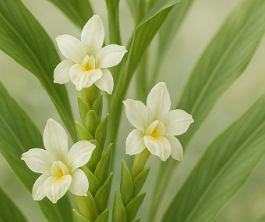 | 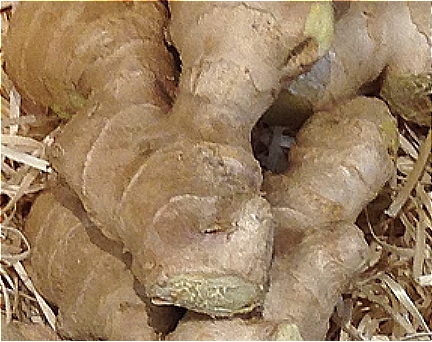 |
Botanical Classification:
- Kingdom: Plantae
- Order: Zingiberales
- Family: Zingiberaceae
- Genus: Zingiber
- Species: Zingiber officinale
Plant Characteristics:
- Growth Form: Zingiber officinale is a perennial plant that typically grows 1-1.5 meters (3-5 feet) in height. It has leafy stems that arise from underground rhizomes.
- Leaves: The leaves are elongated, lanceolate, and can reach up to 20-30 cm (8-12 inches) in length. They are arranged alternately and have a distinctive ribbed texture.
- Flowers: The plant produces small, yellowish or pale green flowers with purple or pink accents. The flowers are borne on spikes and are not particularly showy.
- Rhizome: The most valuable part of the plant is the underground rhizome, which is knobby and has a pale brown skin with a yellowish interior. It has a strong, spicy aroma and a pungent flavor.
Chemical Composition and Structure:
- Essential Oils: Ginger rhizomes contain essential oils, primarily composed of zingiberene, β-sesquiphellandrene, and other sesquiterpenes. These oils contribute to ginger's characteristic aroma and flavor.
- Gingerol: The primary active compound in ginger is gingerol, a phenolic compound with anti-inflammatory and antioxidant properties. It is responsible for the plant’s pungent taste and health benefits.
- Shogaol and Paradol: During the drying process, gingerol is converted into shogaol and paradol, which also have significant medicinal properties.
How to Cultivate It:
- Soil: Ginger thrives in well-drained, loamy soils with a slightly acidic to neutral pH. It prefers rich, organic matter to support its growth.
- Light: The plant requires partial shade to full sunlight. In tropical climates, it benefits from filtered light or dappled shade.
- Watering: Ginger needs consistent moisture for optimal growth. It should be watered regularly, but overwatering should be avoided to prevent root rot.
- Propagation: Ginger is propagated by dividing rhizomes. Each piece should have at least one bud to ensure successful growth. Rhizomes are planted in the spring after the last frost.
- Maintenance: The plant benefits from periodic feeding with a balanced fertilizer and mulching to retain soil moisture. It is generally free of major pests but should be monitored for fungal infections.
Uses and Benefits:
Culinary Uses: Ginger is widely used in cooking and baking for its spicy flavor. It is a key ingredient in various cuisines, including Asian, Indian, and Caribbean. It can be used fresh, dried, or ground, and is also a common flavoring in beverages and sweets.
Medicinal Uses: Ginger is used in traditional medicine for its anti-inflammatory, antioxidant, and digestive properties. It is commonly used to relieve nausea, improve digestion, and reduce symptoms of arthritis and muscle pain.
Cosmetic Uses: Ginger extract is used in skincare products for its stimulating and antioxidant properties. It is included in formulations for acne treatment and anti-aging products.
Applications:
Food Industry: Ginger is utilized in a range of food products, including sauces, soups, beverages, and baked goods. Ginger extracts and powders are also used as flavoring agents.
Pharmaceuticals: Ginger is included in dietary supplements and herbal remedies for its therapeutic benefits. It is used to support digestive health, alleviate nausea, and reduce inflammation.
Cosmetics and Personal Care: Ginger extract is incorporated into skincare and haircare products for its rejuvenating and soothing effects. It is used in products for its antioxidant and antimicrobial properties.
INCI Functions:
Fragrance. It plays a very important role in the formulation of cosmetic products as it provides the possibility of enhancing, masking or adding fragrance to the final product, increasing its marketability. It is able to create a perceptible pleasant odour, masking a bad smell. The consumer always expects to find a pleasant or distinctive scent in a cosmetic product.
Skin conditioning agent. It is the mainstay of topical skin treatment as it has the function of restoring, increasing or improving skin tolerance to external factors, including melanocyte tolerance. The most important function of the conditioning agent is to prevent skin dehydration, but the subject is rather complex and involves emollients and humectants that can be added in the formulation.
Tonic. This product is used to treat the hair when the scalp is clean or after shampooing. It stimulates hair growth, revitalises the scalp for healthy hair growth and reduces hair loss. It provides a feeling of well-being on skin and hair.
Perfuming. Unlike fragrance, which can also contain slightly less pleasant or characteristic odours, the term perfume indicates only very pleasant fragrances. Used for perfumes and aromatic raw materials
CAS 84696-15-1
EC number 283-634-2
Environmental and Safety Considerations:
- Environmental Impact: Ginger cultivation generally has a low environmental impact but requires a consistent supply of water and well-managed soil practices.
- Safety: Ginger is safe for most people when consumed in moderate amounts. However, excessive consumption may lead to gastrointestinal discomfort. It may interact with certain medications, so it is advisable to consult a healthcare provider before using it medicinally.
Studies
Widely used in the food and medical fields.
Among its components are interesting bio-actives: gingerol (co-responsible of spiciness), zingiberene, zingerone (co-responsible of spiciness), shogaol which has anti-inflammatory properties.
Studies
Zingerone, a component of ginger, has demonstrated particular properties, such as antioxidant, anti-inflammatory, anticancer and antidiabetic. As oxidative stress and inflammation contribute to acute and chronic myocardial lesions, this component can be a powerful treatment in the prevention and treatment of heart failure (1).
This study carried out an in-depth meta-analysis of the safety of ginger to counteract the severity of nausea and postoperative vomiting. Ginger is safe and well tolerated and can reduce the demand for antiemetic drugs (2).
Chemotherapy has serious side effects that may be detrimental to the patient, namely complaints of nausea and vomiting. To reduce the side effects of chemotherapy, many patients in our country choose herbal therapy. One such therapy is the intake of ginger. The aim of this article is to explore the effectiveness of ginger to overcome nausea and vomiting caused by chemotherapy in breast cancer patients. The method used is a systematic review. Results of the study suggest that ginger is only effective to reduce nausea, but does not lower the frequency of vomiting caused by chemotherapy in breast cancer patients (3).
It has an antifungal activity through its oil, which, used at 2% together with a 1.5% of its extract delays the ripening of the fruit Papaya (4).
Together with citric acid, it serves to improve the softness of meat in deli products (5).

