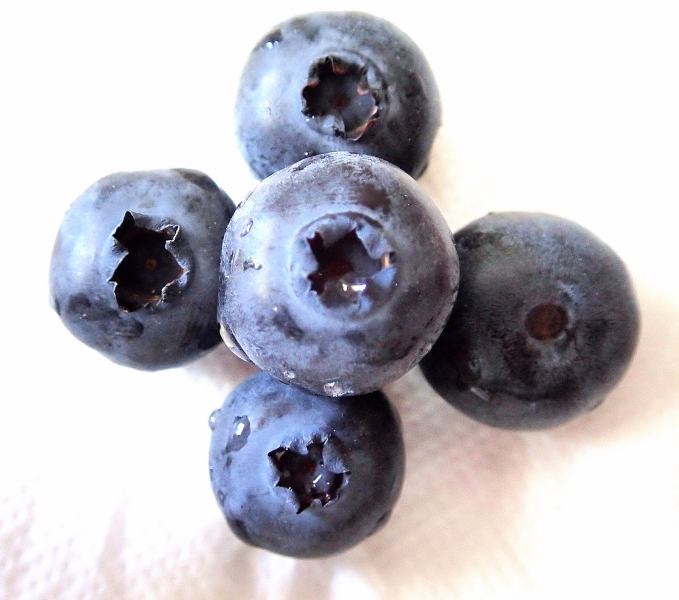
Sometimes, the most common fruits of the forest berries are those that improve our health. The blueberry is a very common berry found in the woods up to an altitude of 2,000 metres. It is rich in flavonoids.

Foods rich in flavonoids were shown to be able to reverse age-related cognitive deficits in both memory and learning in animals and humans. This study suggested that the consumption of blueberries rich in flavonoids had a positive impact on learning performance in healthy young animals, and these improvements were related to the activation of related signals of extracellular kinase (ERK), response element-binding protein (CREB), and a brain neurotrophic factor pro- and mature- (BDNF) pathway in the hippocampus (1).
Another study that focused on the memory of children between 8 and 10 years old, found that taking blueberry drinks, although with mixed results, improved memory by making the children recognize objects more effectively (2).
Other studies, this time in laboratory animals, confirmed the effectiveness of both the strawberry and the blueberry on cognition, motor behaviour and neuronal function (3).

In a comparison of various fruits of the forest berries including blackberries, blackcurrants and blueberries, the highest total of antioxidant capacity belonged to the blackberry, while the blackcurrant, despite having the highest total content of anthocyanins, had a lower antioxidant capacity. The blueberry, which had the main anthocyanins derived from malvidin derivatives, had lower antioxidant capacity (4).
The properties of the blueberry to protect the eyes were investigated, and it was found that some components in the berry, quercetin and rutin, were found to be effective in preventing cataractogenesis (5).
As shown by this study, the blueberry was recognised for its protective properties against inflammation and various diseases, particularly for the eyes and eye disorders, which shows the ability to protect the human cornea from inflammation and oxidative stress (6).

Anthocyanins present in blueberries, strawberries and blackberries contribute to eye health and have an antioxidant, anti-angiogenic and anti-aging action in RPE cells (Retinal Pigmented Epithelium cells) and are a useful healthy food for the prevention of retinal diseases (7).
RPE cells are vital for retinal health. However, they are susceptible to injury with aging and exposure to excessive light, including UV (100-380 nm) and visible radiation (380-760 nm). To assess the protective effect of the blueberry with its anthocyanins on RPE cells, in vitro cell models were created that replicated both senescence and light-induced damage. After purification and fractionation, extracts of anthocyanins (BAE) from blueberries were used in this study. The results demonstrated the effectiveness of BAEs against senescence and light-induced damage to RPE cells (8).