



The green bean is the immature pod of the common bean, Phaseolus vulgaris, belonging to the botanical family Fabaceae. Unlike dried beans, in this stage the whole pod is eaten, including the still-small seeds inside. Green bean varieties can have cylindrical or flattened pods, straight or slightly curved, usually in different shades of green (some cultivars can be yellow or purple).
As a food ingredient, the green bean is appreciated for its delicate flavor and tender yet fleshy texture. It has a high water content and provides dietary fiber, a moderate amount of plant protein, B-group vitamins, vitamin C, and minerals such as potassium and magnesium. In cooking, green beans are commonly boiled or steamed, sautéed in a pan, or used in salads, side dishes, soups and main dishes. They pair well with extra-virgin olive oil, garlic, tomatoes, potatoes, cereals and other vegetables, and they are often included in light, well-balanced diets.
Bean (common bean; Phaseolus vulgaris L., family Fabaceae)
Description
Edible-seed legume grown in many varieties (borlotti, cannellini, black turtle, red kidney, pinto, navy/haricot, etc.).
Sensory: creamy flesh with skins ranging from thin to firm by cultivar; sweet–earthy flavor with occasional nutty notes.
Formats: dry, canned (retorted), or ready-cooked chilled.
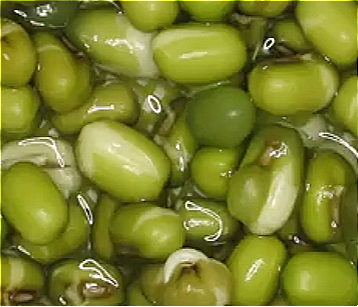
Common name: Bean (common bean)
Parent plant: Phaseolus vulgaris L.
Kingdom: Plantae
Clade: Angiosperms
Clade: Eudicots
Order: Fabales
Family: Fabaceae
Genus: Phaseolus
Species: Phaseolus vulgaris L.
Note: The word “bean” can also refer to other Phaseolus species (e.g. P. lunatus, P. coccineus), but Phaseolus vulgaris is the most widely cultivated species worldwide.
Cultivation and growth conditions
Climate
Common bean is a typical warm-season crop and prefers temperate–warm climates.
Optimal temperatures: 20–26 °C.
It does not tolerate frost (damage already at 0–2 °C).
Flowering and pod set are sensitive to excessive heat (>32–35 °C).
High air humidity favors fungal diseases.
Sun exposure
Requires full sun.
Direct light supports photosynthesis, plant development, and pod production.
In shade, plants grow but yields are low.
Soil
Common bean prefers soils that are:
light to medium-textured,
well drained,
rich in organic matter,
with pH between 6.0 and 7.5.
Heavy, compact, or waterlogged soils slow growth and increase root disease risk.
As a legume, Phaseolus vulgaris fixes atmospheric nitrogen through symbiosis with Rhizobium, improving soil fertility.
Irrigation
Water requirement is moderate, but supply must be regular:
Water is essential during germination and flowering.
Water stress can cause flower drop and poor pod set.
Excess water leads to root rot and other problems.
Stable soil moisture is crucial for uniform pod formation.
Temperature
Germination: 15–22 °C
Optimal growth: 18–28 °C
Heat stress above 32–35 °C
Highly sensitive to cold
Fertilization
Beans are relatively undemanding:
Nitrogen: usually unnecessary thanks to nitrogen fixation.
Phosphorus: supports root development and early growth.
Potassium: improves pod quality and stress tolerance.
Organic amendments help improve soil structure and fertility.
Crop care
Early hoeing to control weeds.
For climbing varieties: use of stakes, poles, or nets for support.
Crop rotation with cereals helps reduce soil-borne pests and diseases.
Monitoring for:
aphids,
leaf miners,
caterpillars and beetles,
powdery mildew, anthracnose, rust.
Good canopy aeration helps limit fungal infections.
Harvest
Harvest time depends on the type of bean:
Green beans (snap beans): harvested when pods are tender and seeds not yet developed.
Fresh shelling beans: harvested when seeds are fully formed but still soft.
Dry beans: harvested when pods and seeds are fully mature and dry.
Green beans should not be harvested late, or pods quickly become fibrous.
Propagation
Beans are propagated by seed.
Direct sowing in the field, 2–4 cm deep.
Spacing: 5–10 cm between plants for bush types, 20–30 cm for climbing types.
Germination is fast if the soil is warm and moist.
Bush beans are earlier; climbing beans produce over a longer period.
Caloric value (per 100 g)
Dry: ~330–350 kcal; carbohydrate ~58–63 g, protein ~21–24 g, fat ~1–2 g, fiber ~15–16 g.
Boiled, unsalted: ~110–140 kcal; carbohydrate ~18–25 g, protein ~7–10 g, fat ~0.3–0.8 g, fiber ~5–9 g.
Sodium naturally low; may increase in brined products (rinsing recommended).
Key constituents
Proteins with a good legume amino-acid profile (rich in lysine, limited in methionine/cysteine).
Starch (varietal amylose/amylopectin), soluble/insoluble fiber, and resistant starch (RS) (↑ after cooling).
Polyphenols (notably in colored seed coats: anthocyanins, proanthocyanidins, flavonols).
Minerals (Fe, Mg, K), folate, and B vitamins.
Anti-nutritional factors lowered by processing: phytates, trypsin inhibitors, lectins (PHA), α-galactosides (raffinose/stachyose).
Technical markers: hydration capacity (mL/g), cooking time, color L*a*b*, uniformity/defects.
Production process
Dry commodity: cleaning, optical sorting, grading, destoning/metal removal, barrier packaging.
Canned/ready-cooked: soaking (sometimes light brine), blanching, filling with cover liquid, retort sterilization, cooling, inspections (drained weight, vacuum, seam integrity).
Variants: sprouting, fermentation, or pressure cooking to improve digestibility and reduce anti-nutrients.
Sensory and technological properties
Soak 6–12 h (or hot-soak) to shorten cooking; acids and hard water (Ca²⁺/Mg²⁺) slow softening.
Small baking soda or brining additions can cut time; excess can fragilize skins and affect flavor.
Hard-to-cook issue (aged/warm-stored lots) is mitigated by pressure cooking.
Food uses
Soups/stews (minestras, feijoada, chili), salads, rice & beans, purees/spreads, stuffings, plant-based burgers.
Aquafaba (cook liquor) can serve as a vegan emulsifier/foamer.
Nutrition and health
Source of plant protein, fiber, and folate; GI typically low–medium, further reduced by cooling (↑ RS) and pairing with fat/protein.
Other components: Salicylic acid (1), iron and zinc (2), The flavonol glycosides phenolic compounds found in common beans possess antimicrobial, anti-inflammatory and ultraviolet radiation (UVR) protective properties (3),
Lectins/inhibitors: thorough boiling/retort inactivates them—avoid raw or undercooked beans.
Phytates may reduce Fe/Zn/Ca bioavailability; soaking, sprouting, and fermentation lower them.
α-galactosides may cause gas; mitigate via soak & refresh water, α-galactosidase enzymes, or pressure cook.
Lipid profile
Very low total fat; typical pattern PUFA (linoleic) ≥ MUFA (oleic) > SFA.
Health note: emphasizing MUFA/PUFA over SFA is generally favorable/neutral for blood lipids; impact here is limited due to low fat content.
TFA industrial absent; MCT not characteristic.
Quality and specifications (typical topics)
Moisture (dry beans) ≤14–16%; size grade and uniformity; defects (breaks, spots, damage) within limits.
Water absorption (mL/g), standard cooking time, texture (shear/rupture force), color and color loss on cooking.
Freedom from pests (bruchids), foreign matter, stones/metals; pesticides/metals compliant; mycotoxins typically non-critical but monitored.
For canned: drained weight, declared salt, pH, commercial sterility, vacuum and container integrity.
Storage and shelf-life
Dry: store cool/dry/dark; avoid high temperatures to reduce hard-to-cook. Shelf-life ~12–24 months; apply FIFO.
Canned/ready-cooked: 24–36 months unopened; once opened, refrigerate and use within 3–4 days.
Allergens and safety
Legumes are not major EU allergens, but allergies/cross-reactivity exist (e.g., peanut/soy).
Manage CCP for foreign bodies, commercial sterility (canned), and hygiene; label salt and any added allergens (e.g., flavorings).
INCI functions in cosmetics
Listings: Phaseolus Vulgaris Extract / Seed Extract (limited use).
Potential roles: mild skin conditioning/antioxidant; verify safety and formula stability.
Troubleshooting
Endless cooking/hard cores: longer soak, soft water, light brine or pressure cook; avoid early acids.
Burst skins: excess agitation or too little sodium during soak → gentle brining and gentler cooking.
Flat flavor: finish with acid (vinegar/lime) and umami (onion, bay, kombu); salt toward the end.
Gas/bloating: soak + change water, rinse canned beans, use α-galactosidase, cool after cooking to raise RS.
Sustainability and supply chain
Nitrogen-fixing crop lowers N fertilizer needs; smaller footprint than animal proteins.
Processing: reuse aquafaba; treat effluents to BOD/COD targets; recyclable packaging; full traceability under GMP/HACCP.
Conclusion
Common beans combine protein, fiber, and polyphenols with broad culinary versatility. Fresh raw material, proper soaking/cooking, and tight quality control yield tender, safe, and flavorful products.
Mini-glossary
RS — Resistant starch: starch fraction not digested; increases after cooling, can temper glycemic response.
GI — Glycemic index: post-meal glucose response; low–medium for beans, shaped by recipe and cooling.
SFA — Saturated fatty acids: excess may raise LDL; low in beans.
MUFA — Monounsaturated fatty acids (e.g., oleic): generally favorable/neutral for blood lipids; low in beans.
PUFA — Polyunsaturated fatty acids (n-6/n-3): beneficial when balanced; low in beans.
TFA — Trans fatty acids: avoid industrial TFA; absent in non-hydrogenated legumes.
ALA — Alpha-linolenic acid (n-3): present only in traces in legumes; limited impact overall.
EPA/DHA — Long-chain n-3 fatty acids typical of fish; absent in legumes.
MCT — Medium-chain triglycerides: not characteristic of legumes.
GMP/HACCP — Good Manufacturing Practice / Hazard Analysis and Critical Control Points: hygiene and preventive-safety systems with defined CCP.
CCP — Critical control point: step where a control prevents/reduces a hazard.
BOD/COD — Biochemical/Chemical oxygen demand: wastewater-impact indicators.
FIFO — First in, first out: stock rotation using older lots first.

