



Scallion (Allium fistulosum L.)
Description
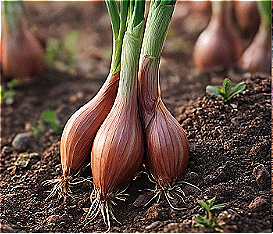
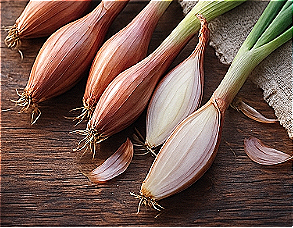
Allium fistulosum is a perennial herbaceous species of the Amaryllidaceae family, characterised by an underground system formed by a slightly swollen, elongated bulb and a pseudostem derived from the tight arrangement of the leaf sheaths. The leaves are tubular and hollow (fistulose), with an almost circular cross-section and a colour ranging from light to deep green; they emerge in dense clumps and can reach several tens of centimetres in length. The plant forms compact tufts by tillering and is commonly grown in open fields or small gardens, in well-drained soils with good organic matter content.
The tissue of the basal bulb and lower leaf portions has a high water content, some fibre, and a soluble solids fraction mainly consisting of simple carbohydrates and sulphur-containing compounds typical of the genus Allium. Among these are cysteine-sulfoxide derivatives and their transformation products (sulphides, thiosulfinates), which are responsible for the alliaceous odour and mildly pungent flavour. Small amounts of vitamin C, some flavonoids and mineral salts (particularly potassium) are also present, especially in fresh, minimally dehydrated tissues.
In practical use, Allium fistulosum is mainly consumed fresh, using both the basal bulb and the green leaf portion. The relatively tender tissue structure and the presence of volatile sulphur compounds make it suitable as a base aromatic vegetable, for sautéing, seasoning or raw use in preparations where a milder alliaceous profile is desired compared with other Allium species. Under heat treatment, the tissues soften rapidly and volatile components are released, with changes in the aromatic profile due to degradation and transformation reactions of the sulphur-containing compounds.
 |  |
Botanical classification
Common name: scallion
Clade: Angiosperms
Order: Asparagales
Family: Amaryllidaceae
Genus: Allium
Species: Allium fistulosum L.
Cultivation and growth conditions
Climate
Scallion is a species of perennial or semi-perennial Allium, suited to cool–temperate climates. It tolerates cold winters, especially during the dormancy of roots and basal clumps, while it prefers temperatures between about 12 and 22 °C for regular vegetative growth. Very high temperatures combined with drought reduce the size of the hollow stems, anticipate flower stalk emission and lower overall yield.
Exposure
It requires full sun to ensure proper photosynthetic activity, dry matter accumulation, development of the hollow leaves and a well-defined aroma. Under partial shade, growth is weaker, the taste is less intense and yields are lower.
Soil
Scallion grows best in light or sandy–loam soils, well drained, with nearly neutral or slightly acidic pH. Heavy, very clayey soils that tend to compact should be avoided, as they limit the development of the root system and the basal clumps. A good supply of organic matter is useful to improve structure and fertility.
Irrigation
The crop needs constant moisture but no waterlogging. Irrigation should keep the soil evenly fresh: prolonged drought leads to thinner stems and early bolting, while excess water favours root rots and other soil diseases. Moderate, regular irrigations are recommended, adjusted to seasonal conditions and soil texture.
Temperature
Germination starts at temperatures above 8–10 °C, while optimal growth occurs between 15 and 22 °C. The species tolerates short frosts in winter, even relatively severe, provided the soil is not saturated with water during freezing. Prolonged periods above 30 °C cause heat stress, reduced vegetative vigour and a higher tendency to go to seed.
Fertilization
Scallion requires balanced fertilization, with appropriate amounts of nitrogen (N), phosphorus (P) and potassium (K):
Nitrogen supports leaf and stem growth, but should not be excessive to avoid overly tender tissues susceptible to diseases;
Phosphorus favours root system establishment and overall plant vigour;
Potassium improves tissue firmness and tolerance to stress.
Well-matured organic fertilizers or balanced mineral fertilizers are preferred. Excess nitrogen produces softer stems, more prone to foliar fungi and lodging.
Crop care
Main cultural practices include:
periodic hoeing and weeding to remove competition for light and nutrients;
maintaining a loose soil structure through shallow cultivation;
crop rotation to reduce the risk of typical Allium diseases;
protection against thrips, leaf miners and root rots, using integrated pest management strategies.
Avoiding waterlogging and arranging rows to promote good air circulation helps keep the canopy healthy.
Harvesting
Harvest is carried out when stems have reached the desired size and are firm and turgid, typically with an intense green colour of the leaves. Harvest can be staggered, by cutting outer stems or uprooting entire plants depending on market requirements. For fresh consumption, careful handling is important to preserve texture and aroma.
Propagation
Propagation can take place by seed or by division of clumps:
from seed, through direct sowing in the field or sowing in nursery trays followed by transplanting;
by vegetative division, using rooted portions of established clumps and replanting them in regular rows.
Vegetative propagation preserves the varietal characteristics more faithfully, while seed propagation may lead to greater variability. Young plants need a fresh, well-drained soil and careful irrigation during the first weeks after planting.
Indicative nutritional values per 100 g (fresh edible portion)
(values may vary according to cultivar, maturity and agronomic conditions)
Energy: 30–35 kcal
Protein: 1.8–2.0 g
Total fat: 0.2–0.4 g
SFA (Saturated Fatty Acids): very low fraction
MUFA and PUFA: predominant share
Available carbohydrates: 6.5–7.5 g
Simple sugars: approx. 2 g
Dietary fibre: 2.5–3 g
Sodium: very low
Minerals (indicative levels): calcium, magnesium, phosphorus, potassium, iron, zinc
Vitamins (indicative presence): carotenoids, B-group vitamins (B1, B2, B3, folates), vitamin C
The product is low in fat, and the small lipid fraction is mainly composed of unsaturated fatty acids.
Key constituents
Water (around 90%)
Carbohydrates (small amount of starch and simple sugars)
Proteins (vegetable proteins typical of Allium species)
Lipids in trace amounts (triglycerides, phospholipids, sterols, tocopherols)
Dietary fibre (cellulose, hemicelluloses, pectins)
Minerals: Ca, Mg, P, K, Fe, Zn
Vitamins: vitamin C, carotenoids with provitamin A activity, B-group vitamins
Bioactive compounds
sulphur compounds (structurally related to allicin derivatives)
flavonoids (e.g. quercetin derivatives)
phenolic components with antioxidant potential
Production process
Cultivation
Sowing or transplanting in open field or greenhouse.
Water management, fertilisation and weed control according to agronomic best practices.
Harvesting
Performed manually or mechanically once the stem has reached the desired commercial length and diameter.
Harvesting generally takes place before tissue lignification and before flowering stems develop.
Post-harvest preparation
Removal of soil, roots and damaged leaves.
Possible washing and controlled drying.
Sorting and calibration by stem length and diameter.
Packaging
Bundled in bunches or placed in trays/bags.
Frequently packaged in modified atmosphere to extend shelf-life.
Maintained under the cold chain during distribution.
Physical properties
Morphology: elongated basal stem (white to whitish-green) with hollow cylindrical leaves
Colour: white at the base, transitioning to bluish-green in the leaf section
Odour: distinct alliaceous aroma
Water activity: high, consistent with fast perishability in ambient conditions
Sensory and technological properties
Flavour: onion-like, but milder, fresher and slightly sweet
Aroma intensity: moderate and increases when cut, due to release of sulphur compounds
Behaviour during cooking:
basal portion maintains structure under short cooking times;
leaves soften rapidly and lose part of their pungent note;
volatile aromatic compounds diminish with prolonged heat exposure.
Technological use:
aromatic base for sautés, broths, stir-fries and sauces,
ingredient for raw toppings and fresh dressings.
Food uses
Aromatic base in soups, stews, sauces, sautés
Raw ingredient in salads, fresh condiments, vinaigrettes
Common in Asian cuisines as flavouring in broths, stir-fried dishes, fillings and noodles
Final finishing in hot dishes (thin green slices added at serving)
Nutrition and health
Scallion is a low-calorie vegetable with a very light lipid profile and a negligible SFA content. Its contribution includes:
dietary fibre supporting digestive wellness
vitamin C, carotenoids and B-group vitamins
mineral salts useful in normal metabolic functions
sulphur compounds and flavonoids with antioxidant potential
Scientific literature attributes several potential biological effects to Allium species, including antimicrobial, antioxidant, anti-inflammatory and cardiovascular support mechanisms. However, these findings often involve concentrated extracts or model systems, while the fresh vegetable should be framed as part of a varied, balanced diet without implying pharmacological properties.
Portion note
Typical use as aromatic ingredient: 10–30 g per serving.
When used as a vegetable component: 40–60 g per adult portion.
Allergens and intolerances
Not classified among regulated major allergens
Rare cases of individual hypersensitivity to Allium species may occur
Contains fermentable carbohydrates (FODMAPs), which may trigger gastrointestinal discomfort in sensitive individuals (e.g. IBS)
In processed foods, the presence of scallion must be declared in the ingredients list, including any “may contain” indications based on manufacturing context
Storage and shelf-life
Best stored under refrigeration (0–4 °C) with moderate humidity
Typical shelf-life: 7–10 days for unpackaged fresh product; longer under modified atmosphere packaging
Rapid deterioration at room temperature due to tissue dehydration, leaf yellowing and microbial spoilage
Domestic recommendations:
remove damaged portions before storage
store in breathable bags or ventilated containers
Safety and regulatory aspects
Subject to legal limits for pesticide residues, heavy metals and other contaminants applicable to fresh vegetables
Good hygienic practices and traceability must be applied from cultivation to packaging
In processed foods, scallion must be listed among ingredients, with appropriate allergen or trace declarations where relevant
Labelling
Fresh retail packaging generally includes:
sales name (e.g. “scallion”, “spring onion”)
botanical name if required (Allium fistulosum)
country of origin
commercial category/size class where applicable
for packaged product: net weight, lot number, minimum durability date, storage instructions, business operator details
in processed foods: indication in the ingredient list in descending order by weight
Troubleshooting
Possible defects
Leaf wilting and yellowing due to excessive storage time or low humidity
Basal rotting caused by high moisture or condensation
Unpleasant odours from onset of fermentation or putrefaction
Preventive measures
Maintain cold chain
Limit condensation inside packaging
Reduce mechanical damage and excessive handling
Main INCI functions (cosmetics)
Extracts and derivatives from Allium fistulosum may appear under cosmetic INCI names such as Allium Fistulosum Extract, Bulb Extract, or Root Extract. Their key declared functions include:
Skin conditioning
Antioxidant
Possible fixing of specific sensory notes in formulations, although the characteristic alliaceous odour usually requires careful dosage or masking
All cosmetic use is subject to regulatory frameworks and safety assessment within the finished product.
Conclusion
The scallion (Allium fistulosum L.) is an aromatic fresh vegetable with low caloric value, negligible saturated fat, moderate fibre, useful micronutrients and specific sulphur-based compounds typical of Allium species. Its main relevance is culinary, where it provides a delicate onion-like aroma suitable both raw and cooked. Consumed as part of a balanced diet, it contributes to vegetable diversification and intake of vitamins, minerals and phytocompounds. Extracts of scallion may also be used in cosmetics as conditioning and antioxidant ingredients.
Mini-glossary
SFA: Saturated Fatty Acids. When consumed in excess, associated with increased cardiovascular risk; scallion contains very little.
MUFA: MonoUnsaturated Fatty Acids. Favourable fatty acids that can support a healthier lipid profile.
PUFA: PolyUnsaturated Fatty Acids. Includes essential fatty acids such as linoleic acid, with potential positive effects on lipid balance and inflammation.
GMP/HACCP: Good Manufacturing Practices / Hazard Analysis and Critical Control Points. Quality and hygiene management systems in food production.
BOD/COD: Biochemical Oxygen Demand / Chemical Oxygen Demand. Parameters used to assess the biodegradable and chemically oxidisable organic load of wastewater, helpful in evaluating environmental impacts.
Studies
Scallion has traditionally been used to treat headaches, abdominal pains, common colds, cardiovascular diseases.
An extract of Allium fistulosum and Viola mandshurica led to a reduction in body weight, fat mass, adipocyte size by improving serum triglycerides, total cholesterol and leptin levels in obese rats (1).
Scallion has demonstrated antioxidant and antihypertensive activity in a 6-month study of obese rats fed with a high-fat high-sucrose diet (2).
The bulb of Allium fistulosum contains essential oils consisting of allicin, raw fat, raw protein, raw fiber, N-free extract, pentosan and polysaccharides (3).

