



Buckwheat: properties, uses, pros, cons, safety
Definition
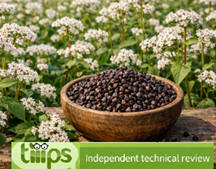
Buckwheat is the pseudo-cereal obtained from the seeds (achenes) of Fagopyrum esculentum (family Polygonaceae). Although used like a cereal in cooking and industry, it does not belong to Poaceae. It is naturally gluten-free, but “gluten-free” compliance depends on the supply chain and cross-contact risk. In food, it is used as dehulled groats, flour, flakes, and semi-finished products (e.g., pasta or dry mixes), with a characteristic sensory profile (nutty/earthy, more toasted if heat-treated).
Production process
Processing depends on the commercial form: cleaning and sorting of seeds, dehulling to remove the husk and obtain groats, optional toasting (to intensify aroma and colour), then milling to produce flour or rolling to make flakes. Pasta and mixes add hydration/mixing and drying steps. Key controls include moisture, foreign bodies, microbiological load, pests, and “gluten-free” supply-chain management when required.
Key constituents
The matrix contains mainly starch and plant proteins, with fibre varying by dehulling degree and form (more whole flours vs more refined groats). Lipids are present at moderate levels, with variable micronutrients (e.g., magnesium, manganese). Among characteristic compounds, buckwheat may contain rutin and other polyphenols at variable levels, influenced by cultivar and processing. Toasting modifies aromas and can enhance nutty notes.
Identification data and specifications
| Parameter | Value | Note |
|---|---|---|
| Ingredient name | Buckwheat | Groats, flour, flakes, derivatives |
| Botanical name | Fagopyrum esculentum | Family: Polygonaceae |
| Plant part | Seed (achene) | Dehulling affects fibre and yield |
| Nature | Starch–protein matrix | Characteristic sensory profile |
| Key parameters | Moisture, particle size (flour), size grade (groats), microbiological load, foreign bodies, optional toasting | Quality and consistency drivers |
| Allergen | No (intrinsic) | Attention to gluten cross-contact risk |
| Caloric value | Typically ~330–370 kcal/100 g | Depends on moisture and commercial form |
Physico-chemical properties (indicative)
| Property | Indicative value | Note |
|---|---|---|
| Physical state | Seeds/groats, flour or flakes | Hydration management changes with form |
| Colour | Ivory → brown (if toasted) | Depends on toasting and refining degree |
| Odour | Mild → nutty/toasted | Variable intensity |
| Water solubility | Insoluble | Absorbs water; starch gelatinises on heating |
| Water absorption | Medium | Increases with fibre and finer particle size |
| Stability | Good if kept dry | Key issues: moisture and odour uptake |
| Typical criticalities | Sensory/yield variability, dustiness (flours), cooking times | Driven by batch and form |
Main uses
Food
Used in grain-based dishes (groats in sides and salads), in traditional preparations (kasha when toasted), and as flour in rustic breads, crêpes and baked goods with a distinctive flavour. In gluten-free bakery, buckwheat flour is often used in blends because it does not form a gluten network: structural supports (starches, fibres, hydrocolloids) are needed for soft leavened products. Flakes are used in porridge, muesli and bars.
Industrial use
Used in gluten-free dry mixes, pasta (often in blends), breakfast products and snacks. Industrial drivers include moisture control, sensory stability, and particle size/colour specifications to standardise yield and flavour.
Nutrition and health
Buckwheat provides mainly carbohydrates (starch) and also supplies protein and fibre (depending on form and refining). Being naturally gluten-free, it is a useful option for those who must avoid gluten, provided the supply chain is controlled. Glycaemic impact and satiety depend on portion size, form (groats vs fine flour) and meal context (protein, fats, fibre).
Pros
It is naturally gluten-free (with a controlled supply chain) and adds nutritional and sensory variety to diets. It can contribute more fibre than highly refined bases and offers a recognisable flavour profile.
Cons
In gluten-free breadmaking it requires more complex formulations (blends and rheology supports). In sweetened processed products (bars, cereals), nutritional profile can worsen due to added sugars and fats. Sensory outcome can vary across batches and between toasted vs untoasted products.
Serving note
Serving size depends on the format (groats, flour, flakes) and the finished product. For practical evaluation, consider the overall meal composition and the actual buckwheat proportion in the recipe.
Safety (allergens, contraindications)
It is not a typical intrinsic allergen, but managing cross-contact with gluten cereals is central for a “gluten-free” claim. Quality depends on correct drying and storage (moisture and odour uptake risk) and foreign-body control. In highly sensitive individuals, individual reactions may occur but are not generalisable.
Storage and shelf-life
Store in a cool, dry place in tightly closed containers. Flours and flakes are more sensitive to moisture and odour uptake than groats; barrier packaging and stock rotation are important to maintain sensory quality and performance.
Labelling
Declare “buckwheat” and the form (e.g., “buckwheat flour”, “buckwheat flakes”, “dehulled buckwheat”). A gluten-free statement should be used only when supported by coherent supply-chain controls. In composite products, note added ingredients that affect allergens and nutrition profile.
Functional role and rationale for use
Provides a starch base with the ability to absorb water and develop texture during cooking (starch gelatinisation), plus a distinctive flavour profile. As flour, it contributes colour and taste in bakery, but does not replace gluten’s structural function; therefore it is often more effective in blends. Toasting (when used) increases aroma and can reduce overly “green”/earthy notes.
Formulation compatibility
In gluten-free leavened products, buckwheat flour performs well with starches and binders that improve cohesion and gas retention. In porridges and soups, hydration management determines viscosity and creaminess. In bars and cereals, binder moisture influences flakes’ crunch stability. Standardising particle size and toasting level helps reduce sensory variability.
Safety, regulatory and quality
GMP/HACCP management is relevant for contamination control, traceability, foreign bodies and pests. For gluten-free products, supply-chain segregation and analytical checks are critical.
Conclusion
Buckwheat (Fagopyrum esculentum) is a naturally gluten-free pseudo-cereal with a distinctive sensory profile and broad versatility (groats, flour, flakes). Key drivers are commercial form, moisture management, standardisation of toasting/particle size and—when needed—strict “gluten-free” supply-chain control.
Studies
It contains, for 100 grams, the following quantities, expressed in milligrams :
- Potassium 460
- Phosphorus 345
- Magnesium 230
- Calcium18
- Selenium 8
- Iron 2
The content of the grains is highly caloric and contains vitamins and minerals that are interesting for health, as we can see from the table above.
Buckwheat, like barley and rice, has cardioprotective properties (1) and induces a sense of satiety even if it does not modify the high blood glucose values (2) in subjects with diabetes mellitus.
Health benefits attributed to Buckwheat (BW) include plasma cholesterol level reduction, neuroprotection, anticancer, anti-inflammatory, antidiabetic effects, and improvement of hypertension conditions. In addition, BW has been reported to possess prebiotic and antioxidant activities. In vitro and animal studies suggest that BW's bioactive compounds, such as D-chiro-inositol (DCI), BW proteins (BWP), and BW flavonoids (mainly rutin and quercetin) may be partially responsible for the observed effects. The purpose of this paper is to review the recent research regarding the health benefits of BW, in vitro and in vivo, focusing on the specific role of its bioactive compounds and on the mechanisms by which these effects are exerted (3).

