



Larix decidua Mill. (European Larch, Common Larch)
Description
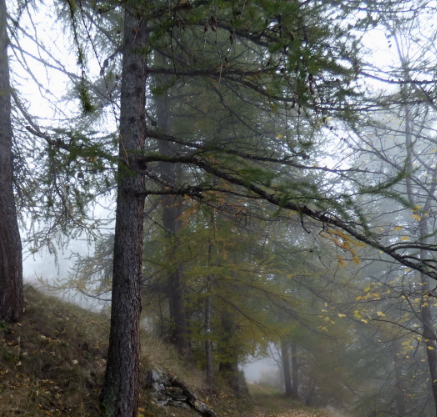
Larix decidua (family Pinaceae), commonly known as European larch or common larch, is a deciduous conifer native to the mountains of central and southern Europe. It is particularly widespread in the Alps, where it forms forests even at high elevations, generally between 1,000 and over 2,000 m.
Unlike most conifers, larch sheds its needles in autumn after they develop a characteristic golden-yellow color. It is valued for its strong, durable wood and for its aromatic resin, historically known as Venice turpentine. Needles, bark, and resin contain terpenes, polyphenols, and other plant compounds traditionally used in aromatic and balsamic preparations.
Botanical classification
Kingdom: Plantae
Clade: Gymnosperms
Order: Pinales
Family: Pinaceae
Genus: Larix
Species: L. decidua
Plant characteristics
- Habit: Large deciduous tree, generally 25–40 m tall and occasionally exceeding 45 m; straight trunk and conical crown, becoming more open in mature specimens.
- Bark: Gray-brown in young trees, becoming progressively thick, reddish-brown, and deeply fissured with age.
- Leaves (needles): Soft, slender, about 2–4 cm long; borne singly on long shoots and in dense clusters on short shoots; light green in spring and golden-yellow in autumn.
- Reproductive structures: Monoecious species; male cones are small and yellowish, while female cones are initially reddish-purple or pink.
- Cones: Small and ovoid, generally 2–4 cm long; turn brown at maturity and may remain on the branches for several years.
- Seeds: Small, brown, and winged, dispersed mainly by wind.
- Roots: Strong and relatively deep root system in suitable soils, providing good resistance to wind and mountain conditions.
- Longevity: Can live for several centuries; some Alpine specimens reach very advanced ages.
Chemical composition (main constituents of needles, bark, wood, and resin)
- Essential oil and volatile fraction: α-pinene, β-pinene, limonene, terpenes, and oxygenated derivatives, with composition varying according to plant part and geographical origin.
- Resin: Rich in resin acids and terpenoid compounds responsible for its aromatic and protective properties.
- Polyphenols and flavonoids: Found especially in bark and needles, contributing to antioxidant activity.
- Tannins: Particularly abundant in the bark, with astringent properties.
- Arabinogalactans: Polysaccharides naturally present in the wood of Larix species and used in technological and nutraceutical applications.
- Vitamin C: Present in fresh needles, in amounts varying according to season and growing conditions.
Cultivation and growing conditions
- Climate: Mountain, cool, or cold climates; highly resistant to low temperatures and winter frost.
- Exposure: Full sun; strongly light-demanding species.
- Soil: Prefers deep, cool, well-drained soils; tolerates rocky substrates but suffers from prolonged waterlogging.
- Irrigation: Generally unnecessary in suitable mountain environments; young trees may require watering during prolonged dry periods.
- Propagation: Mainly by seed.
- Growth: Relatively rapid under favorable conditions, particularly during the juvenile stage.
- Pests and diseases: May be affected by aphids, wood-boring beetles, and fungal pathogens, including larch canker.
Uses and benefits (traditional and supported by preliminary evidence)
- Balsamic and aromatic: Resin and its derivatives have traditionally been used in preparations intended for respiratory comfort.
- Traditional expectorant: Resinous preparations were historically used to promote the clearance of bronchial secretions.
- Antimicrobial: Certain terpenes and phenolic compounds show antimicrobial activity in experimental studies.
- Antioxidant: Polyphenols and flavonoids contribute to the antioxidant capacity of plant extracts.
- Astringent: Bark tannins have traditionally been used in preparations for external application.
Traditional medicinal uses of larch are supported mainly by historical and experimental evidence; clinical evidence remains limited, so these preparations should not be regarded as substitutes for medical treatment.
Applications
- Timber: Highly valued in construction, carpentry, window frames, flooring, and exterior cladding because of its strength and natural durability.
- Resin: Historically used to produce Venice turpentine, employed in technical, artistic, and traditional preparations.
- Herbal medicine: Needles, bark, and resin derivatives used in some aromatic and balsamic preparations.
- Cosmetics: Plant extracts and aromatic derivatives used in cleansing, toning, and fragranced products.
- Forestry: Important Alpine species for timber production, forest management, and protection of mountain slopes.
- Ornamental: Cultivated in parks and large gardens for its elegant habit and distinctive autumn color.
Harvesting and processing
- Needles and young twigs: Mainly collected during the growing season.
- Bark: Usually obtained as a by-product of forestry operations, avoiding harvesting practices that damage living trees.
- Resin: Traditionally collected through controlled incisions in the trunk.
- Drying: Needles and other plant material are dried rapidly in shaded, well-ventilated conditions.
- Distillation: Aromatic plant parts may be steam-distilled to obtain volatile fractions.
- Storage: Dried plant material and resin preparations should be protected from light, heat, and moisture.
Environmental considerations
Larix decidua is an important species of Alpine ecosystems. Its relatively open canopy allows a rich understory vegetation to develop and provides habitat for numerous birds, insects, and mammals.
Its strong root system contributes to the stabilization of mountain slopes. However, prolonged drought, rising temperatures, wildfires, and pest outbreaks may threaten natural populations, making sustainable and diversified forest management increasingly important.
Safety, contraindications, interactions
Ornamental use and use of the wood do not present particular safety concerns; greater caution is required with resin and concentrated extracts.
- Resin and concentrated preparations: May irritate the skin and mucous membranes.
- Topical use: Avoid applying undiluted resin or essential-oil preparations to damaged or sensitive skin.
- Ingestion: Concentrated resin preparations should not be ingested without appropriate professional guidance.
- Allergies: Reactions may occur in individuals sensitive to resins or terpenes from Pinaceae species.
- Pregnancy and lactation: Caution is advised with concentrated extracts and essential-oil preparations.
- Drug interactions: No significant interactions are well documented for customary traditional preparations.
Common preparations (general, non-therapeutic use)
- Aromatic needle preparations: Traditionally used for their fresh, resinous fragrance.
- Balsamic baths: Needle extracts or appropriately formulated aromatic preparations added to bath water.
- Resin preparations: Historically used for balsamic and technical applications.
- Bark extracts: Used in some cosmetic formulations because of their phenolic compound content.
- Wood derivatives: Source of arabinogalactans and natural materials used in various industrial and nutraceutical applications.

