



Hydroxyethyl cellulose, also called HEC, is a chemical compound derived from cellulose with a series of chemical and physical, non-ionic, soluble in hot or cold water.
The name describes the structure of the molecule:
- Hydroxyethyl. This indicates the presence of hydroxyethyl groups in the molecular structure. These groups consist of an ethyl group (-CH₂-CH₃) bonded to a hydroxyl group (-OH), imparting hydrophilic properties to the molecule.
- cellulose. This indicates that the molecule is derived from cellulose, a natural polymer composed of chains of glucose. Hydroxyethylcellulose is a derivative of cellulose that is often used as a thickener and stabilizer in cosmetic and pharmaceutical products.
The function of this compound is to act as a thickener and stabilizer in cosmetic and pharmaceutical formulations. Hydroxyethylcellulose is water-soluble and can increase the viscosity of an aqueous solution, improving its ability to form gels or stable suspensions. It is used in a wide range of products, including creams, lotions, shampoos, and eye lubricants.
Chemical Industrial Synthesis Process
The production of hydroxyethylcellulose (HEC) involves several steps designed to chemically modify cellulose, creating a water-soluble polymer widely used as a thickener, binder, and stabilizer in various industrial applications, including cosmetics, pharmaceuticals, and construction materials.
- Cellulose selection. Raw cellulose, typically derived from cotton fibers or wood pulp, is selected as the base material.
- Cleaning and preparation. The cellulose is purified and prepared to ensure it is free from impurities before the chemical reaction.
- Alkylation. The cellulose is treated with ethylene oxide to introduce hydroxyethyl groups into the cellulose molecular structure. This step is conducted under controlled temperature and pH conditions.
- Neutralization. The modified cellulose is neutralized to stop the chemical reaction.
- Purification. The product is purified to remove any chemical and physical impurities.
- Drying. HEC is dried to reduce moisture content and convert it into a powdery or granular form.
- Packaging. Finally, HEC is packaged in bags or drums for distribution to various industrial sectors.
What it is used for and where
Cosmetics - INCI Functions
Binder agent. Ingredient that is used in cosmetic, food and pharmaceutical products as an anti-caking agent with the function of making the product in which it is incorporated silky, compact and homogenous. The binder, either natural such as mucilage, gums and starches or chemical, may be in the form of a powder or liquid.
Emulsion stabiliser. Emulsions are thermodynamically unstable. Emulsion stabilisers improve the formation and stability of single and double emulsions. as well as their shelf-life. It should be noted that in the structure-function relationship, the molar mass of the ingredient used plays an important role.
Film-forming agent. It produces, upon application, a very thin continuous film with an optimal balance of cohesion, adhesion and stickiness on skin, hair or nails to counteract or limit damage from external phenomena such as chemicals, UV rays and pollution.
Light stabilizer. It prevents light from degrading light-sensitive components and slows down degradation reactions that have already begun. The mechanism is, in a way, similar to antioxidants and the effectiveness depends on the.complexity of the formulation and the density of the product.
Viscosity control agent. It controls and adapts, Increasing or decreasing, viscosity to the required level for optimal chemical and physical stability of the product and dosage in gels, suspensions, emulsions, solutions.
HEC comes in the form of white / yellowish powder.
HEC is used in many fields as a thickener, protector fluid, stabilizer, water release regulator.
- Paints. Polymeric emulsifier.
- Building. Thickener for cement and mortar .
- Cosmetics. Thickener and stabilizer.
- Ceramic. As a humidity regulator.
- Oil extraction. Fluid control.
- Medicines. Regulator of drug release (1) (2)
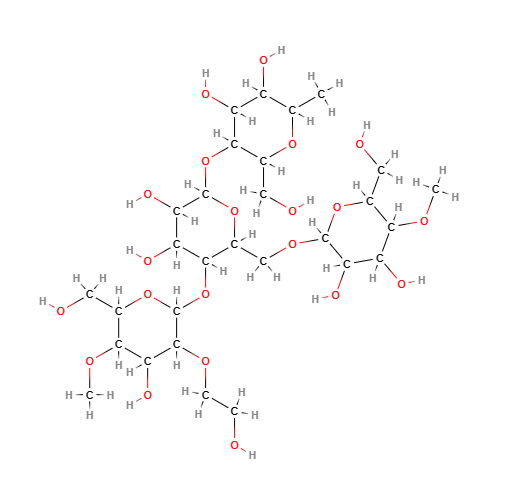 | 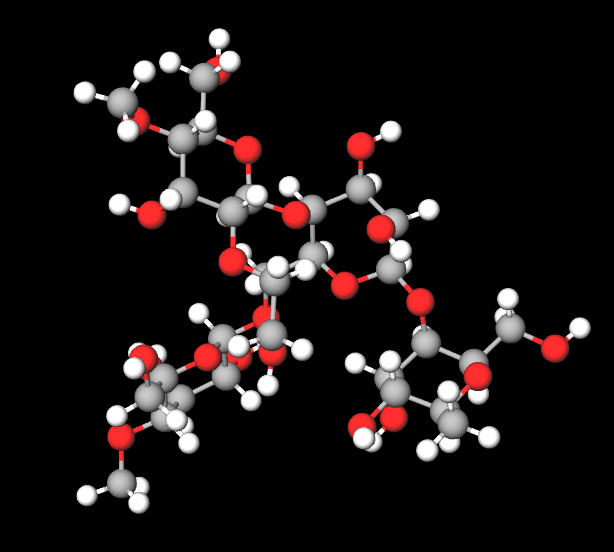 |
Molecular Formula [C6H7O2 (OH)3-x OCH (OH) CH3 x]
Molecular Weight 806.9 g/mol
CAS 9004-62-0

