



Peanuts (Arachis hypogaea)
Description
The peanut (Arachis hypogaea) is an annual herbaceous legume in the Fabaceae family, cultivated worldwide for its oil-rich seeds, commonly known as peanuts or groundnuts. Unlike most legumes, peanuts are remarkable for their geocarpy: after fertilisation, the fruit develops underground, giving rise to the characteristic subterranean pods.
The plant has a low, spreading or slightly erect habit, generally 30–60 cm tall. Stems are slender and branching, bearing pinnate leaves with four oval or elliptic leaflets of bright to medium green. The flowers are small, yellow, and typical of legumes, with a delicate papilionaceous structure. After pollination, a specialised stalk called a gynophore elongates, bends downward and penetrates the soil; the fertilised ovary at its tip then develops into a pod below the surface.
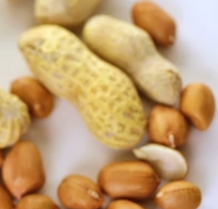
The pod is a thin, wrinkled, netted shell, usually containing one to four seeds. Each seed is coated with a thin reddish to brownish skin and encloses two large cotyledons, which form the edible kernel. Raw peanuts have a firm, somewhat waxy texture and a mild, beany aroma. With roasting, they develop a warm, intense, nutty and slightly sweet flavour, along with a rich, characteristic aroma that is central to their culinary identity.
Agronomically, peanuts are well adapted to warm climates and light, sandy or sandy-loam soils with good drainage. As a legume, they can fix atmospheric nitrogen, contributing to soil fertility in crop rotations. Nutritionally and culturally, peanuts occupy a central role in many food systems as a high-energy, protein-rich oilseed, used both as whole kernels and as raw material for peanut butter, peanut oil, flours, pastes and confectionery ingredients. Their combination of flavour, texture and nutrient density has made peanuts important in traditional cuisines, modern processed foods, and specialised nutrition products.
 |  |
Botanical classification
Common name: Peanut (groundnut)
Clade: Angiospermae
Order: Fabales
Family: Fabaceae
Genus: Arachis
Species: Arachis hypogaea L.
Climate
Peanut is a legume typical of warm and warm–temperate climates, with long, sunny summers and no frost. It needs a relatively long growing period with mild temperatures, while it is sensitive to cold and strong temperature fluctuations in the early stages. Even light frosts can damage young seedlings and reduce the production of underground pods.
Exposure
The ideal exposure is full sun, which is essential for good flowering and for proper penetration of the gynophores into the soil (the pegs that carry the fruits underground). In shaded positions, plants become elongated, produce fewer flowers and form fewer pods.
Soil
Peanut grows best in light, loose soils, sandy or sandy–loam, well drained and easy to work. Soils that are too compact hinder gynophore penetration and regular formation of underground fruits. Medium–low fertility soils are preferable, with slightly acidic to neutral pH; waterlogging and root asphyxia should be avoided, as they favour rot and yield loss.
Irrigation
Irrigation must be regular but not excessive, keeping the soil moderately moist, especially during flowering, gynophore penetration and seed filling. Drought periods in these stages reduce pod number and size, while excess water increases the risk of collar diseases and underground rots. It is best to irrigate evenly, avoiding sharp swings in soil moisture.
Temperature
The optimal temperature range for germination and growth is generally between 20 and 30 °C. Values below about 15 °C strongly slow development and make plants more sensitive to stress and pathogens. Peanut tolerates summer heat well, provided there is no extreme drought; very low temperatures, especially around sowing or final ripening, are unfavourable.
Fertilization
As a legume, peanut can fix atmospheric nitrogen through symbiosis with rhizobia, so it requires only small amounts of mineral nitrogen, often limited to early growth. Phosphorus and potassium are more important, supporting rooting, flowering and seed filling. In poor soils, a moderate application of well–matured organic matter before planting is useful, avoiding excessive fertilization that would promote lush foliage at the expense of pod production.
Crop care
Crop care includes control of weeds by light hoeing, especially in the early stages, and maintaining a loose surface soil to favour gynophore penetration. Good crop rotation reduces the pressure of fungal diseases and nematodes. It is important to avoid soil compaction and heavy traffic during flowering and pod set, so as not to hinder fruit formation.
Harvest
Harvesting is carried out when most pods are mature, with well–filled seeds and shells turning yellow–brown. Maturity is often checked by sampling plants and examining the internal pod colour and seed firmness. Uprooting should be done when the soil is not too wet, to reduce pod losses; pods are then dried in a thin layer in a well–ventilated place until they reach a moisture content suitable for storage.
Propagation
Propagation is by seed, using sound, untreated peanuts (not roasted), either in-shell or shelled, carefully selected. Sowing is done in the field when the soil has warmed sufficiently, placing seeds in rows or hills and keeping enough distance between plants to allow canopy development and underground fruit formation. The use of high–quality seed with good germination is essential to obtain uniform stands and satisfactory yields.
Indicative nutritional values per 100 g
(dry roasted peanuts, unsalted – average values)
Energy: ~ 560–600 kcal
Water: ~ 1–3 g
Total carbohydrates: ~ 15–20 g
Dietary fiber: ~ 8–10 g
Protein: ~ 24–26 g
Total fat: ~ 48–50 g
SFA (saturated fatty acids): ~ 6–8 g
MUFA (monounsaturated fatty acids, mainly oleic acid): ~ 24–28 g
PUFA (polyunsaturated fatty acids, mainly linoleic acid): ~ 13–18 g
Minerals: magnesium, phosphorus, potassium, zinc, copper, manganese
Vitamins: niacin (vitamin B3), folate (B9), vitamin E, small amounts of thiamine (B1), vitamin B6
Values vary with cultivar, origin, degree of roasting and processing, but peanuts consistently show high energy density, high fat and protein content.
Key constituents
Lipids (~ 50% of weight), with a predominance of unsaturated fatty acids (MUFA and PUFA)
Plant proteins (~ 25%), with a relatively high overall protein density
Dietary fiber, mainly insoluble
Carbohydrates: starch and small amounts of simple sugars
Minerals: magnesium, phosphorus, potassium, zinc, copper, manganese, iron
Vitamins: niacin, folate, vitamin E, B-group vitamins
Phytochemicals: phytosterols, phenolic compounds, resveratrol (in small amounts), and other antioxidants
Production process
Cultivation
requires warm temperatures and a frost-free growing season
best in light, sandy or sandy-loam, well-drained soils
sown directly in the field, often in rotated systems to benefit from nitrogen fixation
Flowering and pegging
yellow flowers develop above ground
fertilised flowers produce gynophores that bend and push the young pod into the soil (pegging)
pods then develop and mature underground
Harvesting
when plants show signs of maturity (yellowing leaves; pods hardened, kernels fully formed)
plants are uprooted or lifted; pods are left to dry attached for a short period, then separated
Drying and cleaning
pods dried to safe moisture levels
cleaning to remove soil, stones and foreign matter
Shelling and processing
mechanical shelling to obtain kernels
optional roasting, blanching, grinding, pressing for oil, or milling for peanut butter and flours
Quality control and packaging
monitoring for moisture, microbial load, aflatoxins and defects
packaging in suitable materials to protect from oxygen, light and humidity
Physical properties
kernels: small, oblong to oval, cream-coloured cotyledons with thin reddish-brown skin
texture (raw): firm, waxy, moderately hard
texture (roasted): crisp to crunchy, becoming softer and more pasty when chewed
high fat content leads to an oily mouthfeel and good lubricity in pastes and spreads
low moisture content in properly dried peanuts → long shelf-life, but sensitive to oxidation
Sensory and technological properties
flavour:
raw: mild, beany, slightly grassy
roasted: intense nutty, sweet, toasted notes; characteristic and strongly appealing
aroma: develops markedly during roasting via Maillard reactions and lipid oxidation products
texture:
as kernels: crunchy or crisp when roasted
in peanut butter or paste: smooth to slightly grainy, cohesive, spreadable
technological behaviour:
excellent oil yield for pressing and extraction
good emulsifying and stabilising behaviour in spreads (with appropriate formulation)
forms stable pastes and confections when combined with sugars, cocoa, etc.
peanut flour and protein concentrates improve texture, flavour and protein content in baked goods and snacks
Food applications
direct consumption as snack (roasted, salted, spiced, coated)
peanut butter and other spreads
peanut oil for cooking, frying and dressing
inclusion in confectionery, chocolate bars, nougat, brittle, pralines
ingredient in savoury dishes, sauces and stews (e.g. peanut sauces, curries, African and Asian traditional dishes)
use of peanut flour and peanut protein in baked products, snack foods and high-protein formulations
incorporation into granolas, cereal mixes and nutrition bars
Nutrition and health
Peanuts are a highly energy-dense food, supplying a combination of protein, unsaturated fats, fiber, vitamins and minerals.
Relevant aspects:
Protein: peanuts are a strong source of plant protein and can support overall protein intake, especially in diets with limited animal protein; combining peanuts with cereals improves amino acid balance.
Fats: the lipid fraction is rich in monounsaturated and polyunsaturated fats, notably oleic and linoleic acids, which, when part of a balanced diet, are generally considered favourable compared with high saturated fat intake.
Fiber: contributes to satiety and supports digestive health.
Micronutrients: peanuts provide niacin, vitamin E, folate, magnesium, potassium and zinc, which support energy metabolism, antioxidant defence and neuromuscular function.
However, because of their high calorie density, peanuts should be consumed in moderate portions, particularly in weight-management contexts. Salted, sugar-coated or heavily processed peanut snacks may also contribute excess sodium and added sugars.
Portion note
A common portion of peanuts as a snack or ingredient addition is about 20–30 g (roughly a small handful). In dietary planning, this portion is often considered an energy-dense fat/protein exchange and should be integrated accordingly into total daily energy intake.
Allergens and intollerances
peanuts are one of the major food allergens globally
allergic reactions can be severe or life-threatening (anaphylaxis) even at very low doses
cross-contamination between peanuts and other foods is a critical concern in manufacturing and food service
individuals with peanut allergy must strictly avoid peanuts and peanut-derived ingredients
some people may experience digestive discomfort if consuming large quantities of peanuts or peanut products
Storage and shelf-life
store peanuts in a cool, dry place, away from direct light and heat sources
because of their high fat content, peanuts are prone to oxidative rancidity if exposed to oxygen, high temperatures or light for prolonged periods
well-dried and properly packaged peanuts can have a relatively long shelf-life; refrigeration or freezing extends stability for shelled or ground products (e.g. peanut butter)
peanuts and peanut products must also be monitored for mould and mycotoxins (notably aflatoxins), which can develop under warm, humid storage if quality and hygiene are inadequate
Safety and regulatory
peanuts must be clearly declared as an allergen on labels when present in a food product, according to relevant regulations (e.g. EU, UK, US)
maximum limits for aflatoxins (toxic metabolites from certain moulds) are strictly regulated; peanut producers and processors must monitor and control contamination
peanut oil, flours and protein products must comply with general food safety rules, contaminant limits and hygiene standards
in some specialised products (e.g. nutritional formulations, infant foods), use of peanut ingredients may be limited or specifically regulated
Labeling
Packaged peanuts and peanut-containing products typically indicate:
product name (e.g. peanuts, roasted peanuts, peanut butter, peanut oil)
clear allergen statement for peanut
net weight
country or region of origin (where required)
best-before date
storage instructions
list of ingredients for multi-ingredient products, including added salt, sugar, oils, flavourings, etc.
nutritional information panel
Troubleshooting
In food use
rancid or “old” taste → likely fat oxidation; product improperly stored or too old; discard and use fresher peanuts
hard or rubbery texture → moisture uptake during storage; may indicate poor packaging or humid environment
digestive discomfort → excessive portion size, inadequate chewing, or individual sensitivity
In storage
rancid odour → exposure to air, heat or light; product no longer suitable
visible mould or off-smell → potential contamination; discard immediately
insect infestation → storage in warm, unprotected conditions; requires disposal of product and improvement of storage practices
Main INCI functions (cosmetics)
Cosmetic ingredients derived from peanuts include peanut oil (Arachis hypogaea oil) and related fractions. Typical functions:
emollient: softens and smooths the skin surface
skin conditioning: contributes to skin comfort and suppleness
possible carrier oil for lipophilic active ingredients in creams, lotions and massage oils
Because peanut is a strong allergen, its cosmetic use requires careful evaluation and clear labeling, especially for leave-on products.
Conclusion
The peanut (Arachis hypogaea) is a distinctive legume-oilseed with a unique underground fruit development and a central place in global food systems. Its seeds are energy-dense, rich in unsaturated fats and plant proteins, and highly valued for their flavour and functional properties in both savoury and sweet foods.
At the same time, peanuts are one of the most important food allergens, and their high fat content makes them sensitive to oxidation and quality loss if not properly handled. When used with appropriate portion control, good storage practices and clear allergen management, peanuts represent a nutritionally valuable and technologically versatile ingredient, bridging traditional cuisines, modern snacks, spreads and specialised nutrition.
Studies
Safety
Peanuts can cause allergic reactions or intolerance in some people.

