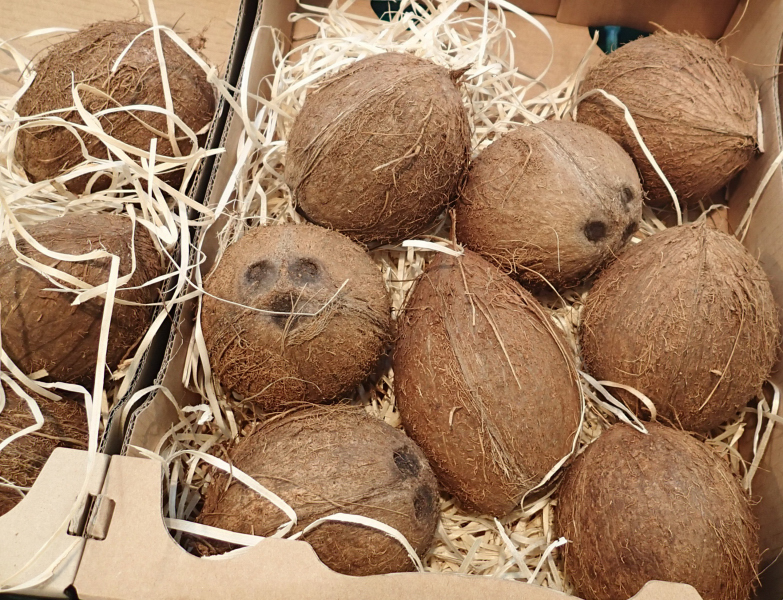
L'olio di cocco è un olio estremamente versatile e viene estratto per spremitura a freddo e mediante trattamento chimico. E' molto diffuso in oriente ed estremo oriente.
In commercio ne esistono di diversi tipi, a seconda del procedimento chimico di spremitura :
- vergine - non ha subito alcun tipo di procedimento artificiale di raffinazione
- raffinato - subisce procedimenti di sbiancamento e deodorazione
- spremuto a freddo - a temperatura di circa 40°
- biologico - certificato da apposito organismo
Viene usato in
cosmesi
- cura dei capelli
- dentifrici
- massaggi
L'Olio di cocco è presente nei prodotti cosmetici ed in particolare in prodotti cosmetici per capelli in quanto riesce a proteggerli da agenti esterni ed esercita un'azione rivitalizzante sui capelli secchi. Ha inoltre un'azione idratante.
alimentare
Dal punto di vista salutare non sono emerse controindicazioni, per quanto riguarda l'olio di cocco vergine, cioè non trattato, occorrerebbe solo sapere se, sulle etichette alimentari, l'indicazione di un olio di cocco generico, si riferisce a quello vergine piuttosto che a quello raffinato, ma io personalmente non ho mai trovato questa distinzione.
Gli studi che sono stati effettuati in campo medico, assumono come parametro l'olio vergine, per il quale sono state riscontrate alcune interessanti proprietà, mentre per gli altri tipi che hanno subito procedimenti di lavorazione quali la raffinazione, deducono una ridotta potenzialità antiossidante (1).
Una prima e più diffusa indicazione terapeutica è la capacità antistress (2), quindi una capacità di generare effetti protettivi sul sistema cardiovascolare (3).
Tuttavia, complessivamente, tenendo conto degli studi e delle prove finora effettuate, questo studio suggerisce che la sostituzione dell'olio di cocco con grassi insaturi cis altererebbe i profili lipidici del sangue in modo coerente con una riduzione dei fattori di rischio per le malattie cardiovascolari (4). Però occorre non esagerare nell'assunzione dell'olio di cocco.
Olio di cocco studi
Bibliografia_____________________________________________________________________
(1) Marina AM, Man YB, Nazimah SA, Amin I. Antioxidant capacity and phenolic acids of virgin coconut oil. Int J Food Sci Nutr. 2009;60 Suppl 2:114-23. doi: 10.1080/09637480802549127.
Abstract. The antioxidant properties of virgin coconut oil produced through chilling and fermentation were investigated and compared with refined, bleached and deodorized coconut oil. Virgin coconut oil showed better antioxidant capacity than refined, bleached and deodorized coconut oil. The virgin coconut oil produced through the fermentation method had the strongest scavenging effect on 1,1-diphenyl-2-picrylhydrazyl and the highest antioxidant activity based on the beta-carotene-linoleate bleaching method. However, virgin coconut oil obtained through the chilling method had the highest reducing power. The major phenolic acids detected were ferulic acid and p-coumaric acid. Very high correlations were found between the total phenolic content and scavenging activity (r=0.91), and between the total phenolic content and reducing power (r=0.96). There was also a high correlation between total phenolic acids and beta-carotene bleaching activity. The study indicated that the contribution of antioxidant capacity in virgin coconut oil could be due to phenolic compounds.
(2) Yeap SK, Beh BK, Ali NM, Yusof HM, Ho WY, Koh SP, Alitheen NB, Long K. Antistress and antioxidant effects of virgin coconut oil in vivo. Exp Ther Med. 2015 Jan;9(1):39-42. doi: 10.3892/etm.2014.2045.
Abstract. Virgin coconut oil (VCO) has been consumed worldwide for various health-related reasons and some of its benefits have been scientifically evaluated. Medium-chain fatty acids were found to be a potential antidepressant functional food; however, this effect had not been evaluated in VCO, which is rich in polyphenols and medium-chain fatty acids. The aim of this study was to evaluate the antistress and antioxidant effects of VCO in vivo, using mice with stress-induced injury. The antistress effect of VCO (administered per os, at a dose of 10 ml/kg body weight) was evaluated using the forced swim test and chronic cold restraint stress models. VCO was able to reduce immobility time and restore oxidative stress in mice post-swim test. Furthermore, mice treated with VCO were found to exhibit higher levels of brain antioxidants, lower levels of brain 5-hydroxytryptamine and reduced weight of the adrenal glands. Consequently, the serum cholesterol, triglyceride, glucose and corticosterone levels were also lower in VCO-treated mice. These results suggest the potential value of VCO as an antistress functional oil.
(2) Babu AS, Veluswamy SK, Arena R, Guazzi M, Lavie CJ. Virgin coconut oil and its potential cardioprotective effects. Postgrad Med. 2014 Nov;126(7):76-83. doi: 10.3810/pgm.2014.11.2835.
Abstract. Emphasis on diet to improve the cardiovascular (CV) risk profile has been the focus of many studies. Recently, virgin coconut oil (VCO) has been growing in popularity due to its potential CV benefits. The chemical properties and the manufacturing process of VCO make this oil healthier than its copra-derived counterpart. This review highlights the mechanism through which saturated fatty acids contribute to CV disease (CVD), how oils and fats contribute to the risk of CVD, and the existing views on VCO and how its cardioprotective effects may make this a possible dietary intervention in isolation or in combination with exercise to help reduce the burden of CVDs.
(4) Eyres L, Eyres MF, Chisholm A, Brown RC. Coconut oil consumption and cardiovascular risk factors in humans. Nutr Rev. 2016 Apr;74(4):267-80. doi: 10.1093/nutrit/nuw002. Epub 2016 Mar 5. PMID: 26946252; PMCID: PMC4892314.
Maki KC, Hasse W, Dicklin MR, Bell M, Buggia MA, Cassens ME, Eren F. Corn Oil Lowers Plasma Cholesterol Compared with Coconut Oil in Adults with Above-Desirable Levels of Cholesterol in a Randomized Crossover Trial. J Nutr. 2018 Oct 1;148(10):1556-1563. doi: 10.1093/jn/nxy156.
Abstract. Background: Few trials have examined the effects of coconut oil consumption in comparison with polyunsaturated fatty acid-rich oils such as corn oil. Objective: This trial assessed the effects of consuming foods made with corn oil compared with coconut oil on lipids, glucose homeostasis, and inflammation. Methods: This was a preliminary randomized crossover study of men (n = 12) and women (n = 13) with a mean age of 45.2 y, mean body mass index (in kg/m2) of 27.7, fasting LDL cholesterol ≥115 mg/dL and <190 mg/dL, and triglycerides (TGs) ≤375 mg/dL. Subjects consumed muffins and rolls providing 4 tablespoons (∼54 g) per day of corn oil or coconut oil as part of their habitual diets for 4 wk, with a 3-wk washout between conditions. Fasting plasma lipids and high-sensitivity C-reactive protein (hs-CRP) and glucose metabolism were assessed via an intravenous glucose tolerance test at baseline and 15 and 29 d of treatment. Responses were compared between treatments by ANCOVA. Results: Median baseline concentrations of LDL cholesterol, non-HDL cholesterol, total cholesterol (total-C), HDL cholesterol, total-C:HDL cholesterol, and TGs were 123, 144, 188, 46.0, 4.21, and 92.5 mg/dL, respectively. Changes from baseline for corn oil and coconut oil conditions, respectively, were: LDL cholesterol (primary outcome; -2.7% compared with +4.6%), non-HDL cholesterol (-3.0% compared with +5.8%), total-C (-0.5% compared with +7.1%), HDL cholesterol (+5.4% compared with +6.5%), total-C:HDL cholesterol (-4.3% compared with -3.3%), and TGs (-2.1% compared with +6.0%). Non-HDL cholesterol responses were significantly different between corn and coconut oil conditions (P = 0.034); differences between conditions in total-C and LDL cholesterol approached significance (both P = 0.06). Responses for hs-CRP and carbohydrate homeostasis parameters did not differ significantly between diet conditions. Conclusions: When incorporated into the habitual diet, consumption of foods providing ∼54 g of corn oil/d produced a more favorable plasma lipid profile than did coconut oil in adults with elevated cholesterol. This trial was registered at clinicaltrials.gov as NCT03202654.
Cox C, Sutherland W, Mann J, de Jong S, Chisholm A, Skeaff M. Effects of dietary coconut oil, butter and safflower oil on plasma lipids, lipoproteins and lathosterol levels. Eur J Clin Nutr. 1998 Sep;52(9):650-4. doi: 10.1038/sj.ejcn.1600621.
Abstract. Objective: The aim of this present study was to determine plasma levels of lathosterol, lipids, lipoproteins and apolipoproteins during diets rich in butter, coconut fat and safflower oil. Design: The study consisted of sequential six week periods of diets rich in butter, coconut fat then safflower oil and measurements were made at baseline and at week 4 in each diet period. Subjects: Forty-one healthy Pacific island polynesians living in New Zealand participated in the trial. Interventions: Subjects were supplied with some foods rich in the test fats and were given detailed dietary advice which was reinforced regularly. Results: Plasma lathosterol concentration (P < 0.001), the ratio plasma lathosterol/cholesterol (P=0.04), low density lipoprotein (LDL) cholesterol (P<0.001) and apoB (P<0.001) levels were significantly different among the diets and were significantly lower during coconut and safflower oil diets compared with butter diets. Plasma total cholesterol, HDL cholesterol and apoA-levels were also significantly (P< or =0.001) different among the diets and were not significantly different between buffer and coconut diets. Conclusions: These data suggest that cholesterol synthesis is lower during diets rich in coconut fat and safflower oil compared with diets rich in butter and might be associated with lower production rates of apoB-containing lipoproteins.




