



PEG-90 Glyceryl Isostearate is a chemical compound, PEG, glycolic polyethylene ether of Glyceryl stearate,
The name describes the structure of the molecule:
- PEG-90. PEG stands for polyethylene glycol. The number 90 indicates the average molecular weight of the polyethylene glycol portion of the molecule. Polyethylene glycol is a polymer based on ethylene oxide, and is often used as a solvent, thickener, or moisture-carrier in various products.
- Glyceryl refers to a group derived from glycerin, a simple polyol compound. Glycerol is a colorless, odorless and viscous liquid that has a sweet, non-toxic taste.
- Isostearate refers to the ester or saline form of isostearic acid, a type of fatty acid. Fatty acids are often used in skin care products for their moisturizing and emollient properties.
Description of raw materials used in production:
- Polyethylene Glycol (PEG) is a polymer derived from ethylene oxide. The number 90 in PEG-90 Glyceryl Isostearate refers to the average molecular weight of the polyethylene glycol component.
- Glyceryl Isostearate is an ester derived from glycerin and isostearic acid. It is commonly used in cosmetics as a conditioning and emollient agent.
The synthesised extraction process takes place in different steps:
- Extraction. The process begins with the extraction of fatty acids from natural sources such as vegetable oils or animal fats. Isostearic acid, a branched-chain fatty acid, is often used.
- Esterification. Isostearic acid is reacted with glycerine in a process known as esterification to form glyceryl isostearate. This reaction involves isostearic acid reacting with an alcohol (glycerine) to form an ester (glyceryl isostearate).
- Reaction with ethylene oxide. Glyceryl isostearate is then reacted with ethylene oxide in a process known as ethoxylation. This reaction attaches a chain of ethylene oxide units to the glyceryl isostearate molecule. The number 90 in PEG-90 Glyceryl Isostearate indicates that on average 90 ethylene oxide units are attached to each glyceryl isostearate molecule.
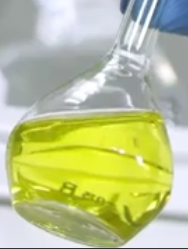
It is typically found in liquid form when used in cosmetic and personal care formulations. In its pure form, it is usually a clear or slightly yellowish liquid.
However, the appearance of the final product in which PEG-90 Glyceryl Isostearate is used can vary greatly depending on the other ingredients used in the formulation.
What it is used for and where
Cosmetics
Anionic surfactant chemical compound with an emulsifying function, i.e. a substance which tends to reduce the surface tension of a liquid in which it is dissolved and functions as an emollient and is used in cosmetics as a surfactant, i.e. of cleaning.
Surfactant - Cleansing agent. Cosmetic products used to cleanse the skin utilise the surface-active action that produces a lowering of the surface tension of the stratum corneum, facilitating the removal of dirt and impurities.
Applications:
- Shampoo
- Detergents
- Lipsticks
- and more
Medical
Drug delivery
Safety
It is an ethoxylated product, but since 90 ethylene oxide units are not easily absorbed through the stratum corneum, it seems unlikely that skin penetration would cause damage.
Studies
Solid lipid nanoparticles (SLNs) represent an affordable, easily scalable, stable and biocompatible drug delivery system with a high drug to lipid ratio which also improves solubility of poorly soluble drugs. Solid lipid nanoparticles were developed by using glyceryl monostearate as the single lipid in the presence of surfactant Poloxamer 188 and evaluated the efficiency of SLNs to load the therapeutic cargo, curcumin. The results provide a strong rationale for further exploration of the newly developed CUR-SLN to be utilized as a potent chemotherapeutic agent in cancer therapy (1).
The product would be safe for human health (2).
This study has characterized an emulsion system stabilized by an amphiphilic random copolymer, methoxy polyethylene glycol-23 methacrylate/glyceryl diisostearate methacrylate copolymer (MPM-GDM). The combined results of the static surface tension and transmission electron microscopy with freeze-fracture technique (FF-TEM) suggested that this copolymer forms aggregates in aqueous solutions. The membrane emulsification method produced an oil-in-water (O/W) emulsion in the mixture of squalane, water, and MPM-GDM, where the squalane concentration was set at 10 - 60 wt% and the MPM-GDM concentration was either 1 or 5 wt%. The prepared emulsion was stable against coalescence due to the formation of an adsorption layer of MPM-GDM. Based on the FF-TEM results, it is confirmed that a relatively large island-like structure is formed on the emulsion droplet surface. Furthermore, MPM-GDM can act as a thickening agent of the continuous liquid phase, which enhances the stability against creaming. The cooperative two effects improve the stability of the emulsion system without adding co-stabilizer such as low molecularweight surfactants (3).
The most relevant studies on this chemical compound have been selected with a summary of their contents:
General Features:
- Form Crystals; color< 6 on Gardner scale
- Odor Faint
- Specific gravity at 20◦C 0.930 to 0.970
- Refractive index at 20◦C 1.455 to 1.475
- Viscosity at 20◦C 0.7 to 1.2 Pa
- Hydroxyl value 180–280 mg KOH/g
- Iodine value <15 g/100 g (based on I2)
- Saponification value 150–170 mg
- Acid value <4 mg KOH/g
Synonyms:
(1)-2,3-Dihydroxypropyl stearate.alpha.-Monostearin1379-EP2270002A11379-EP2270006A11379-EP2270011A11379-EP2277861A11379-EP2277865A11379-EP2281823A21379-EP2289892A11-Glyceryl stearate1-Monostearoylglycerol1-octadecanoylglycerol1-octadecanoyl-rac-glycerol1-O-stearoylglycerol2,3-Dihydroxypropyl 16-methylheptadecanoate2,3-Dihydroxypropyl isooctadecanoate2,3-dihydroxypropyl octadecanoate2,3-Dihydroxypropyl stearate342394-34-737349-34-13-Stearoyloxy-1,2-propanediol8029-22-983138-62-985666-92-8AB1009437Abracol S.L.G.AK175522Aldo 33Aldo 75Aldo MSDAldo MSLGalpha-MonostearinAN-22932Arlacel 165CAS-11099-07-3CAS-123-94-4CC-06953DL-|A-StearinDSSTox_CID_9160DSSTox_GSID_29160DSSTox_RID_78691Eastman 600EINECS 204-664-4EINECS 245-121-1Emerest 2407FEMA No. 2527FT-0626740FT-0626748G0085Glycerin 1-monostearateGlycerin 1-stearateGlycerol .alpha.-monostearateGlycerol 1-monostearateglycerol 1-octadecanoateGlycerol 1-stearateGlycerol alpha-monostearateGlycerol Mono StearateGlycerol monoisostearateGlycerol stearate, pureGlyceryl 1-monostearateGlyceryl 1-octadecanoateGlyceryl monoisostearateGlyceryl monostearateGlyceryl monostearate [JAN:NF]Glyceryl Stearate SEGlyceryl-1-monostearateIsooctadecanoic acid, monoester with 1,2,3-propanetriolIsooctadecanoic acid,ester with 1,2,3-propanetriolIsooctadecanoicacid,esterwith1,2,3-propanetriolLS-164168MONOSTEARIN (L)Monostearin (Related)NCGC00164529-01NSC 3875NSC3875Octadecanoic acid, 2,3-dihydroxypropyl esterP566Polyglyceryl-3 stearateQ-201168rac-Glycerol 1-stearaterac-glyceryl monostearaterac-octadecanoylglycerolS-7950Sandin EUSC-19844SC-79530ST51037333Stearic acid 1-monoglycerideStearic acid alpha-monoglycerideStearin, 1-mono-Stearin, mono-Tegin (Related)Tegin 515Tegin 55GTEGIN 90Triglyceryl monostearateW-110285

